[Policy Pulse] Policies Trapped in Narrative Battles: Asking Again, "Who Benefits?"
![[Policy Pulse] Policies Trapped in Narrative Battles: Asking Again, "Who Benefits?"](http://www.asiae.co.kr/news/img_view.htm?img=2025081412295383969_1755142192.jpg)
"Politics is about reality. If decisions are made based on the people, what do ideology or values matter?"
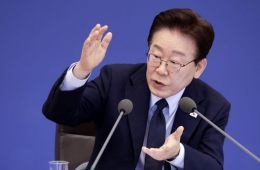
Just as President Lee Jaemyung stated at the Jeju town hall meeting on March 30, policy should not be an abstract slogan but a tangible reality that directly affects people’s lives. While policy is inherently a product of politics, which involves value conflicts, the recent confusion in our society goes beyond simple competition of values. Policy scholar Deborah Stone described policy as a contest of narratives, but when these narratives become trapped in ideological or populist frames rather than objective truths, there is a greater risk that policy will be swayed by political agitation instead of serving the public interest.
The nuclear phase-out policy is a clear example of this problem. The government at the time emphasized the value of safety, but there is ongoing debate as to whether the real-world issues—such as the collapse of the nuclear power ecosystem built up over decades, instability in power supply, and significant cost burdens on industry—were sufficiently considered in the process. There are also divided opinions on how empirical evidence for energy security and carbon neutrality was balanced against perceptions of safety. As the policy direction was later reversed, social conflict and costs increased, and ultimately, the burden was shifted to citizens and businesses. This is not merely a matter of value choice, but an example of policy confusion that arises when ideological judgments overwhelm scientific facts.
This pattern is repeated in regulatory policy. Regulations on large retail stores were promoted under the banner of protecting local businesses and coexistence, but there are diverse assessments of their actual effectiveness. Some findings suggest that the benefits of regulation shifted not to traditional markets, but to major online platforms. At the same time, there are criticisms that dual-income couples and single-person households saw their choices reduced. When policy clings to a binary frame of large retailers versus small business owners, rather than thoroughly analyzing changing consumer patterns and the distribution environment, its effectiveness inevitably weakens.
Both cases share the failure to address the fundamental question: Who actually benefits? As political scientist Harold Lasswell pointed out, the core of policy decisions lies in “who gets what, when, and how.” Policy must consider diverse values, but its starting point must be clear: who benefits, and who bears the costs. In Korea today, this basic principle has become blurred, and this trend is not limited to any particular field. Conflicts between efficiency and equity, freedom and safety, may be the fate of democratic societies, but it is the responsibility of politics to manage such dilemmas with accountability.
Contradictions in policy are a reality, but we must be wary of accepting them as a given. This can easily become a logic for evading responsibility by hiding behind ideology. The success or failure of policy is not determined by grand rhetoric, but by real results that touch people’s daily lives, such as electricity bills and grocery shopping. Facing uncomfortable statistics and taking responsibility for failure are the starting points for restoring public trust in policy. The true strength of policy does not lie in glorifying contradictions. It comes from the responsibility and determination to bear the full weight of the policy’s impact on people’s lives.
Hot Picks Today
 Even with High Oil Price Relief Payment, Additional 300,000 Won Per Person to Be Provided... Applications Open from the 18th in This Region
- Is the Union Still Aiming for the 45 Trillion Won Bonus?... Samsung Union Rejects Government Mediation as Countdown to May 21 General Strike Begins
- FSS Urges Lending Sector to Strengthen Security After Series of Hacking Incidents
- 'Is Everyone Getting Rich but Me?' The Fear Driving 'All-In' and 'Debt Investing'... FOMO Warning Grows [AK View]
- "I'm Younger and Fitter Than Your Husband, Get a Divorce"... Suspicious Messages Between Wife and Fitness Trainer
Oh Chulho, Professor Emeritus, School of Public Administration, Soongsil University
© The Asia Business Daily(www.asiae.co.kr). All rights reserved.