"India Should Be Approached as a Market for Long-Term Business Planning, Not Just a Low-Cost Production Base"
Samil PwC Releases Report on Strategies for Entering India
"Target Policy-Linked Industries and Advanced Consumer Markets"

As the global supply chain undergoes restructuring and the era of low growth is prolonged, India is emerging as a new growth opportunity for Korean companies. Experts advise that Korea should approach India not merely as a low-cost production base, but as a market for long-term business planning based on government policy and changes in industrial structure.
On April 23, Samil PwC announced the publication of a report titled "New Growth Opportunities for Domestic Companies in a Period of Low Growth: Exploring the Indian Market." This report features practical insights from local partners, including Sanjeev Krishan, Chairman of PwC India. It goes beyond analysis of systems and policies, providing concrete details on the key issues Korean companies face during market entry and the strategies to address them.
According to the report, intensifying competition between the United States and China, the spread of protectionism, and the acceleration of supply chain diversification are driving companies to seek diversification, moving away from strategies centered on a single production base. India is emerging as a strategic hub for both production and consumption, underpinned by an annual growth rate of 6–7%, the world's largest domestic market, and a young population structure.

The report categorizes India's promising industries along two axes: growth drivers and entry conditions. The first axis comprises industries linked to government policy, directly connected to India's manufacturing promotion and infrastructure investment policies. This includes advanced manufacturing such as electric vehicles (EVs), electronics, and semiconductors; artificial intelligence (AI) and digital infrastructure such as cloud, data centers, and power grids; and transportation, logistics infrastructure, as well as shipbuilding and marine industries. These sectors are driven by demand rooted in government budgets, incentives, and public infrastructure investment. Initial business structure design—including forming local partnerships and defining roles within the value chain—was analyzed as a key variable for success.
The second axis includes industries based on the advancement of consumption and market growth. This covers premium consumer sectors such as beauty and personal care, food and beverages, as well as content and digital services including media, entertainment, and finance. These sectors possess high growth potential, fueled by the expansion of the middle class, urbanization, and the spread of digital distribution. However, since performance is determined more by market competition and consumer choice than by direct policy support, a phased and long-term approach is required.

The report highlights several key considerations for Korean companies entering India: ▲ designing production and procurement structures from a mid- to long-term localization perspective ▲ conducting prior reviews of state-specific incentives and licensing environments ▲ initial structuring of local partnerships or joint ventures (JVs) ▲ developing pricing strategies that reflect Indian consumer characteristics ▲ establishing the capability for proactive regulatory compliance. The report notes that, since the initial mode and structure of market entry directly affect tariffs, incentives, cost competitiveness, and scalability, companies must consider localization from a long-term perspective at the early stage of strategy development. Detailed information can be found on the Samil PwC website.
Sivam Subramanian, Partner in charge of Korean Corporate Advisory at PwC India, stated, "We often see Korean companies select a target region based on headquarters' criteria, only to realize much later that actual local conditions are completely different. Since each Indian state varies significantly in terms of culture, administration, and incentive structures, it is necessary to design business structures from the perspective of local experts with extensive experience, rather than applying Korea's existing strategies as-is."
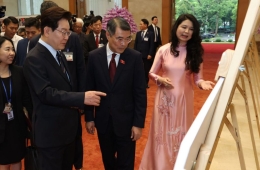
Yoo Wonsuk, Leader of the India Business Center (Partner at PwC Consulting), commented, "With the recent presidential state visit, discussions on revising the 'Korea–India Comprehensive Economic Partnership Agreement (CEPA)' have gained momentum, and strategic cooperation, particularly in shipbuilding and high-tech industries, has been formalized. In particular, the fact that approximately 20 partnerships were led by the heads of major domestic groups demonstrates that it is time for Korean companies to actively consider entering and making mid- to long-term investments in India."
Hot Picks Today
 Chilling Timing "Did They Know Again?"... $640 ...
- "Why Is My Chanel Wallet on Danggeun?"...High School Students Steal Luxury Goods...
- "Doctors Never Eat This": Foods Warned Against by Asan Medical Center Professor
- After Cabbage, Now Green Onions: "Take Them for Free"... Farmers Suffer Absurd L...
- "I Can't Believe They're Real": Cockroaches Squirm Inside Transparent Jacket in ...
© The Asia Business Daily(www.asiae.co.kr). All rights reserved.