


According to the investigation, all raw pork skins sold by these companies were supplied by a supplier located in Gyeongbuk. The acidity level of the raw pork skins distributed in the market was between 0.8 and 1.4. If delivered as raw pork skins, they met the acidity standard (below 4.0), but since they were unrefined and exceeded the acidity level by 3 to 4 times, they did not meet the standards for edible use.
It has been confirmed that raw pork fat (donji), which does not meet edible standards, is being disguised as a cooking ingredient and distributed in the market. Products that exceed the acidity standard (an indicator of oil freshness and rancidity as strictly defined by the Ministry of Food and Drug Safety) by up to four times are even being supplied to department stores, which is expected to spark controversy.
According to The Asia Business Daily's coverage on April 22, as well as the police, at least five distribution companies nationwide, including in Seoul, Incheon, and Daegu, have been found to be selling raw pork fat as edible products rather than as ingredients. Although these companies state the food type as raw pork fat when distributing products online, their product descriptions guide consumers to use them for cooking.
Fueled by the lard oil craze... 'Raw' materials not processed through refining disguised as edible products
Under the Food Sanitation Act, raw pork fat is defined as the 'ingredient' for edible pork fat. It must go through refining processes such as degumming (removal of impurities), deacidification (removal of free fatty acids), decolorization (removal of pigments causing turbidity), and deodorization (removal of unpleasant odors) to be distributed as edible pork fat. At this point, edible pork fat is required to meet strict standards, including an acidity level of 0.3 or less and a moisture content of 0.3% or less. In contrast, raw pork fat, which is the material prior to refining, has a standard acidity level of 4.0 or less.
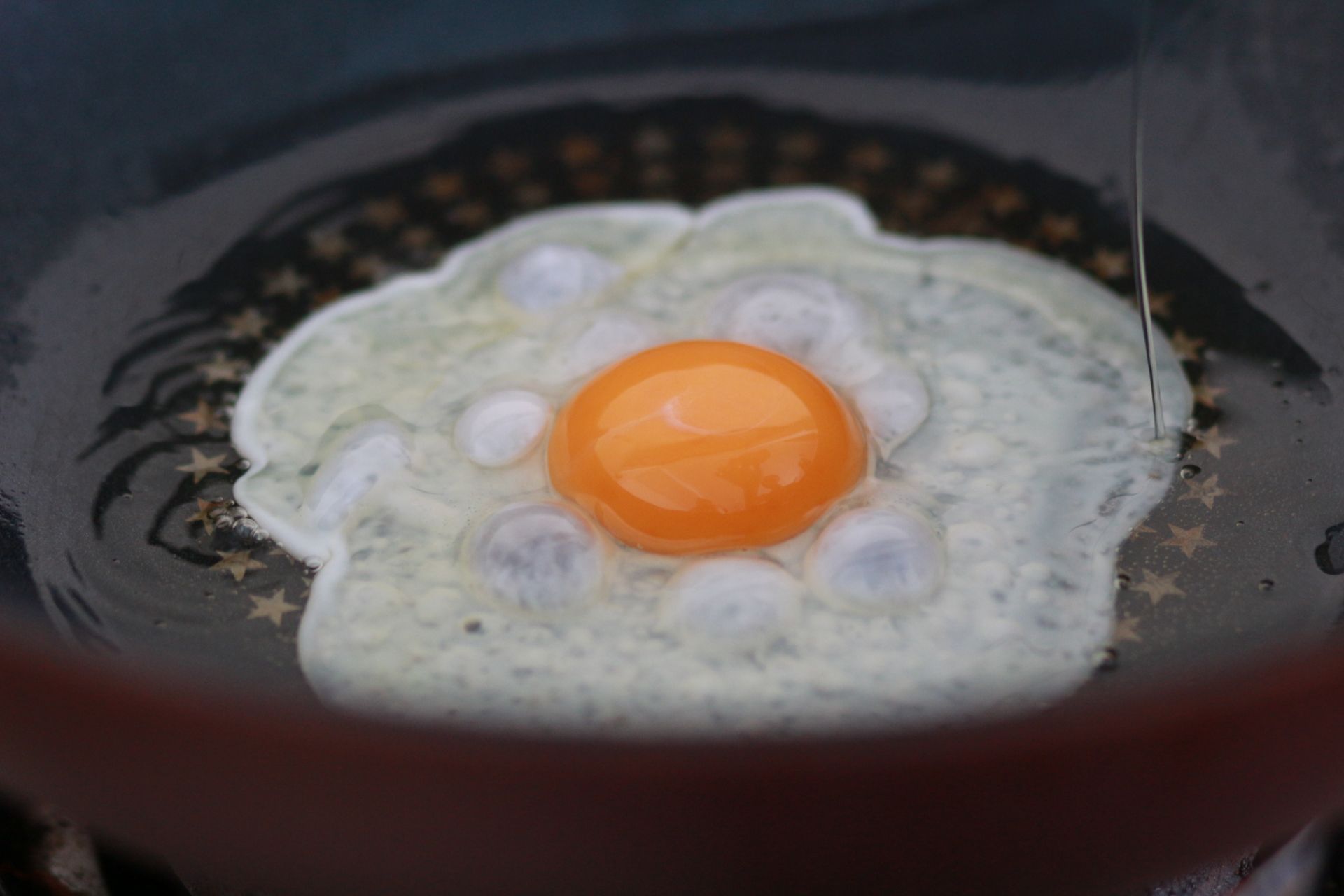
However, Company A based in Seoul recommended using raw pork fat for cooking fried eggs or kimchi pancakes, promoting it as having 'not only great taste but also cooking stability.' Company B in Seoul, when asked whether the product was edible, falsely claimed it was edible pork fat but also answered, "(Whether it is refined) is something managed by the factory, so I am not sure." Company C in Incheon recruited product reviewers and posted blogger reviews, while Company D in Daegu emphasized that it is distributing the product as a premium item to department stores. Company E in Daegu also promoted various cooking methods for their product.

The supplying company maintains that there is no problem with the raw pork fat and that it is safe for edible use. A company representative argued, "To meet acidity standards, various substances must be added during the refining process, and removing them again is complicated. Raw pork fat only needs to have its acidity and moisture managed, so it's actually more natural and safe."
Ministry of Food and Drug Safety: "Inappropriate for edible use, regulatory action possible due to standard violations"

In the industry, some refer to the 1989 beef tallow case, where food companies were acquitted. At the time, the acidity standard for edible beef tallow was 0.3 or less, but prosecutors indicted food company executives for importing 'industrial raw materials' that exceeded this standard. However, the companies argued that they had refined the material to meet edible standards before using it in products like ramen, and the court accepted this defense.
However, in the beef tallow case, industrial oil in its raw state was imported and used after being refined to comply with domestic regulations. Prosecutors argued that even raw materials should have met edible standards, but this is different from distributing unrefined raw pork fat as if it were edible. Kim Taemin, a food law attorney and former official at the Ministry of Food and Drug Safety, pointed out, "If the standard specifications are violated, it is naturally subject to punishment."
The Food Code under the Food Sanitation Act, which stipulates safety standards, is not about whether something is edible or not, but whether its stability throughout the distribution process is guaranteed. The scientific fact is that unrefined oils are not natural foods, as enzymes and microorganisms remain, resulting in an overwhelmingly high risk of rancidity during distribution.
A professor of food engineering at a major university in Seoul, speaking on condition of anonymity, explained, "Legal standards are set to check if there is a possibility of harmful substances occurring. A high acidity level does not itself mean spoilage, but it can indicate that the environmental conditions such as high temperature were poor."
An official from the Ministry of Food and Drug Safety stated, "Unrefined raw pork fat is not suitable for edible use. If it is confirmed that raw pork fat was distributed for edible use, actions can be taken for violating current standard specifications."
-

Reporter Oh Jieun joy@asiae.co.kr
-

Edit Eo Kangbi uhkb86@asiae.co.kr
© The Asia Business Daily(www.asiae.co.kr). All rights reserved.






![[Battleground Preview] Seoul Han River Belt: Opposition Judgment vs. Real Estate Sentiment](https://cwcontent.asiae.co.kr/asiaresize/304/2026042211350336008_1776825304.jpg)
![Things That Slowly Disappear... "The Last Baseball Game" [Slate]](https://cwcontent.asiae.co.kr/asiaresize/304/2026041702163929474_1776359799.jpg)