Pursuing Rare Earth Independence from China, But Self-Sufficiency Remains Distant... Urgent Need for International Cooperation
[Overhaul of Mineral Stockpiling Strategy] Rare Earths Become Strategic Assets Amid Resource Weaponization
Korea Pursues Self-Sufficiency with Bold Support... International Cooperation Seen as Realistic Path

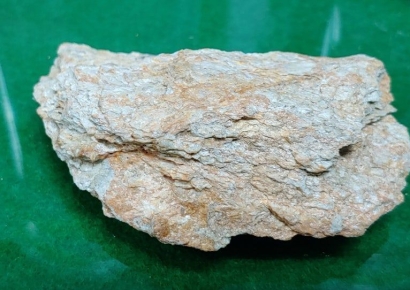
Rare earth elements have emerged as a core security asset. Photo reference image
View original imageAs the U.S.-China trade conflict and wars in the Middle East have unfolded, the resource war front has expanded to rare earth elements. Rare earths are widely used as essential materials in advanced industries such as electric vehicles, semiconductors, petrochemicals, and defense, and are evaluated as security assets by various countries. China, the undisputed dominant player, has expanded its global market share by supplying rare earths at low prices. It accounts for about 70% of global production and over 80% of refining and processing.
In February 2026, the United States officially launched "Project Vault," a strategic core minerals stockpiling initiative worth USD 12 billion (approximately KRW 17 trillion). While core minerals needed for the defense industry have already been stockpiled at the national level, this is the first time a core minerals stockpile project has been established to meet private-sector demand. The United States, together with the Australian government, has pledged over AUD 5 billion (about KRW 5.24 trillion) to key mineral projects. It has also established a special economic zone on Luzon Island in the Philippines, which holds resources such as nickel, copper, chromite, and cobalt, so that U.S. companies can access rare earth metals and other key resources without being subject to Chinese control.
The European Union (EU) has set a goal of mining over 10%, refining more than 40%, and recycling at least 25% of its domestic consumption of key minerals within the region, and is implementing specific policies to achieve this. Japan has succeeded in test-mining mud at a depth of about 6,000 meters in the South Pacific, a region known for its abundant rare earth deposits, by operating exploration mining equipment. At a recent expanded meeting in Washington, D.C. on G7 critical mineral supply chains, Japan announced plans to contribute funds to the Asian Development Bank (ADB) and Inter-American Development Bank (IDB) to build supply chains for critical minerals in partnership with emerging economies.
At the same meeting, Deputy Prime Minister and Minister of Economy and Finance Koo Yooncheol stated, "The supply chain for critical minerals must move toward implementation-centered cooperation between countries," adding, "Korea will actively participate in critical mineral cooperation projects being promoted by multilateral development banks."
In February 2026, the government announced a "Comprehensive Rare Earth Supply Chain Strategy." As the first policy of the Ministry of Trade, Industry, and Energy’s Office of Industrial Resource Security, which was established at the end of December last year, it includes measures to strengthen the entire rare earth supply chain response system from mine development to separation/refining and product manufacturing. All 17 types of rare earths have been designated as critical minerals, and the government will enhance supply-demand analysis by introducing and subdividing export/import codes (HSK codes) for rare earths. The role of the public sector will also be strengthened to help share investment risks with the private sector.
The overseas resource development loan budget for 2026 has been increased by KRW 28.5 billion from KRW 39 billion in the previous year to KRW 67.5 billion, and the loan support ratio will be expanded from 50% to 70% ('25: 50% → '26: 70%), further strengthening policy financing support.It is currently estimated that 26 million tons of rare earths are deposited domestically. Although no companies have moved to develop these deposits due to low profitability, the government is considering the possibility of "domestic production internalization" through bold support measures.
Hot Picks Today
 "Over 20 Times More Than Overseas": 104.5 Milli...
- "Only the Top 1% Winning Big in Stocks Smile... '300 Million Won Splurges' or '1...
- Applied Just for Skin Soothing...Study Finds It Suppresses Antibiotic Resistance
- "If an Accident Happens, Teachers Go to Jail"... The Real Reason Behind Fewer Sc...
- "Please Launch It in Korea!" After All the Hype... This Coffee Finally Arrives i...
The Korea Institute for Industrial Economics & Trade, a state-run research institute, suggested that since rare earth self-sufficiency will take significant time, proactively participating in U.S.- and EU-led supply chain alliances is a realistic alternative. Senior Research Fellow Kim Dongsu stated, "We need to recognize that we cannot build a self-sufficient ecosystem like the United States, China, or the EU," adding, "In the end, international cooperation is the realistic solution."
© The Asia Business Daily(www.asiae.co.kr). All rights reserved.