Iranian Hardliners Assert Influence with Hormuz Re-closure, Emerging as Key Variable in Peace Talks

Iran has declared the re-closure of the Strait of Hormuz and attacked several oil tankers, citing the ongoing U.S. maritime blockade, causing disruptions in the peace negotiations.
Notably, internal conflict between moderates and hardliners in Iran has come to the surface, as the Iranian military announced renewed control over the strait just one day after Foreign Minister Abbas Araghchi declared the lifting of the blockade. Analysts suggest this internal division could become an obstacle in future negotiation processes.
According to Yonhap News and other foreign media on April 19, this re-closure measure highlights the difference in perception between Iran’s political leadership, which is leading the negotiations, and the hardliners within the military. Mediators assess that both Iran and the U.S. are showing a certain degree of flexibility and leaving room for compromise, but there are also voices of opposition within Iran.
Concerns are mounting, especially over the Islamic Revolutionary Guard Corps, which has expanded its influence since the war and is now expressing opposition to a negotiated settlement. Mohammad Amersi, an Iran expert at the Wilson Center, explained, "The West sees Iran as a country with a unified command structure, but in reality, that is not the case," adding, "Even if an agreement is reached through diplomatic channels, it is often the military, which holds actual power, that exerts influence at critical moments."
In fact, the initial announcement to open the strait came not from the military, but from Minister Araghchi. A pragmatic veteran diplomat, he is interpreted to have made this gesture to demonstrate a willingness to negotiate ahead of the end of the ceasefire. Michael Singh, a former official at the White House National Security Council, commented, "This announcement was a signal intended to advance the stalled negotiations."
However, these moves immediately faced internal backlash. According to radio communication records from Gulf area crew members, an individual identifying as a member of the Revolutionary Guard stated on the same day that the strait remained closed and that passage required authorization. He remarked, "We follow the orders of Ali Khamenei, not some tweet."
Tasnim News Agency, which is affiliated with the Revolutionary Guard, also strongly criticized Minister Araghchi for announcing policy through social media. Hardliner Morteza Mahmoudi argued that the announcement drove down international oil prices and worked in favor of the U.S., even calling for the minister’s dismissal.
Foreign media, citing senior military advisors, reported that the military expressed strong dissatisfaction with Minister Araghchi’s unilateral announcement without prior consultation. Some analysts say the Revolutionary Guard is maintaining its determination to retaliate for war damages and believes it holds military superiority.
Hot Picks Today
 Applied Just for Skin Soothing...Study Finds It...
- "Only the Top 1% Winning Big in Stocks Smile... '300 Million Won Splurges' or '1...
- "Paying More Than the Listed Price?"... Academies Caught in the Act of Illicit T...
- "If You Pay, I'll Close the Case"... Former Korea Customs SJPO Who Took 145 Mill...
- "Please Launch It in Korea!" After All the Hype... This Coffee Finally Arrives i...
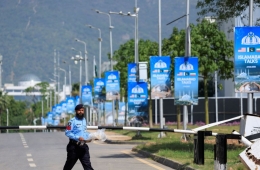
This internal tension could potentially affect the second round of peace talks, which are expected to be held in Islamabad.
© The Asia Business Daily(www.asiae.co.kr). All rights reserved.




![Is This a Boom or a Recession? Queues for Both Luxury and Bargain Goods [K-Shaped Consumption Era]](https://cwcontent.asiae.co.kr/asiaresize/307/2026042114133834494_1776748418.png)