Bond Yields Climb Across the Board as Foreign Investors Sell Despite Rising KOSPI

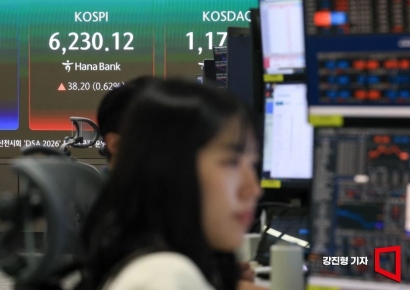
On April 16, the Seoul bond market closed weaker, showing an overall rise in interest rates. Despite the strong performance of the stock market, bond yields increased across the board.
On this day, the yield on three-year government bonds rose by 1.2 basis points compared to the previous trading day, reaching an annual rate of 3.340%. Long-term bonds also continued their upward trend. The yield on the 10-year bond ended the day at 3.675% per annum, up 2.0 basis points. The yields on the five-year and two-year bonds rose by 2.0 and 0.6 basis points, respectively, to 3.536% and 3.205% per annum.
Ultra-long-term bond yields also increased. The yield on the 20-year bond rose by 1.9 basis points to 3.640% per annum, while the yields on the 30-year and 50-year bonds climbed by 1.3 and 1.2 basis points, reaching 3.542% and 3.412% per annum, respectively.
On the supply and demand side, foreign investors' selling activity stood out. Foreign investors were net sellers of 1,674 contracts of three-year government bond futures and 5,096 contracts of ten-year government bond futures, contributing to upward pressure on yields.
Meanwhile, the stock market continued its strong momentum, with the KOSPI rising by about 2%. However, the bond market moved in the opposite direction. This is interpreted as a result of rising U.S. Treasury yields reflecting the increase in U.S. government bond yields despite the gains in the U.S. stock market the previous day. In particular, the yield on the U.S. 10-year Treasury approached the 4.3% level, continuing to exert upward pressure on global interest rates.
Hot Picks Today
 Goldman Sachs Raises Forecast to 220%: "KOSPI H...
- Popcorn Container Craze at Theaters Sparks Sell-Out Frenzy, Emerges as New Reven...
- "Soaking in the Ganges Will Heal You" Tragedy as 13-Year-Old Boy Dies After 12 H...
- "It Turns Out They Were After My Account" Shocked Reactions... "We're Watching Y...
- "Moms Touch Unruly Woman" Video Spreads... Assaulted Employee and Smashed Regist...
Additionally, the sharp rise in international oil prices due to the war in Iran also acted as a burden on the market. Investors are closely monitoring the potential ripple effects of rising oil prices on inflation.
© The Asia Business Daily(www.asiae.co.kr). All rights reserved.



!["They Said It Was 'Delicious' Milk... Is the 'List of Fake Milk Products in Korea' for Real? [Matjal X-File]"](https://cwcontent.asiae.co.kr/asiaresize/307/2023072413274517286_1690172865.jpg)