'Suckers? They Keep Buying Anyway'... 1 Trillion Won in Sales in Korea, 98% of Profits Remitted to Headquarters as Dividends
Record-Breaking Profits Lead "Erusha" to Substantially Expand Dividends
Erusha Sets New Sales Records with Multiple Price Hikes Last Year
Hermes Korea Posts Dividend Payout Ratio of 98%
Chanel Korea's Dividend Surges 50% Last Year

In front of the Louis Vuitton store at Lotte Department Store Avenuel on the afternoon of the 2nd
View original imageLast year, the three global luxury giants known as "EruSha" (Hermes, Louis Vuitton, and Chanel), which achieved record-breaking performance in Korea, significantly increased their dividend payouts. Despite concerns over high inflation and slowing consumption, their consistent strategy of raising prices amid strong luxury demand proved successful, resulting in the majority of profits earned in Korea being transferred to their headquarters.
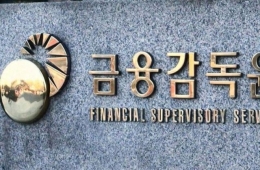
According to the Financial Supervisory Service's electronic disclosure system on April 20, Hermes Korea surpassed KRW 1 trillion in revenue for the first time last year, and its dividend payment also set a record high of KRW 235 billion. During this period, net profit reached KRW 240.4 billion, with a payout ratio of approximately 98%. Most of the profits earned were transferred as dividends. The company has steadily increased its dividend payment every year from KRW 86 billion in 2020 to 2.7 times that amount last year.

Louis Vuitton Korea also paid out KRW 282.2 billion in dividends last year from a net profit of KRW 389 billion, an increase of 30% compared to the previous year. The dividend payment at Louis Vuitton soared from KRW 50 billion in 2020 to KRW 156 billion the following year, and further increased to KRW 225.2 billion in 2022. In 2023, the company distributed KRW 380 billion as dividends—exceeding its net profit of KRW 217.7 billion. This period marked an intensive expansion of dividend payouts among global luxury brands as retained earnings accumulated amid a surge in revenge spending during the COVID-19 pandemic.
During this period, Chanel Korea paid out KRW 195 billion in dividends, the smallest among the three luxury giants, but its growth rate reached 50%. Chanel Korea's payout ratio was merely 38% in 2021, but it surged to 95% in the following year and then to 135% in 2023. The company slashed its dividends by about half in 2024, only to expand them again starting last year.
These three global luxury brands once again set record-breaking performances in the Korean market last year. Hermes Korea's sales surged by 16.7% year-on-year to reach KRW 1.125 trillion, exceeding KRW 1 trillion for the first time. Chanel Korea also recorded KRW 2.0126 trillion in sales, representing a roughly 9% increase from the previous year's KRW 1.8446 trillion. During the same period, Louis Vuitton Korea achieved KRW 1.8543 trillion in revenue, a 6% increase compared to KRW 1.7484 trillion in 2024.
Their profitability indicators were also notable. Last year, Louis Vuitton Korea posted KRW 525.6 billion in operating profit and an operating margin of 28.34%, the highest among the three "EruSha" brands. Hermes Korea followed with KRW 305.4 billion in operating profit and an operating margin of 27.15%. Chanel also reported KRW 335.8 billion in operating profit and an operating margin of 16.7%.

This stands in stark contrast to the global luxury market contraction caused by the economic slowdown in China, the largest luxury consumer nation. Hermes weathered the downturn, posting EUR 16 billion in revenue and EUR 6.6 billion in operating profit last year, growing 8.9% and 7%, respectively. However, LVMH, which owns Louis Vuitton, saw its revenue drop to EUR 80.8 billion, a 5% decrease, with net profit falling 13% to EUR 10.9 billion. Chanel has yet to release last year's performance, but in 2024, its revenue and operating profit each plummeted by 4.3% and 30% year-on-year.
Repeated price increases are cited as a major factor behind the record-high results of the three luxury brands in Korea. Last year, Hermes, Louis Vuitton, and Chanel raised prices on key popular items between two and five times. For example, the price of Chanel’s iconic "Chanel Classic Medium" bag rose from KRW 15.5 million in January 2025 to KRW 17.9 million currently, a nearly 15% increase over one year. This is attributed to the fact that luxury consumption in Korea has remained robust despite high inflation and sluggish consumption.
Some analysts point out that the Korean market, with its high purchasing power and strong brand loyalty, maintains demand even amid price hikes, securing high profit margins and establishing itself as a "cash cow" for global luxury brands. Indeed, LVMH Chief Financial Officer Cecile Cabanis has previously referred to Korea as an "important market."
Hot Picks Today
 Goldman Sachs Raises Forecast to 220%: "KOSPI H...
- Popcorn Container Craze at Theaters Sparks Sell-Out Frenzy, Emerges as New Reven...
- "Soaking in the Ganges Will Heal You" Tragedy as 13-Year-Old Boy Dies After 12 H...
- "It Turns Out They Were After My Account" Shocked Reactions... "We're Watching Y...
- "Moms Touch Unruly Woman" Video Spreads... Assaulted Employee and Smashed Regist...
A department store industry official commented, "Domestic department store performance is also being driven by luxury sales, so demand is not easily dampened despite price increases. With stable domestic demand and additional sales from foreign customers, there is a high possibility that this growth trend will continue for the time being."
© The Asia Business Daily(www.asiae.co.kr). All rights reserved.


!["They Said It Was 'Delicious' Milk... Is the 'List of Fake Milk Products in Korea' for Real? [Matjal X-File]"](https://cwcontent.asiae.co.kr/asiaresize/307/2023072413274517286_1690172865.jpg)