[Jung Inkyu's Trade-Off] No Freedom on the Imperialist Seas... Is There a 'Plan B' for Energy Sovereignty?
Korea Faces Isolation Amid Hormuz Blockade
Focusing National Capacity on Transitioning from Petrochemical to Future-Oriented Industries
The Starting Point of U.S. Global Hegemony
The 1944 Bretton Woods system played a pivotal role in the United States' rise as a global hegemonic power. This system is generally understood as a foundation for postwar international economic stability, established through the gold standard—a monetary system that linked the value of money to a fixed amount of gold, ensuring currency convertibility into gold—and the founding of the International Monetary Fund (IMF) and the International Bank for Reconstruction and Development (IBRD). However, underlying this was a more fundamental premise: the United States' strategic choice to guarantee "free trade" and "the security of maritime routes."
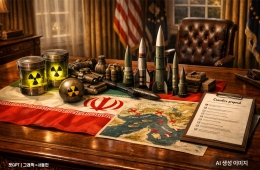
![[Jung Inkyu's Trade-Off] No Freedom on the Imperialist Seas... Is There a 'Plan B' for Energy Sovereignty?](http://www.asiae.co.kr/news/img_view.htm?img=2026030308144358445_1772493283.png)
Immediately after World War II, the United States possessed overwhelming industrial capacity, accounting for half of the world’s manufacturing output, along with naval power capable of controlling the world’s oceans. Within the Cold War framework, the U.S. proposed an implicit order to contain the Soviet Union and expand its alliances. That is, by joining the U.S.-led order, nations would be provided with secure maritime routes and guaranteed free trade. This was more than a mere promise of economic cooperation; it marked the starting point of a liberal international economic system based on maritime order.
This policy was far from mere idealism. During the Cold War, the U.S. needed to prove that the free market economy was superior to the communist planned economy, and for this, the economic prosperity of its allies was essential. The United States used its naval power to secure global maritime routes, which in turn enabled the economic prosperity of the Western world. The collapse of the former Soviet bloc, which struggled with economic hardship, proved the soundness of the American strategy.
The Era of Imperial Maritime Trade
Today, we take "freedom of navigation" on the high seas for granted as an international norm, but historically, the sea was never a free domain. During the age of imperialism, the oceans were ruled by the logic of power. Countries without naval strength could not protect their merchant ships, which meant that trade itself was impossible. Maritime trade at the time was hardly viable without warship escorts, and nations militarily dominated key routes and ports, blocking access to others.
Britain’s occupation of Gibraltar, the Suez Canal, and Singapore was not simply territorial expansion, but a strategic move to control the maritime routes linking India and Asia. Imperialist powers maintained an "exclusive economic system" that allowed only their own ships to enter their colonies’ ports, while foreign ships were often seized or sunk by their navies. The sea was essentially an extension of military power, and trade was a product of might and a tool for colonial exploitation.
The International Codification of Freedom of Navigation
The concept of "freedom of navigation" was shaped through a long history of conflict and debate. Since the 17th century’s advocacy for freedom of the seas, centuries of international confrontation and negotiation gradually established the sea as a public good. This trend was institutionalized by the 1982 United Nations Convention on the Law of the Sea (UNCLOS), which cemented key concepts of modern maritime order such as territorial waters, the high seas, international straits, innocent passage, and transit passage, effectively functioning as the "constitution of the sea."
Because international straits are essential routes for global trade, the smooth passage of the world takes precedence over the sovereignty of coastal states. If the high seas are a vast plaza belonging to no one, international straits are like public roads crossing the front yards of private homes. In other words, international straits are regarded as global economic public goods that outweigh the territorial rights of individual nations. The Strait of Hormuz is a prime example of such an international strait.
The international order established by the Bretton Woods system was not merely a financial and monetary regime, but a political and economic structure combined with maritime order. The United States used its naval power to make the oceans a "free space," upon which it built a free trade system. The operating principles of today's global economy, which we take for granted, are in fact constructed upon this balance of power and strategic decision-making.

On the morning of the 9th (Korean time), numerous oil tankers and cargo ships remain stranded around the Strait of Hormuz, as shown on the real-time vessel tracking website. MarineTraffic
View original imageThe Significance of the Strait of Hormuz Crisis
The current crisis in the Strait of Hormuz disrupts these very principles. This strait is a vital artery for global energy transportation and is often described as the lifeline of the world economy. With about 80% of global trade conducted by sea, the blockade of any particular strait is not merely a regional dispute but a matter that threatens the entire world economy.
Attempts to restrict passage or impose tolls in the Strait of Hormuz are regarded as violations of the right of transit passage under international law and can deal a severe blow to the global supply chain.
The U.S. declaration of a counter-blockade in response to Iran’s closure of the strait should be understood not as a simple regional conflict, but as an event that shakes the very foundation of the postwar international order. At the same time, it presents fundamental challenges for maritime-dependent countries like South Korea to diversify energy supply chains and transform industrial structures. In particular, such conflict is critical for "energy island" South Korea. Nearly all of our energy sources are imported, and every shipment arrives via maritime routes. If the Strait of Hormuz is blocked, oil tankers immediately come to a halt and the national economy faces a kind of arteriosclerosis. This is not simply a logistics crisis, but a matter of national survival. It is a stark reminder that the stability of maritime routes is our lifeline.
South Korea’s Strategic Response
Then, what should our survival strategy be? In the short term, we must join international efforts to defend freedom of navigation. We need to voice the necessity of maintaining maritime order based on international law, in line with our reliance on imported energy and our economic capabilities.

President Lee Jae-myung held a video summit on the freedom of navigation in the Strait of Hormuz, led by France and the United Kingdom, at the Blue House on the 17th. The meeting included leaders and representatives from over 50 countries, including South Korea, France, the United Kingdom, Germany, Italy, Canada, Australia, Iraq, and Singapore, who exchanged views on international efforts to ensure freedom of navigation in the Strait of Hormuz, the safety of sailors and protection of ships, and practical measures to guarantee navigation safety after the end of the war. Provided by the Blue House
View original imageIt is highly positive that President Lee Jae-myung attended the international summit on the freedom of navigation in the Strait of Hormuz on the 17th. The summit, led by the United Kingdom and France, brought together leaders from 50 countries both online and offline. Participating via video, President Lee stated, "We will make practical contributions to ensuring freedom of navigation."
However, what is even more important is a fundamental transformation. First, we must fundamentally recalibrate our "energy mix" by diversifying energy supplies and increasing the share of nuclear and renewable energy. Excessive dependence on particular regions or energy sources only serves as a shackle, making our entire economy hostage to external shocks. Second, we need to focus national capabilities on transforming our petrochemical-centered industrial structure into a future-oriented industry based on hydrogen and electricity. This goes beyond merely responding to fluctuations in oil prices; it is about leading a new industrial paradigm and establishing a "Plan B" for national survival.
As global supply chains are restructured and competition among major powers over maritime domains intensifies, freedom of the seas has become more strategically valuable than ever. The current Strait of Hormuz crisis offers an expensive lesson: freedom of navigation is not a given, and the ability to defend and utilize it will determine the future of South Korea as a maritime nation. It is time to seek a new survival strategy along threatened sea lanes.
Hot Picks Today
 "Six Months After 'Mom's Touch Troublesome Woma...
- Popcorn Container Craze at Theaters Sparks Sell-Out Frenzy, Emerges as New Reven...
- "With This Certificate, Even Those in Their 60s Can Get Hired and Earn 3.69 Mill...
- Kang Hoon-sik Urges Enhanced Effectiveness of Mandatory Employment for People wi...
- Female Game Caster Makes Bold Move After Criticism Over "Short Skirt" on Broadca...
![[Jung Inkyu's Trade-Off] No Freedom on the Imperialist Seas... Is There a 'Plan B' for Energy Sovereignty?](http://www.asiae.co.kr/news/img_view.htm?img=2025110308184291318_1773619406.jpg)
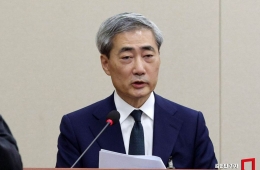
Jung In-kyo, Professor of International Trade at Inha University (Former Chief Negotiator for Trade)
© The Asia Business Daily(www.asiae.co.kr). All rights reserved.


!["They Said It Was 'Delicious' Milk... Is the 'List of Fake Milk Products in Korea' for Real? [Matjal X-File]"](https://cwcontent.asiae.co.kr/asiaresize/307/2023072413274517286_1690172865.jpg)