"Interest on Interest"... Why Individual Investors Are Flocking to Safe, High-Yield Government Bonds [Finance Barometer]
Four Consecutive Months of Sell-Outs,
New Three-Year Bonds Launched This Month
High Stability and Tax Benefits Drive Popularity
Investments Available Through Retirement Pension Accounts Starting in September
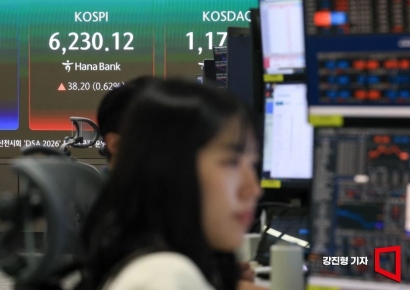
This year, retail government bonds have continued to sell out completely. Demand for retail government bonds is surging due to the stability guaranteed by the state and higher yields compared to bank deposits.
!["Interest on Interest"... Why Individual Investors Are Flocking to Safe, High-Yield Government Bonds [Finance Barometer]](http://www.asiae.co.kr/news/img_view.htm?img=2026041609592328352_1776301163.jpg)
According to the retail government bond subscription status on Mirae Asset Securities’ mobile trading system (MTS), M-STOCK, as of April 16, the subscription was oversubscribed again this month, maintaining the sell-out streak. In the April subscription, which closed the previous day, the competition rate for the 3-year coupon bond was 1.03:1, the 3-year compound interest bond was 1.46:1, the 5-year compound interest bond was 2.44:1, the 10-year compound interest bond was 1.67:1, and the 20-year compound interest bond was 1.89:1.
Mirae Asset Securities conducted the April subscription for retail government bonds from April 9 to April 15. Notably, a new 3-year bond was launched this month. With the addition of the 3-year coupon bond and the 3-year compound interest bond, in addition to the existing 5-year, 10-year, and 20-year compound interest bonds, a total of five products are now available. Compound interest bonds pay both principal and compound interest at maturity, while coupon bonds pay regular interest once a year during the holding period and, at maturity, pay the principal, the regular interest, and an additional interest amount.
The total issuance for this month is 210 billion won, which is an increase of 30 billion won compared to the previous month. The breakdown is as follows: 10 billion won for the 3-year coupon bond, 10 billion won for the 3-year compound interest bond, 50 billion won for the 5-year bond, 110 billion won for the 10-year bond, and 30 billion won for the 20-year bond.
Retail government bonds have been selling out each month since the beginning of the year. In January, approximately 335.1 billion won was subscribed for a target of 140 billion won, resulting in a competition rate of 2.39:1. In February, about 401.7 billion won was subscribed for a target of 170 billion won, with a competition rate of 2.36:1. In March, approximately 444.4 billion won was subscribed for a target of 180 billion won, resulting in a competition rate of 2.47:1. For the first quarter of this year, a total of 1.18 trillion won was subscribed for a total target of 490 billion won, with an overall competition rate of 2.41:1.
The main reasons for the surging demand for retail government bonds include their stability and higher yields compared to bank deposits. Retail government bonds are savings-type government bonds issued to individual investors, with the government guaranteeing payment, making them among the most stable bond products available.
The expansion of available products is also attracting more investors. With the lineup expanding from mainly 10-year and 20-year long-term bonds to include the 5-year bond and, as of this month, the 3-year bond, it has also attracted investors who were previously hesitant to commit their funds for longer periods.
The biggest appeal of retail government bonds is the annual compound interest structure. Unlike ordinary savings deposits, which use simple interest, these products employ compound interest, where interest is paid on both the principal and accumulated interest. If held to maturity, investors receive compound interest on both the base rate and additional rate. For the April issuance, the additional rates are: 0% for the 3-year bond, 0.1% for the 5-year bond, 1.05% for the 10-year bond, and 1.10% for the 20-year bond. If held to maturity, the pre-tax average annual yields are: 3.47% for the 3-year coupon bond, 3.59% for the 3-year compound interest bond, 4.14% for the 5-year bond, 5.89% for the 10-year bond, and 8.11% for the 20-year bond.
The government’s move to increase the additional rate for long-term bonds has also influenced investment demand. Last December, the government announced measures to invigorate retail government bonds, deciding to increase the additional rates for the 10-year and 20-year bonds from the previous 50-70 basis points (bp=0.01 percentage points) to at least 100 basis points.
There are also tax benefits. For subscription amounts up to 200 million won, interest income received at maturity is subject to separate taxation and not included in comprehensive income. However, the separate taxation benefit does not apply to the 3-year bond.
In the second half of the year, it will become possible to invest through retirement pension accounts. Starting in September this year, individuals will be able to invest in the 10-year and 20-year bonds through their retirement pension accounts (DC type and IRP).
Hot Picks Today
 Goldman Sachs Raises Forecast to 220%: "KOSPI H...
- Popcorn Container Craze at Theaters Sparks Sell-Out Frenzy, Emerges as New Reven...
- [Breaking] Magnitude 7.4 Earthquake Strikes Off Eastern Honshu, Tsunami Warning ...
- "It Turns Out They Were After My Account" Shocked Reactions... "We're Watching Y...
- "Moms Touch Unruly Woman" Video Spreads... Assaulted Employee and Smashed Regist...
There are some considerations when investing. Early redemption is possible after one year of holding, but in this case, only interest based on the base rate will be paid, and the additional rate, compound interest, and separate taxation will not apply. Retail government bonds can be purchased through subscriptions via the designated agency’s app or branches. The investment limit is up to 200 million won per person per year, with a minimum investment of 100,000 won.
© The Asia Business Daily(www.asiae.co.kr). All rights reserved.



!["They Said It Was 'Delicious' Milk... Is the 'List of Fake Milk Products in Korea' for Real? [Matjal X-File]"](https://cwcontent.asiae.co.kr/asiaresize/307/2023072413274517286_1690172865.jpg)