Prohibition of Hoarding Ethylene and Propylene... Expanded Oversight of Petrochemical Feedstocks
Infusion Bags and Packaging Containers to Be Immediately Regulated in Case of Supply Instability
Emergency Supply Adjustment Measures to Be Activated if Disruptions Persist

The government has expanded its oversight from naphtha to include basic petrochemical feedstocks such as ethylene and propylene, as well as intermediates and finished products, in an effort to stabilize the supply chain. The authorities plan to completely block hoarding and cornering practices, and in case of supply instability, they will activate emergency supply adjustment measures to prioritize the supply of materials to healthcare, daily necessities, and key industries.
The Ministry of Trade, Industry and Energy and the Ministry of Economy and Finance announced on April 14 that, starting from April 15 and continuing until June 30, the "Regulation on the Prohibition of Hoarding of Raw Materials for Petrochemical Products and Emergency Supply Adjustment" will be implemented. The core of this policy is to expand the scope of management from naphtha alone to the entire petrochemical sector.
Under this measure, seven basic feedstocks—ethylene, propylene, butadiene, benzene, toluene, xylene, and other feedstocks—are now subject to the prohibition of hoarding. Businesses are not allowed to hold inventories of these items in excess of 80% compared to the same period last year. Through this, the government aims to prevent distribution distortions at the basic material stage and to secure supply stability.
In addition, intermediate products such as polyethylene (PE) and polypropylene (PP), as well as finished goods like medical infusion bags and packaging containers manufactured from basic feedstocks, can also be immediately designated as regulated items in the event of supply instability. The relevant ministries plan to flexibly designate items through interdepartmental consultations to enable a swift response.
If supply disruptions persist despite the prohibition of hoarding, emergency supply adjustment measures will also be enacted. The government will directly control the volume of production, shipment, and sales, and will apply the principle of prioritizing supply to healthcare, daily necessities, national defense and security, as well as key industries such as semiconductors and automobiles. If companies incur losses during the supply adjustment process, some or all of those losses will be compensated in accordance with relevant laws and regulations.
Additionally, the Korea Customs Service will designate the regulated items as subject to additional taxes for delayed import declarations. If import declarations are not filed within 30 days after importation, an additional tax of up to 2% will be imposed. This is intended to prevent the concealment of goods or delays in distribution.
Hot Picks Today
 "Six Months After 'Mom's Touch Troublesome Woma...
- Popcorn Container Craze at Theaters Sparks Sell-Out Frenzy, Emerges as New Reven...
- "With This Certificate, Even Those in Their 60s Can Get Hired and Earn 3.69 Mill...
- When His Father Suddenly Collapsed Before His Eyes... 13-Year-Old Son Preserves ...
- Female Game Caster Makes Bold Move After Criticism Over "Short Skirt" on Broadca...
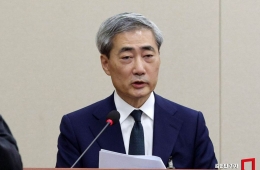
Kim Jeongkwan, Minister of Trade, Industry and Energy, stated, "This measure is intended to provide tighter control over the entire petrochemical supply chain, going beyond individual items such as naphtha," and added, "We will maximize supply by offering subsidies for naphtha import price differences and other measures."
© The Asia Business Daily(www.asiae.co.kr). All rights reserved.


!["They Said It Was 'Delicious' Milk... Is the 'List of Fake Milk Products in Korea' for Real? [Matjal X-File]"](https://cwcontent.asiae.co.kr/asiaresize/307/2023072413274517286_1690172865.jpg)