"Securities Firms' IB Shift from Real Estate PF to Corporate Finance, Now Exceeding 60% Share"
Average Corporate Finance Balance of Top 10 Securities Firms: 4.2 Trillion Won
Quality Risks Rise with Adventure Capital Expansion
Concerns Over Potential Latent Triggers
The investment banking (IB) operations of major securities firms, which were previously centered on real estate project financing (PF), are rapidly shifting toward a focus on corporate finance. The average corporate finance balance at Korea Investment & Securities and NH Investment & Securities has reached approximately 9 trillion won each, more than double the average of the top 10 major firms.
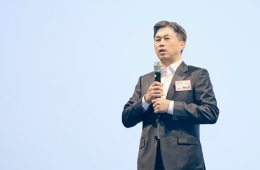
An Sujin, Senior Researcher at NICE Investors Service’s Financial Structured Finance Evaluation Division, stated this during an e-seminar held on the afternoon of April 14 under the theme "Corporate Finance: A New Chapter in Risk Management for Major Securities Firms' Investment Banking." Since 2022, as real estate PF has entered a period of adjustment, the proportion of corporate finance within the IB divisions of major securities firms has expanded to the 60% range. As of the end of last year, the scale of corporate finance at major securities firms, based on credit-risk-weighted exposures, was estimated at approximately 42 trillion won.

During the same period, the average corporate finance balance of major securities firms stood at 4.2 trillion won, equivalent to 54% of their equity capital. In absolute terms, Korea Investment & Securities (9.6 trillion won), NH Investment & Securities (8.8 trillion won), and KB Securities (5.5 trillion won) ranked at the top. In terms of the ratio to equity capital, NH Investment & Securities recorded the highest at 102%, followed by Korea Investment & Securities at 86%, KB Securities at 83%, and Shinhan Securities at 64%, all exceeding the average of major firms.
Researcher An explained, based on an analysis of the corporate finance competitiveness of these major securities firms, that Meritz Securities was classified as profit-oriented, Korea Investment & Securities, NH Investment & Securities, Kiwoom Securities, and KB Securities as balanced, and Samsung Securities, Mirae Asset Securities, Hana Securities, and Shinhan Securities as stability-oriented.

This expansion of corporate finance is the result of regulatory changes coinciding with policy direction. Financial authorities have imposed prudential regulations on real estate PF, such as limits on investment relative to equity capital, differentiated risk weights, and strengthened loan loss provisions, thereby restricting the expansion of securities firms’ PF businesses. Conversely, policies to expand corporate finance, such as additional approvals for short-term notes and integrated investment management accounts (IMA), are being actively advanced, and the growth of corporate finance is expected to accelerate further.
In particular, NICE Investors Service emphasized that investment in 'adventure capital'—venture capital for small and medium-sized enterprises and startups—is on the rise. Researcher An remarked, "The quality risks in corporate finance have increased due to the strengthening of adventure capital. Adventure capital typically has higher credit risk and greater volatility in profitability than traditional corporate finance." Seven comprehensive investment firms with approvals for short-term notes or IMAs are expected to supply 22.5 trillion won in adventure capital over the next three years. This figure corresponds to about 41% of their total capital.
As a result, maturity management of funding and operations, liquidity response capabilities, post-management, and early warning systems in the corporate finance sector have been identified as key risk factors. Corporate finance tends to have a prolonged collection period, which can lead to mismatches between funding and operation maturities. During periods of rising interest rates, higher interest expenses may significantly erode profitability, as demonstrated by the deficits recorded in short-term note accounts between 2022 and 2023.
Researcher An pointed out, "There is a need to assess the maturity management of funding and operations, as well as liquidity response capabilities, in light of rising interest rates and deteriorating refinancing conditions. Due to the gradual accumulation and discontinuous materialization of corporate finance risks, it is difficult to detect potential bad assets through prior screening. Therefore, the importance of post-management and early warning systems has grown."
This expansion of corporate finance presents new opportunities for securities firms but also brings accompanying risks. While diversification of profit portfolios, high profitability, and reduced dependence on other markets are positive factors, the increase in high-risk assets, the potential decrease in recovery rates, the limitations in risk quantification, and the burden of post-management have been cited as sources of concern.
Hot Picks Today
 "With This Certificate, Even Those in Their 60s...
- Popcorn Container Craze at Theaters Sparks Sell-Out Frenzy, Emerges as New Reven...
- Jung Wono Camp’s Lee Haesik: "Oh Sehoon Blames Others and the Past... Repeating...
- "Six Months After 'Mom's Touch Troublesome Woman' Incident... Franchise Says, 'S...
- "Quit Office Job to Earn Over 200 Million Won a Year"… Chinese Woman in Her 30s...
Researcher An concluded, "Corporate finance is an area with both growth potential and profitability, but if risks accumulate, it could become a latent trigger. Going forward, we plan to monitor the quantitative and qualitative risks, as well as the business and financial capabilities of individual securities firms in relation to corporate finance expansion, and reflect these in credit ratings to assess the balance between risk and capital accumulation."
© The Asia Business Daily(www.asiae.co.kr). All rights reserved.



!["They Said It Was 'Delicious' Milk... Is the 'List of Fake Milk Products in Korea' for Real? [Matjal X-File]"](https://cwcontent.asiae.co.kr/asiaresize/307/2023072413274517286_1690172865.jpg)