What Is More Frightening: Ghosts or Distrust? [Slate]
Director Lee Sangmin’s 'Salmokji'
Building the Horror of Lost Trust Through Stone Pagodas
Portraying Distrust That Sees Others as Potential Threats

The film "Salmokji" explores the anxiety of an era stripped of trust. By overlaying the modern observational tool of road view onto the eerie reservoir legends of Yesan, Chungcheongnam-do, it reveals how precarious the foundations of our reality truly are. At its core lies distrust—the inability to believe in the existence right beside us.
A mysterious figure appears on the road view screen, prompting PD Han Suin (Kim Hyeyoon) and her crew to head to Salmokji for a retake. There, at the closed reservoir, they encounter their missing senior, Woo Kyosik (Kim Junhan), and as a series of inexplicable events unfolds, chaos descends upon them.
Director Lee Sangmin rejects a narrative centered on simply fleeing from external threats. Instead, he places front and center the gradual transformation in the eyes of isolated colleagues and the confusion over whether what unfolds before them is real or hallucination. He focuses more on the emotional chill arising from ruptured relationships between characters than on the physical pressure of the space itself.
In this regard, road view serves as an excellent device to reinforce the film’s themes. While it records the world in two dimensions, it fails to capture the truth that lies beneath. Through this, Director Lee highlights the paradox of modern people who observe the world through digital devices yet fail to grasp the reality before their eyes. He projects the contemporary pathology of blindly trusting information beyond the screen while suspecting those right next to us onto the uncanny setting of Salmokji.

This directorial approach applies just as much to the audience. Although viewers watch events unfold through the camera lens, like the characters, they cannot discern what is fact and what is deception. The portrait of modern people lost amid information overload is mirrored in the protagonists trapped in the reservoir’s fog.
The film’s themes are also well-expressed through its symbols. The stone pagoda, in particular, functions as a structural device where sealing and liberation, sacrifice and salvation, are exchanged. The daughter of the elderly woman living near the entrance to Salmokji is a being who escaped only in form from her confinement. The scene in which the elderly woman knowingly accepts her daughter reveals how easily humans turn away from the truth in the face of desire.
Despite meticulous setup, the latter part of the film is less satisfying. The carefully constructed narrative of lost trust collapses under the weight of genre conventions. The unidentified figure is shown directly, and grotesque visual images are repeatedly displayed. This stands in stark contrast to the fear built up in the first half, where the truth remained elusive, removing the space for the audience’s imagination to fill in the gaps.

The process by which the characters begin to suspect each other also feels contrived. To convincingly portray the destruction of humanity in extreme circumstances, each character’s backstory needs to be solid. However, in "Salmokji," the characters tend to serve merely as tools reacting to fear. With little justification for their obsession with Salmokji despite the risks, the distrust and conflict fail to evoke empathy and instead cause fatigue.
Hot Picks Today
 "Even Luxury Cars Drive Off Without Paying"... ...
- "Only the Top 1% Winning Big in Stocks Smile... '300 Million Won Splurges' or '1...
- Applied Just for Skin Soothing...Study Finds It Suppresses Antibiotic Resistance
- "Is the Starting Salary Really 4 Million Won?"... Surprise as Navy Salary and Sa...
- “Nothing Left to Protect” as Japan Drops Its “Peace State” Banner... Lifts B...
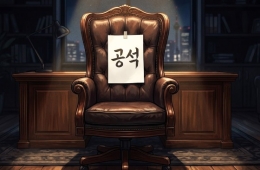
Even so, the film’s focus on the fractured trust systems of our society, using the framework of horror, is noteworthy. It breaks away from the typical Korean horror trope of vengeful ghosts to explore horror in a modern and philosophical way. What is more terrifying than the physical prison of the reservoir is the inner distrust that assumes others are potential perpetrators. Perhaps, in an era where faith in others has been stripped away, our entire age is one vast Salmokji.
© The Asia Business Daily(www.asiae.co.kr). All rights reserved.


![Is This a Boom or a Recession? Queues for Both Luxury and Bargain Goods [K-Shaped Consumption Era]](https://cwcontent.asiae.co.kr/asiaresize/307/2026042114133834494_1776748418.png)