Baek Hyeryun of the Democratic Party Proposes Bill to Support Energy-Vulnerable Groups Amid Ongoing Middle East Crisis
Expansion of Project Scope to Include Tailored Energy Supply
Legal Basis Established for Local Governments to Apply for Energy Access Vouchers Ex Officio
Baek Hyeryun, a member of the Democratic Party of Korea, announced on April 13 that she has sponsored the "Partial Amendment to the Energy Act," which would allow for the automatic application of energy usage vouchers for vulnerable energy consumers in order to improve the support system for these groups.
Baek, who serves on the National Assembly's Health and Welfare Committee, explained the background for proposing the bill by stating, "Recently, the instability in crude oil supply due to the Middle East crisis has caused a sharp rise in oil prices, leading to an increase in energy costs for all citizens."

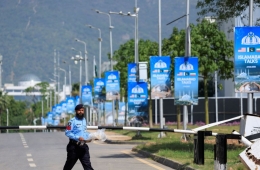
Baek Hyeryun, Special Committee Chair on Judicial Reform for the Democratic Party, is announcing the judicial reform proposal of the Special Committee on Judicial Reform at the National Assembly on October 20, 2025. Photo by Hyunmin Kim
View original imageAccording to an analysis by the National Assembly Futures Institute, more than 80% of the current energy welfare budget is concentrated on the short-term and consumptive energy voucher program, which provides bill subsidies.
In addition, the current "application-based" system, in which beneficiaries must apply themselves to receive energy vouchers, is difficult for the elderly and disabled households who have limited access to information and mobility issues.
This amendment aims to fundamentally improve the domestic energy welfare system in response to situations such as the Middle East crisis.
To this end, the scope of energy welfare projects will be expanded to include "customized energy supply and improvement of residential environments for energy-marginalized groups." The bill broadens the framework of energy welfare beyond simple bill subsidies to include projects that improve residential environments, such as enhancing the energy efficiency of aging homes.
Furthermore, the amendment establishes grounds for local government heads to apply for the issuance of energy usage vouchers by authority for individuals recognized as needing support.
This is intended to enable local governments to proactively identify eligible recipients, ensuring that those who do not know how to apply are not excluded from receiving benefits.
Hot Picks Today
 Applied Just for Skin Soothing...Study Finds It...
- "Only the Top 1% Winning Big in Stocks Smile... '300 Million Won Splurges' or '1...
- "Paying More Than the Listed Price?"... Academies Caught in the Act of Illicit T...
- "If You Pay, I'll Close the Case"... Former Korea Customs SJPO Who Took 145 Mill...
- "Please Launch It in Korea!" After All the Hype... This Coffee Finally Arrives i...
Baek emphasized, "While providing usage vouchers is important to support those most severely affected in times of crisis, it is also essential to implement fundamental measures, such as improving the energy efficiency of homes." She added, "The success of energy welfare depends on how thoroughly we identify and support energy-marginalized groups."
© The Asia Business Daily(www.asiae.co.kr). All rights reserved.



![Is This a Boom or a Recession? Queues for Both Luxury and Bargain Goods [K-Shaped Consumption Era]](https://cwcontent.asiae.co.kr/asiaresize/307/2026042114133834494_1776748418.png)