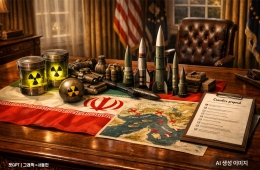
UNESCO World Heritage Sites Shattered: "Thousands of Years of History Bombed"
Cultural Heritage Caught in the Crossfire of US-Israel-Iran Conflict
UNESCO: "Hall of Mirrors at Golestan Palace Damaged"
Damage Also Reported in Israel and Lebanon... "Restoration May Take Years"
Concerns have been raised that Iran's cultural heritage sites have suffered severe damage due to large-scale airstrikes by the United States and Israel.

The collapsed Golestan Palace, a UNESCO World Heritage Site located in Iran. Photo by TASS Yonhap News Agency
View original imageAccording to Yonhap News Agency on April 11 (local time), which cited the UK daily Financial Times (FT), Iran’s Ministry of Cultural Heritage announced that “over 130 heritage sites across the country were either directly hit or damaged by the shockwaves from the bombings by the United States and Israel.”
In particular, significant damage has been reported at the Golestan Palace, a UNESCO World Heritage Site from the Qajar Dynasty (1789–1925), located in Tehran, the capital and largest city of Iran. UNESCO stated, “A powerful shockwave from airstrikes targeting the police station and courthouse in Arg Square near the palace struck the Golestan Palace,” adding, “Parts of the famed ‘Hall of Mirrors’ were shattered and stone structures collapsed.”
Historic sites in Isfahan—known as the “Jewel of the Middle East”—were also impacted. Airstrikes targeting the main mosque from the Safavid Dynasty (1501–1736) caused cracks in the murals and damage to the ornate ceilings of the 17th-century Chehel Sotoun Palace nearby. Additionally, sites including the Sa’dabad Palace complex in northern Tehran and relics surrounding the 3rd-century Falak-ol-Aflak Fortress in western Khorramabad have reportedly been damaged.
Hassan Partousi, Secretary-General of the Iranian National Commission for UNESCO, expressed his anger, stating, “Before and after the war, we provided the coordinates of heritage sites to the warring parties via UNESCO, but it was to no avail.” He continued, “Even though we installed protective markers for cultural sites that are visible from the air, they were ignored.”
In contrast, the Israeli military explained, “We are conducting operations in accordance with international law and have not intentionally targeted cultural heritage sites.” The U.S. Department of State also countered, “The airstrikes were aimed at military assets, not at cultural heritage sites.”

Previously, U.S. President Donald Trump issued a warning ahead of ceasefire negotiations with Iran, stating that he would “bomb Iran back to the Stone Age.” This statement has become a point of controversy. The FT reported, “President Trump’s words have fueled outrage among the Iranian public.” One Tehran citizen told the FT, “We had to watch as the history we have protected for thousands of years was recklessly bombed.”
Meanwhile, Iran’s retaliatory attacks have reportedly damaged Bauhaus structures within the ‘White City’—a UNESCO World Heritage Site in Tel Aviv, Israel. Additionally, world heritage sites in Lebanon, where Israel and Hezbollah are engaged in clashes, are now at risk of being damaged.
Hot Picks Today
 "With This Certificate, Even Those in Their 60s...
- Popcorn Container Craze at Theaters Sparks Sell-Out Frenzy, Emerges as New Reven...
- "Bear Destroyed My Rolls-Royce"... US Car Owners Who Claimed $200,000 Insurance ...
- Passed Through Just Before Hormuz Re-closure... 1 Million Barrels of Crude Oil H...
- "Quit Office Job to Earn Over 200 Million Won a Year"… Chinese Woman in Her 30s...
UNESCO announced, “We are implementing emergency measures to relocate artifacts from vulnerable sites to safe locations.” However, experts have pointed out, “It will take years to restore the sites that have already been damaged,” and warned that “even after restoration, the original value may never be fully recovered.”
© The Asia Business Daily(www.asiae.co.kr). All rights reserved.



!["They Said It Was 'Delicious' Milk... Is the 'List of Fake Milk Products in Korea' for Real? [Matjal X-File]"](https://cwcontent.asiae.co.kr/asiaresize/307/2023072413274517286_1690172865.jpg)