Lee Targets 'Corporate Non-Business' Real Estate... National Tax Service to Inspect 2,630 High-Priced Corporate Homes First
The government has begun inspecting non-business real estate holdings owned by companies. This move follows President Lee Jaemyung’s directive to review ways to increase the holding burden on companies’ non-business real estate. While the intention is to curb the practice of businesses accumulating real estate for speculative purposes, side effects such as the ambiguity between speculative assets held for capital gains and legitimate assets are expected to spark debate.
According to the National Tax Service as of April 12, 2026, there are about 1,600 corporations that own high-priced housing units exceeding the national housing size standard (exclusive area of 84 square meters) and with an officially assessed value of over 900 million won. The total number of such housing units is 2,630. The combined official value of these high-priced residences amounts to 5.4 trillion won, with an average official value of about 2 billion won per unit. There are over 100 units valued at more than 5 billion won, and even some ultra-high-priced apartments worth over 10 billion won.
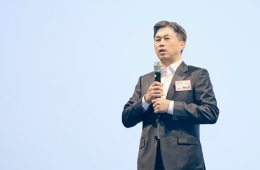
On the same day, National Tax Service Commissioner Lim Gwanghyun stated on Facebook, "We will initially inspect all 2,630 high-priced housing units held by corporations, and if necessary, expand the review to other units as well." He added, "For corporations found to possess non-business real estate with suspected tax evasion, we will convert the case into a tax investigation and impose additional taxes accordingly."

Aside from housing, the scale of non-business land owned by corporations is estimated indirectly through property tax data. According to the Local Tax Statistical Yearbook from the Ministry of the Interior and Safety, the total area of comprehensive land holdings—including non-business land owned by corporations—was about 2,126 square kilometers as of 2024, which is approximately 730 times the size of Yeouido.
The burden of the comprehensive real estate tax imposed on these holdings is also on the rise. According to the National Tax Service, the comprehensive real estate tax assessed on corporate land holdings increased by about 33% over four years—from 1.166 trillion won in 2020 to 1.5559 trillion won in 2024. The number of corporations subject to this tax also rose by about 30%, reaching 21,859.
Under current law, if land classified for comprehensive taxation is not used for business purposes within one to five years after acquisition, it is considered non-business land and taxed at the following rates: 1% for tax bases up to 1.5 billion won, 2% for those between 1.5 billion and 4.5 billion won, and 3% for amounts exceeding 4.5 billion won. The tax base is calculated by subtracting a deductible amount (500 million won) from the total official value and applying a fair market value ratio of 100%. In contrast, land recognized as used for business is classified separately, receives an 8 billion won deduction, and is taxed at a lower rate of 0.5–0.7%, resulting in a significantly lighter tax burden. Furthermore, when a corporation disposes of non-business real estate, an additional 10 percentage points are added to the standard corporate tax rate.
Earlier, on April 9, President Lee Jaemyung stated at the National Economic Advisory Council, "We must make it impossible to profit from speculative real estate operations," adding, "Let’s consider options that impose a substantial holding burden." Based on the president’s remarks, policy tools utilizing taxation are likely to be prioritized. Measures may include subdividing the tax brackets or base for comprehensive land holdings, or reducing the deductible amount to increase the burden.
The challenge, however, is that it is not easy to uniformly classify all comprehensively taxed land as non-business land. For example, land purchased for factory construction may be taxed as non-business if there are delays in financing or obtaining permits, or if there is surplus land exceeding building area standards, and these may be unfairly grouped together for taxation purposes.
Hot Picks Today
 "Six Months After 'Mom's Touch Troublesome Woma...
- Popcorn Container Craze at Theaters Sparks Sell-Out Frenzy, Emerges as New Reven...
- "With This Certificate, Even Those in Their 60s Can Get Hired and Earn 3.69 Mill...
- When His Father Suddenly Collapsed Before His Eyes... 13-Year-Old Son Preserves ...
- Female Game Caster Makes Bold Move After Criticism Over "Short Skirt" on Broadca...
Civic groups have argued for increased regulation, pointing out the rapid rise in real estate assets among major conglomerates. According to the Citizens' Coalition for Economic Justice’s 2024 report on "Concentration of Economic Power and Status of Real Estate Assets among the Top Five Chaebols," the book value of land assets held by Korea's five largest groups—Samsung, SK, Hyundai Motor, LG, and Lotte—increased by more than 47 trillion won over the 15 years from 2007 to 2022.
© The Asia Business Daily(www.asiae.co.kr). All rights reserved.



!["They Said It Was 'Delicious' Milk... Is the 'List of Fake Milk Products in Korea' for Real? [Matjal X-File]"](https://cwcontent.asiae.co.kr/asiaresize/307/2023072413274517286_1690172865.jpg)