Three Reasons for U.S.-Iran's Fruitless Talks: "Hormuz, Highly Enriched Uranium, Unfreezing of Funds"
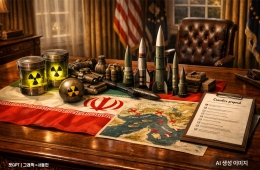
According to reports, the main points of contention in the U.S.-Iran end-of-war negotiations were the reopening of the Strait of Hormuz, the handling of highly enriched uranium, and the unfreezing of overseas funds.
On April 12, 2026 (local time), the New York Times (NYT) cited several Iranian officials familiar with the negotiations, reporting that the three key unresolved issues were: ▲ reopening the Strait of Hormuz ▲ the fate of roughly 400 kg of highly enriched uranium ▲ and the release of approximately 27 billion dollars in oil sale proceeds frozen overseas.

The United States demanded that Iran immediately reopen the Strait of Hormuz. However, Iranian officials who requested anonymity stated that Iran refused to relinquish control over the Strait of Hormuz and would only consider reopening it after a final peace agreement was signed.
Additionally, Iran called for compensation for damage caused by six weeks of airstrikes and requested the unfreezing of oil sale proceeds held in Iraq, Luxembourg, Bahrain, Japan, Qatar, Turkey, and Germany to fund reconstruction. The U.S. side reportedly rejected these requests.
Another major sticking point was U.S. President Donald Trump’s demand for Iran to hand over or sell its entire stockpile of highly enriched uranium. Iranian officials said that Iran made a counterproposal in response, but both sides failed to reach a compromise.
However, the NYT noted that even the fact that both sides engaged in talks, despite the outcome being no deal, was itself a sign of progress. Just six weeks earlier, the United States had assassinated Iran’s supreme leader Ayatollah Ali Khamenei, and the Iranian side had vowed revenge.
In fact, the meeting between U.S. chief negotiator Vice President JD Vance and Iran’s chief negotiator, Majlis (parliament) Speaker Mohammad Bagher Ghalibaf, was reportedly relatively calm. According to sources cited by the NYT, Vice President Vance and Speaker Ghalibaf shook hands and conducted the negotiations in an overall polite and composed atmosphere.
Vali Nasr, a professor at Johns Hopkins University and an expert on Iran, commented, “This summit represents the most serious and sustained direct dialogue between the United States and Iran, reflecting both sides’ determination to end the war,” adding, “The very fact that the talks did not break down and have lasted this long is clear evidence that there is positive momentum.”
Hot Picks Today
 "Six Months After 'Mom's Touch Troublesome Woma...
- Popcorn Container Craze at Theaters Sparks Sell-Out Frenzy, Emerges as New Reven...
- "With This Certificate, Even Those in Their 60s Can Get Hired and Earn 3.69 Mill...
- When His Father Suddenly Collapsed Before His Eyes... 13-Year-Old Son Preserves ...
- Female Game Caster Makes Bold Move After Criticism Over "Short Skirt" on Broadca...
Speaker Ghalibaf also posted on social media that day, “We have the necessary goodwill and determination, but because of our two previous experiences with war, there is a lack of trust in the other side,” adding, “The United States has come to understand our logic and principles, and now it is time for them to decide whether they can give us their trust.”
© The Asia Business Daily(www.asiae.co.kr). All rights reserved.



!["They Said It Was 'Delicious' Milk... Is the 'List of Fake Milk Products in Korea' for Real? [Matjal X-File]"](https://cwcontent.asiae.co.kr/asiaresize/307/2023072413274517286_1690172865.jpg)