Namhae County Marks 100 Days of Rural Basic Income... 'Virtuous Cycle Effect' in Local Economy Becomes Visible
Increase in Local Spending and Expansion of Community Activities
Pushing for System Enhancement
3.9 Billion Won Used Out of 5.1 Billion Distributed
Establishing a Virtuous Cycle in the Local Economy
More than two months have passed since the full-scale distribution of rural basic income in Namhae County, Gyeongsangnam-do, and the "virtuous cycle of the local economy" is becoming increasingly evident. This is reflected in the rise of local commercial district sales and the spread of community-level joint welfare activities.
In particular, as the basic income is rapidly being spent within the local area, it is directly contributing to recovering sales for small business owners and revitalizing the local economy. In some villages, the policy effect is being concretely realized through the creation of joint funds and the expansion of community-based cooperation activities.
Namhae County plans to closely monitor these trends on the ground while continuously proposing institutional improvements to the government, such as expanding the list of places where basic income can be used, in order to further enhance the policy's effectiveness.

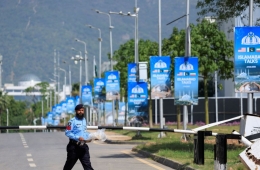
Namhae County, Rural Basic Income Pilot Project Regional Tour Meeting Group Photo
View original imageAdditionally, the county is carefully examining commercial districts that could be relatively excluded from the benefits, with the goal of ensuring that improvements to the system lead to tangible outcomes for all stakeholders.
On April 1, County Mayor Jang Chungnam visited the traditional market in Namhae-eup to communicate directly with merchants, assess the changing atmosphere since the implementation of basic income, and listen to the challenges and suggestions experienced on site.
During the visit, merchants expressed difficulties caused by the recent economic downturn due to rising oil prices. They also suggested that, in consideration of local characteristics, residents from rural areas should be allowed to use their basic income at the traditional market in the town center.
In response, County Mayor Jang Chungnam stated, "We have managed to overcome various difficulties and launch the rural basic income initiative here in Namhae County, and we are continuing institutional improvement efforts to establish this as a model case for South Korea."
He emphasized, "The success of the basic income policy depends on the revitalization of local commercial districts, including traditional markets, and that is also the government's general policy direction. I will do my utmost to ensure that residents' demands, such as expanding the list of eligible spending outlets, are fully realized."
On the same day, the Presidential Committee on Agricultural and Fisheries Affairs held a "Rural Basic Income Pilot Project Regional Tour Meeting" at the Namhae County Dream Sharing Center.
This meeting was organized to directly gather feedback on the pilot project and requests for improvement from local residents. More than 50 people from various walks of life—including village leaders, residents' self-governance councils, merchants' associations, and representatives of seniors and youth—participated and offered diverse opinions.
Cha Hongdo, Chairperson of the Rural Basic Income Special Committee, stated, "We selected Namhae County as a pilot site after comprehensively assessing the level of preparation and willingness to implement the program on the ground. For this system to expand nationwide, we must continue to improve it based on feedback from the field."
Participants at the meeting were divided into five groups for open discussion, followed by a general debate. The wide range of opinions collected will be relayed to the Office of the President and relevant ministries for consideration in future policy improvements.
Meanwhile, as of the end of February, it was found that out of the approximately 5.1 billion won in basic income distributed to Namhae County residents (150,000 won per person), 3.9 billion won, or 77%, has already been used.
Hot Picks Today
 Applied Just for Skin Soothing...Study Finds It...
- "Only the Top 1% Winning Big in Stocks Smile... '300 Million Won Splurges' or '1...
- "Paying More Than the Listed Price?"... Academies Caught in the Act of Illicit T...
- "If You Pay, I'll Close the Case"... Former Korea Customs SJPO Who Took 145 Mill...
- "Please Launch It in Korea!" After All the Hype... This Coffee Finally Arrives i...
Additionally, in accordance with the Ministry of Agriculture, Food and Rural Affairs' guidelines, on March 31, Namhae County completed an additional payment of 300,000 won per person, including retroactive payments for January.
© The Asia Business Daily(www.asiae.co.kr). All rights reserved.




![Is This a Boom or a Recession? Queues for Both Luxury and Bargain Goods [K-Shaped Consumption Era]](https://cwcontent.asiae.co.kr/asiaresize/307/2026042114133834494_1776748418.png)