National Security Office Launches Whole-of-Government Council to Strengthen Energy, Logistics, and Digital Infrastructure
Chaired by Oh Hyunju, Third Deputy Director of the National Security Office
The National Security Office announced on March 9 that the first meeting of the "Whole-of-Government Core Infrastructure Resilience Enhancement Council" was held, chaired by Oh Hyunju, the Third Deputy Director of the National Security Office.

This council was launched to assess the nation's response capabilities to complex crises affecting key infrastructure—such as energy, international shipping and logistics, and digital sectors—that form the backbone of the national economy and security. It also aims to strengthen inter-ministerial policy coordination. Participating ministries and agencies include the Ministry of Economy and Finance, the Ministry of Science and ICT, the Ministry of Foreign Affairs, the Ministry of Trade, Industry and Energy, the Ministry of Climate, Energy and Environment, the Ministry of Oceans and Fisheries, and the National Intelligence Service.
The National Security Office stated, "With various complex risks such as geopolitical conflicts, global supply chain disruptions, and cyber threats becoming constant, uncertainty surrounding global energy supplies and maritime transport is increasing due to the situation in the Middle East." The office emphasized, "This is a crucial time to strengthen the stable operation and resilience of core infrastructures."
Accordingly, in the energy sector, discussions were held on diversifying energy import sources and conducting safety inspections of oil and gas storage facilities, as well as timely response measures in times of crisis, to actively address the instability of oil and gas supply caused by developments in the Middle East. In addition, plans were set to expand the power infrastructure to meet surging electricity demand, and to enhance the power infrastructure ecosystem through the development of core facility technologies and the diversification of supply chains.
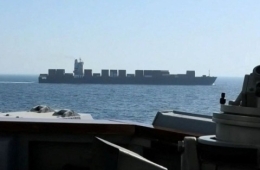
For the international shipping and logistics sector, measures were discussed to strengthen emergency response systems, such as real-time monitoring of the Middle East situation, as well as long-term strategies to strengthen the shipping infrastructure network by securing global logistics hubs and expanding fleets. In the digital infrastructure sector, measures were suggested to establish safety management systems for digital infrastructure—including subsea cables and data centers—to prevent public damage caused by communication and digital disruptions.
Oh Hyunju, the Third Deputy Director, stressed, "Energy, international shipping and logistics, and digital infrastructure are the arteries of our economy and security. Because threats to these areas can have profound effects on both economic and national security, we must reinforce a system based on prevention and resilience, rather than relying solely on post-incident responses."
Hot Picks Today
 Goldman Sachs Raises Forecast to 220%: "KOSPI H...
- Popcorn Container Craze at Theaters Sparks Sell-Out Frenzy, Emerges as New Reven...
- National Assembly Finance Committee Adopts Personnel Hearing Report for Bank of ...
- "It Turns Out They Were After My Account" Shocked Reactions... "We're Watching Y...
- "Moms Touch Unruly Woman" Video Spreads... Assaulted Employee and Smashed Regist...
The National Security Office plans to continuously strengthen the government's joint response system by using this council's launch as an opportunity to regularly monitor and prevent risks in each sector, diversify sources of supply, and ensure swift recovery in times of crisis, recognizing that the resilience of core infrastructure is the practical foundation supporting the country's economic security.
© The Asia Business Daily(www.asiae.co.kr). All rights reserved.



!["They Said It Was 'Delicious' Milk... Is the 'List of Fake Milk Products in Korea' for Real? [Matjal X-File]"](https://cwcontent.asiae.co.kr/asiaresize/307/2023072413274517286_1690172865.jpg)