[Why&Next] Volatile Markets Amid Middle East Crisis: Is a Rate Hike Back on the Table?... What to Watch at the Monetary Policy Meeting in Four Weeks
Whether the War Will Be Prolonged Is the Key Factor Shaping Monetary Policy Direction
Bank of Korea's Inflation Forecast of 2.2% Based on 'Annual Average Oil Price of USD 64'
Focus on How Much Prolonged High Oil Prices Will Raise This Assump
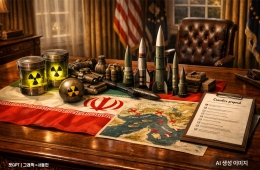
With the Middle East crisis sending international oil prices fluctuating around USD 100 per barrel, uncertainty has also clouded the outlook for the Bank of Korea's policy rate. During the Monetary Policy Board meeting in February, the Bank of Korea presented the so-called "K dot plot," a conditional rate forecast for the next six months by the board members, signaling an extended hold. This provided relief to the market, which had previously reflected concerns over a possible rate hike. However, as the priority of monetary policy—price stability—comes under threat due to the war involving the US, Israel, and Iran, the prospect of a rate increase within the year, which had subsided, is now resurfacing. The market views the potential prolongation of the war, which is the backdrop of the oil price surge, as a core factor that will determine the direction of monetary policy, and is closely monitoring real-time developments.
At the Monetary Policy Board meeting scheduled for April 10, the board members' three-month rate outlook will be presented qualitatively, divided into majority and minority opinions. This is because the newly introduced K dot plot, unveiled last month, is published only in February, May, August, and November, when economic forecasts are released. The market believes it is unlikely that the Bank of Korea will respond to the oil supply shock by raising rates in the near term. However, changes in the likelihood of a rate hike over the longer term, beyond three months, compared to February, are drawing close attention. These changes will need to be confirmed through remarks by Governor Lee Chang-yong on the day of the meeting.
![[Why&Next] Volatile Markets Amid Middle East Crisis: Is a Rate Hike Back on the Table?... What to Watch at the Monetary Policy Meeting in Four Weeks](http://www.asiae.co.kr/news/img_view.htm?img=2026031010541268717_1773107653.jpg)
Key Variable for Rates: Inflation... How Much Will the US-Iran War Shake the 'USD 64 per Barrel' Assumption?
The primary variable determining the policy rate is inflation. When inflation rises, there is upward pressure on rates. In its economic outlook announced on February 26, just before the US-Iran war, the Bank of Korea projected this year's consumer price inflation rate at 2.2 percent. This is close to the Bank of Korea’s inflation target (2.0 percent), assuming an average annual international oil price (Brent) of USD 64 per barrel. The Bank of Korea forecasted an average oil price of USD 65 per barrel in the first half of the year and USD 63 per barrel in the second half, stating, "Although international oil prices have risen significantly recently due to heightened military tensions between the US and Iran, a situation of oversupply is expected to persist throughout the year, gradually bringing prices down."
However, as the situation worsened with the US launching airstrikes against Iran and Iran subsequently blocking the Strait of Hormuz, international oil prices soared above USD 100 per barrel. As South Korea relies heavily on Middle Eastern oil imports that pass through the Strait of Hormuz, it is among the countries most affected by oil price spikes and subsequent inflation. Experts say the key issue is how long the current high oil prices—hovering around USD 100 per barrel—will persist. Depending on how much the level and duration of high oil prices raise the 'annual average USD 64 per barrel' assumption, the inflation forecast, which was expected to remain in the stable range (2.2 percent), could rise enough to prompt a policy rate hike.
Although market opinions remain divided on the likelihood of a prolonged war, concerns are growing that the worst-case scenario must be considered amid the surge in oil prices. Choi Ji-uk, a researcher at Korea Investment & Securities, said, "Assuming that the war ends within four to five weeks and oil prices gradually return to pre-war levels, the consumer inflation rate for this year would be 2.2 percent, as forecasted by the Bank of Korea." However, he added, "If the current oil price increase persists for one month before gradually falling, overall consumer inflation could rise by 0.22 to 0.36 percentage points over the next 12 months."
If the average annual international oil price rises to USD 100 per barrel and the situation worsens significantly, inflation could rise by as much as 1.1 percentage points. Hyundai Research Institute predicted that with an average international oil price of USD 100 per barrel, South Korea's economic growth rate would drop by 0.3 percentage points, while consumer price inflation would rise by 1.1 percentage points. Researcher Choi noted, "Since there is a possibility that the war could drag on, there is strong upward pressure on this year's consumer and core inflation forecasts. If the war lasts more than three months and oil prices continue to rise, the Bank of Korea may open the door to a policy rate hike."

Lee Chang-yong, Governor of the Bank of Korea, is striking the gavel at the Monetary Policy Board meeting held on the 26th of last month at the Bank of Korea headquarters in Jung-gu, Seoul. Photo by Joint Press Corps
View original imageAfter Threatening 1,500 Won, the Rate Falls Back to the 1,470 Won Range... "Monitoring Both Level and Volatility"
The developments in the exchange rate and real estate, as well as the overall unstable financial stability situation, are also key points of interest. On March 9, the weekly closing price of the won-dollar exchange rate (as of 3:30 p.m.) hit 1,495.5 won, the highest level since March 12, 2009 (1,496.5 won) during the global financial crisis.
The exchange rate, which had threatened the 1,500-won mark during intraday trading the previous day, opened at 1,470.8 won on March 10 at the Seoul foreign exchange market, down 24.7 won from the previous session's close, signaling a temporary pause. Although it sharply retreated and partly corrected the previous day's overshooting, the high exchange rate in the 1,470-won range persists. The significant gap between the exchange rate and fundamentals, as well as the high volatility with swings of tens of won within a single day, are factors that put upward pressure on the policy rate. This is because it raises import prices, which in turn leads to higher consumer inflation.
While the market does not expect an immediate rate hike due to the ongoing high exchange rate, it sees this as a major factor that could increase upward pressure on inflation and thus needs to be closely monitored. Kim Jina, a researcher at Eugene Investment & Securities, commented, "The Bank of Korea effectively switched to a rate hold stance starting from the January policy board meeting. In addition to the economy, there are many reasons—such as real estate and the exchange rate—why South Korea cannot easily lower its policy rate. Unless there is an 'economic recession,' it will be difficult to expect a rate cut." She explained that while the semiconductor cycle, led by AI and relatively immune to geopolitical risks, continues, financial instability due to exchange rate volatility and inflation concerns from high oil prices are raising the likelihood of a rate hike.

On the 9th, the KOSPI and the won-dollar exchange rate are displayed in the dealing room of the Hana Bank headquarters in Jung-gu, Seoul. Photo by Yonhap News Agency
View original imageMonetary Policy Board members are also expected to focus on financial stability for the time being. After the February policy meeting, Governor Lee stated at a press conference, "Even though the exchange rate came down to the 1,420-won level at that time, it's too early to be assured about stability," in response to a question about whether the exchange rate had stabilized. He emphasized, "For the board members, not only inflation but also financial stability will remain a major consideration for a considerable period."
Hot Picks Today
 "With This Certificate, Even Those in Their 60s...
- Popcorn Container Craze at Theaters Sparks Sell-Out Frenzy, Emerges as New Reven...
- "Bear Destroyed My Rolls-Royce"... US Car Owners Who Claimed $200,000 Insurance ...
- Passed Through Just Before Hormuz Re-closure... 1 Million Barrels of Crude Oil H...
- "Quit Office Job to Earn Over 200 Million Won a Year"… Chinese Woman in Her 30s...
Meanwhile, the possibility that the US Federal Reserve might delay its policy rate cuts could also be a burden. As major global investment banks become increasingly concerned about a weakening labor market due to poor employment data, they are still leaving the possibility of a rate cut in the first half of the year open. However, concerns about rising inflation stemming from Middle East risks are cited as factors that could push US rate cuts to the second half of the year. This could result in a delayed narrowing of the Korea-US interest rate gap, which currently stands at 1.25 percentage points, based on the upper end of the current US policy rate (3.75 percent).
© The Asia Business Daily(www.asiae.co.kr). All rights reserved.


!["They Said It Was 'Delicious' Milk... Is the 'List of Fake Milk Products in Korea' for Real? [Matjal X-File]"](https://cwcontent.asiae.co.kr/asiaresize/307/2023072413274517286_1690172865.jpg)