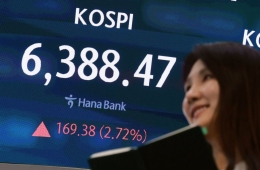
[Why&Next] Insurers Shift Bond Strategies... Long-Term Bond Purchases Continue Despite Weakened Demand for Ultra-Long-Terms
30-Year Treasury Yields Rise... Yield Inversion Between Ultra-Long-Term and Long-Term Bonds Narrows
Insurers' Buying Power Weakens Amid Market Shifts
Impact of Duration Regulations... "Focus on Long-Term Bond Investments Will Continue"
Recently, changes have emerged in the supply and demand dynamics of the bond market, as evidenced by the rise in 30-year Treasury bond yields. There are growing assessments that the insurance industry's buying power, which has been the main driver behind ultra-long-term bond purchases, has weakened compared to the past. As a result, shifts in insurers' bond investment strategies are becoming apparent. However, since the need for duration management to match the maturity structures of assets and liabilities remains, the prevailing view is that insurers will continue to focus on long-term bond investments for the time being. Authorities’ efforts to strengthen Asset-Liability Management (ALM) are cited as a factor reinforcing this trend.
![[Why&Next] Insurers Shift Bond Strategies... Long-Term Bond Purchases Continue Despite Weakened Demand for Ultra-Long-Terms](http://www.asiae.co.kr/news/img_view.htm?img=2026030511361962951_1772678179.jpg)
According to the financial industry on March 6, as of March 3, the 30-year Treasury bond yield closed at 3.57%, a sharp increase of 15 basis points (1bp = 0.01 percentage point) from the previous trading day. This is 2 basis points lower than the 10-year Treasury yield, which stood at 3.59% on the same day. The yield inversion between ultra-long-term and long-term bonds, which at the beginning of the year exceeded 17 basis points, has narrowed, with long-term yields getting closer to short-term yields.
In the market, analysts suggest that changes in the insurance industry's bond demand have influenced this ultra-long-term yield increase. The purchasing capacity of insurers, who have been the primary buyers of 30-year Treasury bonds, appears to have weakened compared to before. Recently, insurers are reported to have conveyed in discussions with government bond issuers that it would be difficult to significantly increase their purchases of ultra-long-term bonds.
In this context, the “money move” phenomenon, driven by a bullish stock market, is cited as one of the reasons for decreased demand for ultra-long-term bonds. The continued strength of the stock market since last year may have affected the inflow of long-term funds into insurers to some extent. In fact, as of the end of November last year, the total contract holdings of life insurers stood at approximately 2,311 trillion won, down 1.2% from the previous year's 2,339 trillion won.
However, some point out that the shift of funds to the stock market alone does not fully explain the decline in demand for ultra-long-term bonds. Kim Jaewoo, head of the research center at Samsung Securities, said, "While the reduction in insurers' ultra-long-term bond purchases is partly due to the strong stock market, a more fundamental reason appears to be the improvement in capital adequacy resulting from the overall rise in market interest rates." This is related to the structure in which the present value of insurers' liabilities decreases as interest rates rise, thereby improving solvency indicators such as the K-ICS (Korea Insurance Capital Standard) ratio. As capital adequacy grows, the need to actively purchase ultra-long-term bonds to match asset and liability maturities may be less pressing than before.
Kim further noted, "Insurers' continuous purchases of ultra-long-term bonds in the past led to a yield inversion, where long-term Treasury yields were lower than short-term yields, which in turn negatively affected the return on insurers’ investment assets. The asset management environment for insurers has generally become more favorable compared to the past."
Insurers Must Strengthen ALM Management... "Long-Term Bond Purchases Will Continue"
![[Why&Next] Insurers Shift Bond Strategies... Long-Term Bond Purchases Continue Despite Weakened Demand for Ultra-Long-Terms](http://www.asiae.co.kr/news/img_view.htm?img=2026030514273463198_1772688455.png)
Although demand for ultra-long-term government bonds has weakened somewhat, insurers' investment demand for long-term bonds overall remains intact. According to the Korea Financial Investment Association, from the beginning of the year through the end of last month, insurers’ net bond purchases totaled about 7.9 trillion won, marking an increase of over 70% compared to the same period last year. They are mainly investing in stable mid- to long-term bonds, such as government bonds, special bonds, and bank bonds.
Experts believe that since duration management is needed to align asset and liability maturities, insurers’ focus on long-term bond investments will continue for the time being. With the financial authorities having announced last year that they would introduce duration-related regulations starting this year, insurers are now in a position where they must further strengthen ALM. Duration is a measure of the sensitivity of asset and liability values to interest rate changes. The duration gap—the difference between asset duration and liability duration—closer to zero indicates a well-matched maturity structure between assets and liabilities. Conversely, a larger gap means greater volatility in net assets due to interest rate changes.
The Financial Services Commission plans to strengthen standards for interest rate risk management by insurers by newly incorporating the duration gap indicator into management evaluation criteria and applying lower ratings if the gap exceeds a certain threshold. In addition, they will add duration and duration gap to public disclosure items to foster an effective system of market discipline and oversight. The Commission stated, "This is a starting point for improving ALM management in the insurance industry and enhancing asset management returns," adding, "It will contribute to establishing a virtuous cycle between sound, trustworthy finance and productive finance."
In line with the regulators’ direction, insurers are continuing to pursue asset management strategies focused on long-term bonds to strengthen duration management. Hyundai Marine & Fire Insurance, which succeeded in narrowing its duration gap from minus 3 years in the first quarter of last year to minus 0.7 years at the end of the year, explained in a recent conference call, "This improvement in the capital ratio reflects not only the impact of rising market interest rates but also our efforts to increase the proportion of long-term bond investments on the asset side," adding, "We plan to further increase the share of long-term bonds this year to enhance the interest rate sensitivity of our assets and improve ALM."
Hot Picks Today
 "Even Luxury Cars Drive Off Without Paying"... ...
- "Only the Top 1% Winning Big in Stocks Smile... '300 Million Won Splurges' or '1...
- Applied Just for Skin Soothing...Study Finds It Suppresses Antibiotic Resistance
- "Is the Starting Salary Really 4 Million Won?"... Surprise as Navy Salary and Sa...
- “Nothing Left to Protect” as Japan Drops Its “Peace State” Banner... Lifts B...
An industry official commented, "Since the introduction of the new International Financial Reporting Standard (IFRS17), insurance liabilities are now valued at market prices, prompting insurers to gradually increase asset duration by purchasing both domestic and overseas long-term bonds. While there may be some short-term adjustments in investment strategies due to interest rate volatility, considering the introduction of duration regulations and the management of the basic capital K-ICS ratio, it is highly likely that insurers will maintain an ALM management strategy centered on long-term bonds."
© The Asia Business Daily(www.asiae.co.kr). All rights reserved.






![Is This a Boom or a Recession? Queues for Both Luxury and Bargain Goods [K-Shaped Consumption Era]](https://cwcontent.asiae.co.kr/asiaresize/307/2026042114133834494_1776748418.png)