"I Don't Want to Go to the U.S. Factory": Chilly Mood Leads LG Energy Solution Partners to Resort to "Ladder Game" for Assignments
Applications for U.S. Business Trips Begin Today
Industry Describes Atmosphere as "Chilly"
Factory Operation Faces Challenges
Safety Concerns at Construction Site
Employees of LG Energy Solution and its partner companies, who were released after being detained by U.S. immigration authorities in Georgia, returned to work on October 13 after completing a month of paid leave. However, with a growing reluctance to travel to the United States following the crackdown in Georgia early last month, it is expected to take considerable time before the construction of the factory returns to normal. Some partner companies that have been unable to find personnel willing to be dispatched to the U.S. factory are reportedly selecting candidates through a game of chance known as "Sadari Game."

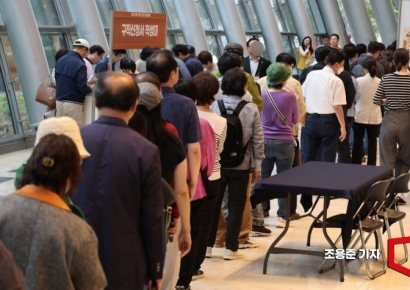
Korean workers who were arrested and detained by U.S. immigration authorities were released and returned home through Incheon International Airport on the afternoon of September 12, heading to their families. The released Koreans set foot on their homeland eight days after being arrested and detained at the Hyundai Motor Group-LG Energy Solution battery joint factory construction site in Ellabell, Georgia, U.S., on September 4. 2025.9.12 Photo by Kang Jinhyung
View original imageAccording to industry sources on October 13, LG Energy Solution began recruiting personnel for return to the U.S. site starting that day. The company is currently accepting applications from employees who recently returned to Korea, and plans to finalize the number of personnel and the dispatch schedule based on the applicant pool. A company representative stated, "Business trips to the U.S. will be carried out based on volunteers, and some employees have already departed for the local site," adding, "It is difficult to disclose the exact number of employees who have returned, including those who were previously detained."
Nevertheless, industry sentiment remains chilly. A factory equipment company in Changwon, Gyeongnam Province, reported that due to a lack of volunteers for U.S. business trips, it is resorting to the semi-compulsory "Sadari Game" to select personnel for dispatch. This company, a partner of LG Group, not only supplies equipment but also dispatches staff for installation and training. A company official said, "Since the incident in Georgia, not a single employee has volunteered to go to the U.S., and everyone is just watching each other."
This atmosphere contrasts with the agreement reached at the Korea-U.S. visa working group meeting on September 30. The two countries agreed to allow holders of short-term business (B-1) and Electronic System for Travel Authorization (ESTA) visas to install factory equipment, thereby creating conditions to resume factory construction. However, anxiety persists on site. Psychological aftereffects from the crackdown remain, and there is significant resentment among American workers toward companies using foreign equipment, raising the risk of being targeted again. Companies argue that even if the visa system is improved, unless local perceptions and monitoring systems change, it will be difficult to take such risks again.
As a result, it has become difficult to ensure the timely operation of the factory. Industry insiders believe that if skilled workers are not deployed in the initial phase, production delays will be inevitable. While the spread of automation has reduced the demand for regular workers, more skilled personnel are needed at the early stage to optimize equipment.
Concerns have also been raised about safety incidents at construction sites in the United States. The Wall Street Journal (WSJ) reported on October 12 (local time) that the HL-GA construction site had already gained a reputation for frequent safety accidents even before the large-scale crackdown last month, noting that three construction workers have died since the project began in 2022. The WSJ pointed out that even considering the project's large scale, with a total budget of $7.6 billion (approximately 10.9 trillion won), the frequency of accidents is unusually high.
Hot Picks Today
 "With This Certificate, Even Those in Their 60s...
- Popcorn Container Craze at Theaters Sparks Sell-Out Frenzy, Emerges as New Reven...
- When His Father Suddenly Collapsed Before His Eyes... 13-Year-Old Son Preserves ...
- Female Game Caster Makes Bold Move After Criticism Over "Short Skirt" on Broadca...
- "Quit Office Job to Earn Over 200 Million Won a Year"… Chinese Woman in Her 30s...
LG Energy Solution is proceeding cautiously with the redeployment of personnel, taking into account the local atmosphere and working to resolve visa issues. A company representative stated, "Once the visa issues are sorted out, employees will return to the site," adding, "We plan to sequentially assign employees who volunteered for U.S. deployment to the construction site." The company is organizing business trip teams primarily with B-1 visa holders, strengthening local legal services, supplementing entry support procedures, preparing and requiring employees to carry documentation proving the legitimacy of their work at all times, designating on-site response managers, and arranging support from external lawyers to improve its response system.
© The Asia Business Daily(www.asiae.co.kr). All rights reserved.


!["They Said It Was 'Delicious' Milk... Is the 'List of Fake Milk Products in Korea' for Real? [Matjal X-File]"](https://cwcontent.asiae.co.kr/asiaresize/307/2023072413274517286_1690172865.jpg)