[Hot Interview] Park Jung, Budget Committee Chair, "Budget Review Is Not a Black Box... Goal Is to Meet Legal Deadline"
Holding a Full Meeting on the 29th to Aim for Budget Approval
"Failing to Pass It in the Budget Committee and Passing It On Is Truly a Blind Spot"
Next Year's Budget Expected to Be Adjusted by 4-5 Trillion Won in the National Assembly
The legal deadline for processing next year's budget bill, which is the 2nd of next month, is fast approaching. The National Assembly's Budget and Accounts Committee is accelerating the review of the budget bill with the goal of processing it within the legal deadline. This year, in particular, the Budget and Accounts Subcommittee has started not only reduction reviews but also increase reviews, showing a different approach from previous years. Park Jeong, Chairman of the National Assembly Budget and Accounts Special Committee (affiliated with the Democratic Party of Korea), said, "We are aiming to process the budget bill by the 29th to meet the legal deadline."
-As the unofficial budget review body called Soso-wi (an informal consultative group within the Budget and Accounts Subcommittee, consisting only of the Budget and Accounts Committee chairman, ruling and opposition party floor leaders, the Vice Minister of Strategy and Finance, and senior expert members of the Budget and Accounts Committee) has been activated, there are renewed criticisms of the so-called 'black-box budget review.'.
▲The first goal set by the Budget and Accounts Committee while reviewing next year's budget is to finish within the deadline. (Although the Soso-wi review is called 'black-box,') the real black-box is when the Budget and Accounts Committee fails to complete the review in the Budget and Accounts Review Subcommittee or the plenary session, and the processing is done at the negotiation stage between floor leaders. The effort to process within the deadline is to solve this problem. Both party leaders and floor leaders have the will to adhere to the legal deadline.

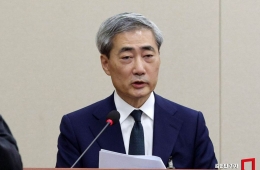
The National Assembly's Special Committee on Budget and Accounts has officially begun reviewing increases and decreases in the budget based on the preliminary review results from each standing committee. Chairman Park Jeong is presiding over the Budget and Accounts Subcommittee on the 18th. Photo by Kim Hyun-min
View original image-How far has the budget review progressed?
▲The reduction review has proceeded very quickly, and discussions on increases are underway. Budget increases are made equivalent to the amount reduced. If only reductions are made without increases, it is unclear what to do next, so members of the Budget and Accounts Subcommittee discuss what they consider important in the National Assembly and convey opinions on areas the government may have missed. The government can also set directions for increases based on these points. Reflecting these, the Budget and Accounts Committee can conduct its review. A framework showing how much reduction and increase are possible must be established for approval. In the Budget and Accounts Subcommittee, members are setting principles. For example, if there is a research and development (R&D) budget, they propose principles on how to handle it, reducing differences in positions. Reducing differences can lead to consensus.
-Since increases depend on the scale of reductions, how much reduction is expected?
▲We are currently holding Soso-wi meetings to discuss the scale of reductions. This will later be ratified by the Budget and Accounts Subcommittee. Although the overall reduction scale has not been fixed, it has usually been around 4 to 5 trillion won.
-Is it about the same this year?
▲Yes.
-Will the Budget and Accounts Committee process the budget bill tomorrow?
▲It must. After the 30th of this month, the Budget and Accounts Committee loses its review authority. Before that, a plenary session must be held to approve and forward the bill to the plenary session of the National Assembly. However, this requires not just talking but organizing materials, and after the government reviews and returns them, each party must examine them.
-This year, the review is also pushed to the last minute.
Hot Picks Today
 "Six Months After 'Mom's Touch Troublesome Woma...
- Popcorn Container Craze at Theaters Sparks Sell-Out Frenzy, Emerges as New Reven...
- "With This Certificate, Even Those in Their 60s Can Get Hired and Earn 3.69 Mill...
- Wild Boar Charges at People After Breaking Into Gapyeong Rest Area... Slams Into...
- Female Game Caster Makes Bold Move After Criticism Over "Short Skirt" on Broadca...
▲Above all, there is a lack of physical time. To review this vast amount, one to two or three months are needed. The Budget and Accounts Committee should be open year-round to review as needed. Currently, under the National Assembly Act, only budget approval is possible, but if the ministries work with standing committees from the budget formulation stage, and the Budget and Accounts Committee manages the total amount, it could be more efficient. This is not happening under the current system. Moreover, since the enactment of the National Assembly Innovation Act, the budget review must be completed within the deadline, but if the budget bill is delayed, the Budget and Accounts Committee cannot review it and must end without action.
© The Asia Business Daily(www.asiae.co.kr). All rights reserved.



!["They Said It Was 'Delicious' Milk... Is the 'List of Fake Milk Products in Korea' for Real? [Matjal X-File]"](https://cwcontent.asiae.co.kr/asiaresize/307/2023072413274517286_1690172865.jpg)