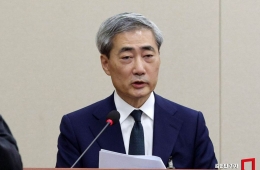
"The Speed of KOSDAQ Recovery Will Accelerate Due to the Abolition of the Financial Investment Tax"
On the 5th, IM Securities analyzed that abolishing the financial investment income tax (금투세) is expected to have effects such as resolving stock market differentiation, the return of domestic investors to the domestic stock market, and reducing the outflow of bond funds.
Seungjae Lee, a researcher at IM Securities, explained, "The possibility of resolving the differentiation phenomenon between KOSPI and KOSDAQ has increased," adding, "The domestic stock market had lower returns compared to other countries' stock markets amid the introduction of the financial investment income tax and undervaluation controversies."
He continued, "There was also a differentiation phenomenon between KOSPI and KOSDAQ, with KOSDAQ showing lower returns compared to KOSPI," and added, "Because KOSDAQ, which has a high proportion of individual investors, was expected to be more severely affected by the introduction of the financial investment income tax amid the related controversies."
He stated, "KOSDAQ trading volume recorded 4 trillion won on October 28, the lowest level this year, amid the outflow of domestic investor funds due to the financial investment income tax," and predicted, "As the financial investment income tax is abolished, funds will rapidly flow into KOSDAQ, which has a high proportion of individual investors." Furthermore, he expected, "The recovery speed of KOSDAQ compared to KOSPI could be steep," and "This will resolve the stock market differentiation phenomenon between KOSPI and KOSDAQ."
Researcher Lee analyzed, "As controversy over the implementation of the financial investment income tax arose, enthusiasm for investment in the domestic stock market cooled, and investors seeking to avoid tax burdens turned their attention to overseas stock markets," adding, "As of the 30th of last month, investor deposits stood at 49.5973 trillion won, the lowest since January 26."
He emphasized, "The fact that investor deposits have fallen to the lowest level of the year proves that domestic investors' evaluation of domestic stocks and other financial products is not favorable."
Lee explained, "The decrease in standby investment funds shows weakened investment sentiment," and noted, "Overseas investment by domestic individual investors is at an all-time high." He expressed hope, saying, "Abolishing the financial investment income tax will create an environment for domestic investors to return to the domestic stock market and promote the recovery of the domestic stock market."
Hot Picks Today
 "Six Months After 'Mom's Touch Troublesome Woma...
- Popcorn Container Craze at Theaters Sparks Sell-Out Frenzy, Emerges as New Reven...
- "With This Certificate, Even Those in Their 60s Can Get Hired and Earn 3.69 Mill...
- When His Father Suddenly Collapsed Before His Eyes... 13-Year-Old Son Preserves ...
- Female Game Caster Makes Bold Move After Criticism Over "Short Skirt" on Broadca...
When the financial investment income tax was implemented, bond investors had to pay 22% tax on capital gains after a basic deduction of 2.5 million won. The balance of individual investors' bonds has steadily increased since July 2022, when the individual's monthly net bond purchase amount began to exceed 3 trillion won. However, concerns over the introduction of the financial investment income tax led to a decrease in the balance. The proportion of individual investors' bond holdings, which was about 55 trillion won in June this year, recently decreased to 53.7 trillion won. Researcher Lee judged that with the decision not to introduce the financial investment income tax, individual investors' bond purchases are expected to become active again.
© The Asia Business Daily(www.asiae.co.kr). All rights reserved.



!["They Said It Was 'Delicious' Milk... Is the 'List of Fake Milk Products in Korea' for Real? [Matjal X-File]"](https://cwcontent.asiae.co.kr/asiaresize/307/2023072413274517286_1690172865.jpg)