"South Korea's Highest Inheritance Tax Rate 50%... Reduced Incentives for Major Shareholders to Participate in Value-Up"
Korea Institute of Public Finance 'Value-Up Tax Support Public Hearing'
"Inheritance, Corporate, and Dividend Tax Policies Must Change for Value-Up"

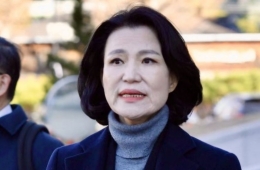
Professor Shim Chung-jin of the Department of Business Administration at Konkuk University advocated the need to change the inheritance tax base and adjust tax rates at the "Value-Up Tax Support Public Hearing" hosted by the Korea Institute of Public Finance on the afternoon of the 24th at the FKI Tower in Yeouido, Seoul. Photo by Cha Min-young
View original imageIt has been pointed out that the high inheritance tax rate of up to 50% hinders the succession of family businesses in Korean companies and causes the Korea discount (undervaluation of the Korean stock market) phenomenon. There is a call for mid- to long-term inheritance tax reform measures to prevent an increase in heirs giving up business succession.
"The higher the corporate value, the greater the burden... reducing size through physical division"
Professor Shim Chung-jin of the Department of Business Administration at Konkuk University stated this on the afternoon of the 24th at the FKI Tower in Yeouido, Seoul, during the "Value-Up Tax Support Public Hearing" hosted by the Korea Institute of Public Finance.
The meeting was organized to gather opinions from various sectors on tax support plans for inheritance, corporate, and dividend taxes to support value-up. Earlier, on May, Deputy Prime Minister and Minister of Strategy and Finance Choi Sang-mok said at a press briefing, "We are reviewing measures to ease the burden of business succession," and announced preparations for corporate tax credits and separate taxation of dividend income.
Professor Shim, who presented on inheritance tax, said, "The higher the corporate value, the greater the inheritance tax burden, which acts as a factor lowering corporate value," and advocated for changes in the inheritance tax base and adjustments to tax rates.
In fact, South Korea's highest inheritance tax rate is 50%. It is the second highest after Japan (55%), and the shares of the largest shareholder are subject to a 20% premium valuation. Professor Shim argues that considering the average inheritance tax rate of the OECD (26%), the rate should be lowered to 6?30%.
He also proposed raising the taxable base brackets threefold each, reflecting the nominal GDP increase of 255% from 2000, when the highest inheritance tax rate was adjusted, to last year. In 1999, the highest tax bracket was lowered from over 5 billion KRW to over 3 billion KRW, and the top rate was raised from 45% to 50%. According to Professor Shim's plan, a 6% tax rate would apply to taxable amounts up to 300 million KRW, and 30% would apply to amounts exceeding 9 billion KRW.
Professor Shim also proposed abolishing the premium valuation on the largest shareholder's shares. If the inheritance tax rate is adjusted to a maximum of 30%, he suggested reducing the premium from 20% to 5?10%.
He proposed expanding the target of the family business succession deduction from companies with sales of up to 500 billion KRW to those with up to 1 trillion KRW. Professor Shim explained, "As small and medium-sized enterprises grow into mid-sized and large companies, they repeatedly lower valuations through physical division," supporting this proposal.
He also advocated expanding the amount subject to low-rate gift tax during business succession to a maximum of 100 billion KRW. For example, if the decedent's management period is over 30 years, the current deduction limit is 60 billion KRW. He proposed expanding the deduction limit to 100 billion KRW if certain conditions are met, such as acquiring treasury shares above a certain amount or achieving a dividend payout ratio exceeding the recognized interest rate (currently 3.5%).
As a tax measure for value-up companies, he suggested introducing a stock valuation discount system. This plan would discount shares by up to 30% depending on the value enhancement period of companies meeting certain requirements. Professor Shim said, "It can be used as an incentive for corporate value-up and can reduce relative deprivation feelings," adding that "benefits can be given to family business succession companies and largest shareholders."
"Full tax credit on dividend amounts is necessary"
In the following session 2, presentations related to corporate and income tax systems were made. Hong Byung-jin, a senior researcher at the Korea Institute of Public Finance, emphasized the need for institutional, policy, and social linkage, stating, "The Korea discount phenomenon is caused by a complex combination of various factors, and individual approaches may take a long time to produce effects."
Specifically, Hong proposed full tax credits on dividend amounts and tax credits on increased dividends to enhance shareholder returns of corporations.
However, he pointed out limitations: full tax credits on dividend amounts may have a limited effect on increasing shareholder returns, and tax credits on increased dividends may have limited incentive effects for companies that have already paid high dividends.
He also suggested adding dividends to the items recognized for reinvestment under the Investment and Win-Win Cooperation Promotion Tax System (Tuwangse), raising the non-taxable rate of dividend income, and providing tax credits for investor relations (IR) and shareholder meeting expenses.
For tax support measures for shareholders, he proposed complete separate taxation of dividend income, low-rate separate taxation on all or increased dividend income of value-up company shareholders, excluding low-dividend companies' dividend income from gross-up, and low-rate separate taxation on dividend income for activist fund investors.
Hot Picks Today
 After Firing 1,000 $3.6 Million Missiles, U.S. ...
- "Grandma, This Isn't Made by AI, Right?"... Thought It Was Old-Fashioned, But No...
- 'Man in His 20s Who Raped 14-Year-Old and Produced Sexually Exploitative Materia...
- Believing in a 'Blue House Administrator' Business Card... Lost 600 Million Won ...
- "We Can't Hold Out Any Longer": Airlines Reduce Seats, Cut Routes, and Face Bank...
Considering South Korea's characteristic of a high proportion of controlling shareholders who are managers, Hong said that tax support for dividend income would have a more direct effect than tax support for corporations. However, he also pointed out that the scale of tax revenue reduction would be large and that it could undermine the vertical equity of taxation.
© The Asia Business Daily(www.asiae.co.kr). All rights reserved.