Monthly Rentals in Seoul Surpass 70%... Over 80% in Gwanak and Dongdaemun
Monthly Rental Share Hits 70.9% Last Month
Peaks at 71.9% in February, Highest Since Records Began
Tenants Shift to Monthly Rent as Jeonse Prices Rise and Listings Decrease

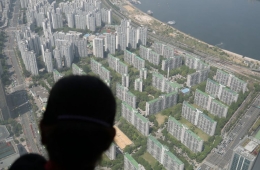
The proportion of monthly rental contracts among registered lease agreements in Seoul that received an official confirmation date has surpassed 70%. This trend is attributed to the continuous rise in Jeonse (lump-sum deposit lease) prices, leading more people to opt for monthly rent. While the share of monthly rentals was high in mid- to lower-tier districts, it remained relatively low in premium areas such as Gangnam-gu.
According to the Court Registration Information Plaza on the 25th, the share of monthly rental contracts among Seoul’s lease agreements with an official confirmation date last month was 70.9%. This is a 3.8 percentage point increase compared to 67.1% in the same period last year. The previous month saw an even higher rate at 71.9%, which is the highest figure recorded since statistics began in 2010.
Until 2022, the proportion of monthly rental contracts remained around 50%. The share gradually increased, entering the 60% range from February 2024. In January last year, it stood at 63% and continued to rise steadily, reaching 67.1% in December of the same year. This year, after recording 68.9% in January, the rate exceeded 70% for the first time last month.
The official confirmation date is the date on which a housing lease contract is verified by the court or local community center. It plays a crucial role in protecting tenants’ rights. If a property is subject to foreclosure or public auction, the tenant can receive their deposit (preferential repayment right) ahead of creditors only if their confirmation date precedes that of the creditors. Because this date is typically obtained immediately after a lease contract is signed, it serves as an important indicator of the number of lease agreements.
This year’s surge in the proportion of monthly rentals is interpreted as a result of rising Jeonse prices. As Jeonse deposits in Seoul continue to increase, more tenants are entering the monthly rent market. Additionally, a decrease in Jeonse listings due to government regulations has also played a role.
According to the Korea Real Estate Board’s weekly apartment price trends for the third week of April (as of the 20th), Jeonse prices for apartments in Seoul rose by 0.22% compared to the previous week. This is a 0.05 percentage point increase from the previous week, marking the highest rate of increase in 6 years and 4 months since the fourth week of December 2019, during the Moon Jae-in administration, when it was 0.23%.
Following the October 15 measures last year, the entire city of Seoul was designated as a land transaction permission zone, which introduced an obligation for actual residence when taking out mortgage loans. This made gap investment (buying property with Jeonse tenants in place) more difficult, restricting the supply of Jeonse rentals. Furthermore, starting from May 9, the resumption of heavy capital gains tax on multi-homeowners is expected to prompt them to sell properties they had previously offered for rent, further reducing the supply of Jeonse listings.
Hot Picks Today
!["We Can't Hold Out Any Longer": Airlines Reduce Seats, Cut Routes, and Face Bankruptcy Amid Crisis [Global Focus]](https://cwcontent.asiae.co.kr/asiaresize/93/2026042414573239703_1777010253.jpg) "We Can't Hold Out Any Longer": Airlines Reduce...
"We Can't Hold Out Any Longer": Airlines Reduce...
- "Guilt-Free Pleasure: A New Menu Sells Every 4 Seconds With Great Taste and No W...
- "This Has Never Happened to Me in Korea"... Gwangjang Market Stall That Charged ...
- "Never Hike Alone as a Woman" "Even Two Are at Risk"... Growing Fear of Crime on...
- "Seniors Take Over the Disco Festival: 'Only 50 and Above Allowed' [Mwonil Issyu...
By district, the share of monthly rentals was highest in Gwanak-gu, exceeding 85%, while it was lower in premium areas such as the three Gangnam districts and Yongsan-gu. Specifically, Gwanak-gu had the highest proportion at 86.7%, followed by Dongdaemun-gu at 80.3%. Jongno-gu also exceeded the Seoul average at 79.5%, with Gwangjin-gu at 76.1%, Gangbuk-gu at 75.8%, and Geumcheon-gu at 74.3%. Gangnam-gu recorded a lower rate than the Seoul average at 67.8%, Songpa-gu at 64.8%, and Seocho-gu at 61.6%. Among all districts, Yongsan-gu had the lowest proportion of monthly rentals at 55.3%.
© The Asia Business Daily(www.asiae.co.kr). All rights reserved.