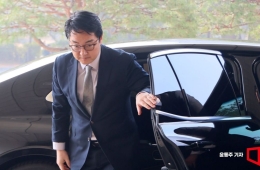
Believing in a 'Blue House Administrator' Business Card... Lost 600 Million Won Over 8 Years
Created Fake Business Cards to Deceive and Defraud
Pretended Connections in Politics, Business, and Law Circles to Carry Out Fraud
A man in his 70s who impersonated a Blue House administrator and deceived an acquaintance by promising to quash a prosecution investigation has been sentenced to prison in the second trial as well.

On April 25, the Criminal Division 1 of the Jeonju Panel at the Gwangju High Court (Presiding Judge Jeong Moonkyung) announced that it had dismissed both the prosecutor's and the defendant's appeals in the appellate trial of Mr. A (70), who was indicted for violating the Act on the Aggravated Punishment, etc. of Specific Economic Crimes (fraud), as well as the Attorney-at-Law Act. The court upheld the original sentence of four years in prison and the confiscation of 585 million won.
Mr. A was accused of defrauding businessman Mr. B of approximately 665 million won over 128 occasions between 2015 and 2023 in exchange for handling incidents.
Mr. A's fraudulent scheme began in October 2015. He visited Mr. B's company in Gunsan, North Jeolla Province, and said, "I am an administrator at the Blue House Office of Political Affairs. I can resolve the prosecution investigation you are facing," and added, "I need to greet the Senior Presidential Secretary for Civil Affairs, who has the authority over personnel in the prosecution, so give me 20 million won first." Mr. A even brought a fake business card labeled "Blue House Administrator" when he visited Mr. B. At the time, Mr. B was embroiled in a lawsuit and accepted Mr. A's proposal, transferring the money that same day.
Mr. A was neither a Blue House administrator nor had he ever met the Senior Presidential Secretary for Civil Affairs. Mr. B's case proceeded as per the normal legal process and eventually went to court. Nevertheless, Mr. A continued his fraudulent activities. He told Mr. B, "I met with the prosecutor in charge and lowered the sentence recommendation for you, so you will receive a suspended sentence," but then added, "However, it seems we also need to greet the judge," demanding more money for entertainment expenses.
Afterward, Mr. A continued to extort large sums under the pretense of helping Mr. B, who was facing financial difficulties, by claiming he could introduce him to officials from government agencies such as the Financial Supervisory Service, National Pension Service, and National Tax Service, as well as executives of major corporations. He demanded money under the guise of socializing expenses. During this process, Mr. A also deceived Mr. B by claiming that his company would be able to participate in major projects such as operating the Gunsan shipyard and Saemangeum renewable energy – projects that were long-standing wishes in the Gunsan region. Hoping to secure business interests and receive some benefits, Mr. B continued to send money to Mr. A.
Over eight years, more than 600 million won was exchanged as bribes and entertainment expenses. However, not a single promise made by Mr. A was fulfilled. Mr. A used the money he took from Mr. B for personal use, such as transferring it to family or acquaintances or for credit card payments.
The first-instance court stated, "Given the defendant's method, duration, and frequency of the crime, the nature of the offense is extremely poor. Furthermore, the defendant continues to deny the crime and shows no remorse, which calls for a severe punishment," sentencing Mr. A to four years in prison. Both Mr. A and the prosecutor appealed, citing unfair sentencing.
Hot Picks Today
 After Firing 1,000 $3.6 Million Missiles, U.S. ...
- "We Can't Hold Out Any Longer": Airlines Reduce Seats, Cut Routes, and Face Bank...
- "Be Quiet, Pig": Jimmy Kimmel Live! Wins 'Broadcasting Pulitzer' After Sharp Sat...
- "Stabbing Pain" Should Not Be Ignored... This Disease Linked to Obesity Injectio...
- "My Wife Is 9 Years Older Than My Mother": 20s Student Marries 60s Teacher, Prom...
The appellate court stated, "The defendant not only caused financial harm to the victim but also pursued personal gain to the extent of severely undermining public trust in the fairness of official duties in the public sector. Although the defendant's wife agreed to pay 100 million won to the victim, no actual restitution has been made so far. Considering these factors, the original sentence cannot be seen as exceeding the reasonable scope of judicial discretion and is not unjust," explaining the reason for dismissing the appeals.
© The Asia Business Daily(www.asiae.co.kr). All rights reserved.