[Book Sip] 11 Years Caring for Mother’s Illness... "It Was Conscience Over Sincerity"
This is an autobiographical essay that realistically recounts the experience of caring for a mother suffering from a rare disease for 11 years. It coldly confronts the human conditions of aging and illness, caregiving as essential labor, and the death that lies at the end. Through this, the author aims to provide useful help and comfort to those who will someday be both caregivers and care recipients. On the other hand, it also faces uncomfortable truths. The author says, “I played the role of a good daughter,” but that was more “conscience” than “sincerity,” and caring for the mother was a “harsh duty.” The author, Lynn Tillman, struggled and was confused between the ‘conscience’ that compelled her to care for her mother and the ‘desire’ to maintain her own life. One of the keywords in the subtitle, ‘ambivalence,’ does not merely mean the mixed feelings of love and hate toward the mother but reveals the indescribable emotional chaos experienced during the caregiving process. The author’s words, “It is impossible to do this perfectly and properly,” offer great comfort to those currently engaged in caregiving.
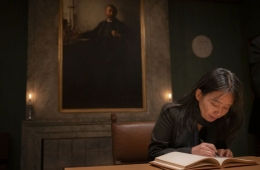
![[Book Sip] 11 Years Caring for Mother’s Illness... "It Was Conscience Over Sincerity"](http://www.asiae.co.kr/news/img_view.htm?img=2023102306473224075_1698011253.jpg)
Then you scream for help. You attract attention. When you see someone suffering from pain, all the rules of dignity break down. - p.79
Older patients are especially regarded in the medical field as hopeless burdens. - p.104
I played the role of a good daughter, but my sincerity was not in it; instead, my conscience was. - p.130
I sat my mother on the toilet, and to borrow my mother’s expression, I wiped her bottom. Washing her genitals, wiping under her breasts, touching her chest was an act that defied blood ties and unspoken order. - p.142
My mother told me she wanted to die. She often asked me, why am I still alive? Each time, instead of comforting her, I said this: When your time comes, it will happen. Your body is just not ready yet, I’m sorry. - p.168~169
There is nothing more painful than watching someone you love or at least feel compassion for suffer. - p.169
The outward sign, the sign that death is near, is that the toes curl inward. As if grasping something. - p.184
The sound a person makes when dying from the throat is caused by saliva pooling in the mouth because it no longer passes through the throat. This is because swallowing stops when dying. - p.185
As my mother’s mobility declined, the world of the disabled became vividly apparent beyond mere existence. - p.226
Hot Picks Today
!["Rather Than Endure a 1.5 Million KRW Stipend, I'd Rather Earn 500 Million in the U.S." Top Talent from SNU and KAIST Are Leaving [Scientists Are Disappearing] ①](https://cwcontent.asiae.co.kr/asiaresize/93/2026051914165468840_1779167814.png) "Rather Than Endure a 1.5 Million KRW Stipend, I'd Rather Earn 500 Million in the U.S." Top Talent from SNU and KAIST Are Leaving [Scientists Are Disappearing] ①
"Rather Than Endure a 1.5 Million KRW Stipend, I'd Rather Earn 500 Million in the U.S." Top Talent from SNU and KAIST Are Leaving [Scientists Are Disappearing] ①
- "No Cure Available, Spread Accelerates... Already 105 Dead, American Infected"
- Brilliant Korean Technology Flows Overseas... Subsidies Granted, but "No Product Launch Allowed"
- "Reporters Who First Revealed Jo Jinwoong's Juvenile Offense History Cleared of Juvenile Act Violation"
- Instead of a National Assembly Profile, Now a 'Carpenter'... Ryu Hojung Says "I Couldn't Do a Body Profile Shoot Twice"
Caring for Mother | Written by Lynn Tillman | Translated by Bang Jin-i | Dolbegae | 263 pages | 16,800 KRW
© The Asia Business Daily(www.asiae.co.kr). All rights reserved.


![Cheaper Than Candy, Yet Impossible to Find... Fears of a 'Pediatric Medical Crisis' as Pharmaceutical Companies Halt Production [Why&Next]](https://cwcontent.asiae.co.kr/asiaresize/307/2026051910065268365_1779152813.jpg)



