

The flagship models, the Seerion 7 and Ato 3, are rapidly expanding their consumer base by leveraging a price gap of several million won to up to 10 million won compared to domestic electric vehicles in the same class. Additionally, the entry of latecomers such as Geely Automobile Group's Zeekr into the Korean market is continuing, accelerating the territorial expansion of Chinese cars.
[Shaken K-Automotive Industry]
Although the number of registered electric vehicles in Korea has surpassed 1 million, the main players in the market are changing.
In the first quarter of this year, the best-selling electric vehicle was the Tesla Model Y, and BYD, the global No. 1, surpassed a cumulative sales total of 10,000 units just one year after entering the market, quickly establishing its presence. With the offensive from American and Chinese brands, Korean automakers are losing their dominance even in their home market.
At the root of this shift lies a policy gap.
The United States protects its domestic industry with the Inflation Reduction Act (IRA), while Japan uses the Strategic Fields Promotion Tax System to provide robust support. China also offers comprehensive support for its electric vehicle industry through subsidies and tax benefits. In contrast, even companies that manufacture vehicles domestically in Korea are unable to access meaningful support. As a potential solution, the "Domestic Production Promotion Tax System" is being discussed.
According to an analysis by the Korea Institute for Industrial Economics & Trade on May 19, the market share of Chinese-made electric vehicles in Korea was only 1.1% in 2021, but it soared to 33.1% last year. During the same period, the share of Korean-made electric vehicles fell from 74.2% to 57.9%, a drop of 16.3 percentage points. The overall share of imported vehicles also expanded significantly from 25.8% to 42.1%.
What is even more concerning is that not only Chinese brands, but also foreign companies with factories in China, are rapidly gaining ground in the Korean market. The most notable example is Tesla, which ranks No. 1 in imported car sales in Korea.
The Tesla Model Y and Model 3, produced at the company's Shanghai factory in China, sold nearly 60,000 units in Korea last year alone. In effect, "Made in China" electric vehicles now top the list of imported car sales. Given that the Chinese industry has positioned eco-friendly vehicles as a core export engine, the aggressive push targeting the Korean market is only expected to intensify.
BYD's remarkable growth is seen as just the beginning. Despite lingering doubts about Chinese brands, BYD sold 6,107 vehicles last year, entering the top 10 in the imported car market. In just January through April of this year, BYD sold 5,991 units, jumping to fourth place—achieving last year's annual results in just four months.
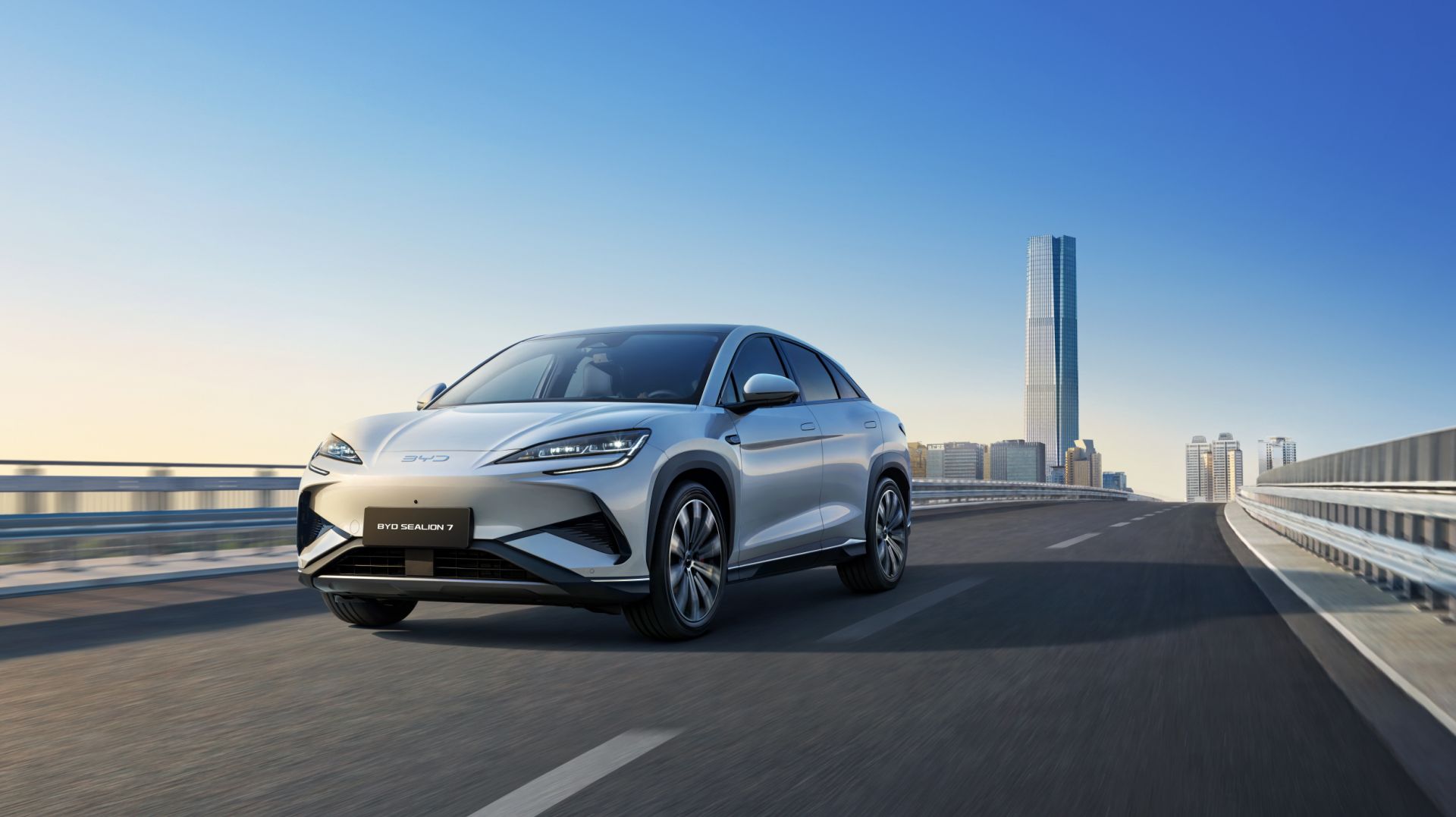
The core driver of the rise of Chinese cars is their unmatched cost competitiveness. BYD has penetrated the market by lowering prices to the point that its electric vehicles can be directly compared in price to domestic internal combustion engine vehicles in the same class. This is the result of battery production in-house, a vertically integrated component supply chain, and all-around support from the Chinese government. China provides not only purchase subsidies for electric vehicles but also research and development (R&D) tax credits, support for production infrastructure such as electricity and land, and even direct government backing for the supply of critical minerals. This delivers a tremendous cost advantage to domestic manufacturers.
In contrast, Korea remains focused on demand-side policies such as purchase subsidies, lacking institutional mechanisms that directly support companies building factories and manufacturing in-country. This stands in stark contrast to the United States, which offers companies the Advanced Manufacturing Production Credit (AMPC), and Japan, which supports domestic production of electric vehicles and semiconductors for 10 years through the Strategic Fields Promotion Tax System.
There is growing consensus that industrial policy should shift beyond simply expanding subsidies, to provide practical incentives to companies that manufacture in Korea and create domestic jobs. An industry official said, "Korea also needs to actively consider providing sufficient support within the legal boundaries that do not trigger trade disputes."
Lee Hoguen, Professor at Daedeok University’s Department of Future Automotive Engineering, said, "The cost gap between Chinese-made parts and those produced by the domestic components industry is so large that, in terms of cost-effectiveness (performance relative to price), meaningful competition is virtually impossible. If the Domestic Production Promotion Tax System can lower the price of domestically produced cars exported overseas, rather than simply fattening the profits of large corporations, the entire industry ecosystem could benefit."
Lee Hanggu, Senior Research Fellow at the Korea Automotive Technology Institute, advised, "Since the global automotive market is shifting to electric and future vehicles, providing tax credits for investments that convert existing facilities to future vehicle production could help the entire automotive industry."
-

Reporter Choi Youngchan elach1@asiae.co.kr
-
Edit Kim Hyunhee faith100@asiae.co.kr
© The Asia Business Daily(www.asiae.co.kr). All rights reserved.
!['WHO Declares International Public Health Emergency' Why the Untreatable 'Variant Ebola' Is More Deadly Than COVID-19 [Reading Science]](https://cwcontent.asiae.co.kr/asiaresize/323/2026052110164072055_1779326201.png)
!["Please Help Us": How Much Do Those Bowing 90 Degrees These Days Actually Earn? [Data Pick]](https://cwcontent.asiae.co.kr/asiaresize/323/2026052010120870131_1779239528.png)