Pancreatic Cancer in Patients Over 80, Surgery Abandoned? ... Survival Rates Are Similar
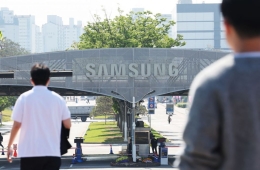
Samsung Seoul Hospital Research Results
Trend Overcoming Age Limits for Pancreatic Cancer
No Difference in Postoperative Complications and Survival Rates
A study has shown that pancreatic cancer patients aged 80 and over do not need to forgo surgery simply because of their advanced age.
On the 10th, according to the medical community, a research team led by Professor Shin Sang-hyun and Clinical Lecturer Jung Hye-jung from the Department of Hepatobiliary and Pancreatic Surgery at Samsung Medical Center analyzed 666 patients who underwent pancreaticoduodenectomy for cancer located in the head of the pancreas from January 2009 to December 2018. Their research paper was recently published in an Australian surgical journal.

Pancreatic cancer is a very difficult cancer to treat, and among them, pancreaticoduodenectomy, which treats cancer occurring in the head of the pancreas, is considered one of the most complex surgeries in the field of surgery. This is because it requires the complex resection of the pancreas along with the duodenum, bile duct, and gallbladder, and the reconstruction process is also complicated.
The probability of complications after surgery can reach up to 40%, and if leakage (fistula) occurs in the pancreas or blood vessels rupture during surgery, it is a life-threatening operation. Accordingly, it is known that the burden on medical staff is very high.
However, the benefits of surgery are clear. Overseas studies have shown that the median survival period for patients who underwent surgery was 12.6 months, whereas for non-surgical patients it was 3.5 months, a difference of about four times. Nevertheless, many patients give up pancreaticoduodenectomy due to age.
According to the 2019 domestic cancer statistics, among 8,099 newly diagnosed pancreatic cancer patients, 1,727 (21.3%) were aged 80 or older. Among them, only a small portion chose surgery.
In fact, in this study, only 24 patients (3.6%) out of the 666 pancreatic cancer surgery patients analyzed were aged 80 or older. Considering the national statistics showing 21.3% of pancreatic cancer patients are in their 80s, this is a significantly low figure. Compared to the known fact that about 20-30% of all pancreatic cancer patients undergo surgery, the number of octogenarians deciding on surgery is very small.
Accordingly, the research team explained the purpose of this study, saying, "Every time we see elderly patients who undergo surgery and recover, we realized that age alone cannot be an absolute criterion for surgery," and "We wanted to verify whether age has a decisive impact to the extent that surgery must be abandoned."
The research team divided the 666 pancreatic cancer surgery patients during the study period into two groups: those under 80 years old (642 patients) and those 80 years old or older (24 patients). They statistically adjusted the two groups to be homogeneous based on overall health status (ASA score) and surgery-related conditions such as cardiovascular and cardiopulmonary diseases, then compared the prognosis.
As a result, contrary to common perception, the impact of age was minimal. The average hospital stay for the under-80 group was 12.6 days, which was not significantly different from 13.7 days for the 80-and-over group. The incidence rate of complications was also similar regardless of age.
The overall survival rate was also not significantly different, with 18 months for those under 80 and 16 months for those 80 and over, and progression-free survival showed no meaningful difference at 11 months versus 8 months. In fact, the research team reported that six patients aged 80 or older survived long-term for more than 24 months after surgery.
Hot Picks Today
![About 100 Trillion Won at Stake... "Samsung Strike Is an Unprecedented Opportunity" as Prices Surge 20% [Taiwan Chip Column]](https://cwcontent.asiae.co.kr/asiaresize/93/2026051416263163580_1778743590.jpg) About 100 Trillion Won at Stake... "Samsung Strike Is an Unprecedented Opportunity" as Prices Surge 20% [Taiwan Chip Column]
About 100 Trillion Won at Stake... "Samsung Strike Is an Unprecedented Opportunity" as Prices Surge 20% [Taiwan Chip Column]
- 'Still Hesitant? If You're Wondering Whether KOSPI Will Rise, This Is the Number You Must Watch [Weekend Money]'
- "Heading for 2 Million Won": The Company the Securities Industry Says Not to Doubt [Weekend Money]
- "Anyone Who Visited the Room Salon, Come Forward"… Gangnam Police Station Launches Full Staff Investigation After New Scandal
- Did Samsung and SK hynix Rise Too Much?... Foreign Assets Grow Despite Selling [Weekend Money]
Professor Shin Sang-hyun stated, "The era when surgery is considered difficult solely based on age without other health factors in pancreatic cancer is over," and added, "Although there are still many challenges to overcome, this is a meaningful study in that it provides an opportunity to extend expected survival through active treatment and restores the patient's right to choose."
© The Asia Business Daily(www.asiae.co.kr). All rights reserved.