[Urgent Diagnosis] 6 Economic Experts Say "Long-Term Low Growth Phase... Need to Consider Interest Rate Cuts and Fiscal Spending"
Second Half Outlook for the Korean Economy
High Export Dependence in Korea
Increased Volatility in Economic Forecasts
Conservative Investment Decisions by Companies
Excessive Private Debt as a Drag
'Sangjohago' Pattern Valid for Second Half
"Monetary Authorities Need Policy Management"
A diagnosis has emerged that the delay in export recovery and contraction in consumption are holding back the growth of the Korean economy in the second half of this year. It is explained that Korea’s low-growth trend continues amid a global manufacturing downturn, with Korea’s high export ratio being a key factor. The increase in private debt due to worsening corporate earnings and the burden of high interest rates were also cited as factors restricting investment and consumption. Experts expressed concern that if this trend in the Korean economy prolongs, the low-growth phase could become structurally entrenched. They agreed on the need for short-term interest rate cuts by authorities and strong tax reduction policies to encourage corporate investment expansion.
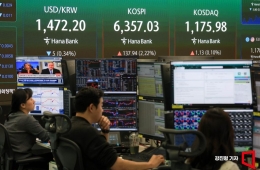
On the 2nd, Asia Economy conducted an urgent diagnosis of the Korean economy in the second half of the year with six economic experts, and these opinions predominated. Professor Kim Young-ik of Sogang University Graduate School of Economics diagnosed, “The fundamental reason why Korea’s economic growth forecast has been lowered, contrary to the global economic outlook, is that consumption is not supporting the economy amid difficulties in exports.” He explained that the weak reopening effect in China and the increasing risk exposure in semiconductor exports are causing the timing of Korea’s economic recovery to be continuously delayed.
![[Urgent Diagnosis] 6 Economic Experts Say "Long-Term Low Growth Phase... Need to Consider Interest Rate Cuts and Fiscal Spending"](http://www.asiae.co.kr/news/img_view.htm?img=2023080210163327481_1690938993.jpg)
Increased Economic Volatility... Negative Impact on Corporate Investment Restrictions
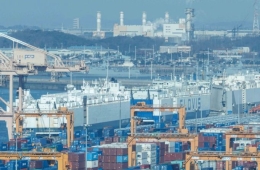
Korea’s high export dependence acts as a factor that intensifies the amplitude of its economy. A larger amplitude means that economic forecast volatility is expanding. Park Yang-su, Director of the SGI (Sustainable Growth Initiative) at the Korea Chamber of Commerce and Industry, pointed out, “Recently, the global economy is dividing into blocks, and individual countries are reallocating supplies to friendly countries to diversify risks, a movement known as ‘friendshoring.’” He warned, “In this process, if Korea’s economy, which is highly export-dependent, experiences increased amplitude, companies face survival threats during crises and tend to adopt conservative behaviors prioritizing stability in investment decisions, which inevitably negatively affects economic growth.” This is why the government focuses its major policy goals on minimizing economic amplitude between boom and bust cycles.
Excessive private debt is also restricting economic growth in the second half of the year. Professor Kim said, “Consumption is decreasing due to rising household debt, and investment is becoming difficult as corporate debt increases.” He added, “For example, if a household earns 1 million won per month, about 400,000 won is currently used for principal and interest repayments.” Cho Kyung-yeop, Head of Economic Research at the Korea Economic Research Institute, also pointed out, “The Korean economy grew by 0.9% year-on-year in both the first and second quarters of this year, and to meet the IMF’s forecast of 1.4%, it must grow at least 1.9% in the second half. Considering corporate investment and consumption, it remains uncertain whether this forecast can be achieved.” They agreed that reduced investment and consumption due to high interest rates and private debt are major downside risks to growth recovery.
![[Urgent Diagnosis] 6 Economic Experts Say "Long-Term Low Growth Phase... Need to Consider Interest Rate Cuts and Fiscal Spending"](http://www.asiae.co.kr/news/img_view.htm?img=2023080211115227628_1690942312.jpg)
Concerns Over Prolonged Low-Growth Phase... Consider Short-Term Interest Rate Cuts
The problem is that Korea’s low-growth trend is entering a long-term phase. Director Park said, “The current low growth is caused by both cyclical and structural factors. From a cyclical perspective, economic growth rates will increase after the second half of this year, but due to structural factors, it is difficult to expect a return to the high growth rates of the past.” He pointed to structural factors such as declining labor input due to low birth rates and aging, and the decreasing contribution of capital to growth. Joo Won, Senior Researcher at Hyundai Research Institute, said, “There are no clearly growing industries, and as the working-age population decreases, our opportunities to create added value in the Chinese market will gradually diminish.” Professor Kim analyzed, “Korea has already entered a structural low-growth phase. While the export share to China is decreasing, ASEAN and India, which together account for 21%, will fill the gap.”
Experts suggested that to resolve the low-growth phase, short-term interest rate cuts and government fiscal spending to expand corporate investment are necessary. Director Park said, “Although it is impossible to completely rule out capital outflow risks due to widening interest rate differentials, monetary authorities need to operate monetary policy in a way that reduces corporate debt risks while promoting economic and financial stability.” Senior Researcher Joo advised, “Monetary authorities should cut interest rates, and fiscal authorities should implement short-term fiscal spending and mid-to-long-term policies to strengthen industrial capabilities. Especially, subsidy policies should be more actively promoted to enable domestic companies to invest.” On the other hand, Professor Kim Sang-bong of Hansung University’s Department of Economics emphasized, “Monetary and fiscal authorities alone cannot fully solve the low-growth problem. Korea, though late, needs active structural reforms in line with global industrial restructuring.”
The most urgent policies identified were the elimination of unnecessary procedures and regulations and the expansion of new investments. It was explained that the government should promote industrial policies such as designing incentive mechanisms that encourage new investments and behavioral changes so that companies do not miss entry timing and fail to secure competitive advantages. There were also calls to expand quality jobs. Professor Lee Jeong-hee of Chung-Ang University’s Department of Economics said, “Government industrial support should consider how many jobs it can create. Considering the increased government burden due to high unemployment, expanding quality jobs will lead to a reduction in government burden.”
![[Urgent Diagnosis] 6 Economic Experts Say "Long-Term Low Growth Phase... Need to Consider Interest Rate Cuts and Fiscal Spending"](http://www.asiae.co.kr/news/img_view.htm?img=2023080114354926449_1690868149.jpg)
'Lower in the First Half, Higher in the Second Half' Trend Valid... Exports Are Key
The consensus among experts is that the trend of “lower in the first half, higher in the second half” (expecting the economy to be sluggish in the first half and improve in the second half) remains valid for the Korean economy in the second half. However, they viewed the perceptible effect as limited. Professor Kim Young-ik forecasted, “In the fourth quarter of this year, due to the base effect from last year, semiconductor exports centered on China will increase, leading to a slight rise in growth rates that may continue into next year. However, it will not deviate significantly from Korea’s potential growth rate in the 2% range.”
Hot Picks Today
![[Exclusive] Latest Cancer Treatment Costs Rise by 40 Million Won... War Disrupts Raw Material Supply, Domestic Production Stalled Without Budget](https://cwcontent.asiae.co.kr/asiaresize/93/2026042109055833701_1776729958.jpg) [Exclusive] Latest Cancer Treatment Costs Rise ...
[Exclusive] Latest Cancer Treatment Costs Rise ...
- Individual Investors Net Buy 140.3 Billion Won in a Month... KOSPI Surges While ...
- Couple Secretly Making Love on Mountain Summit... Broadcast Live on the Internet
- Female Game Caster Makes Bold Move After Criticism Over "Short Skirt" on Broadca...
- A Child's Scream Is Not Just "Sound Effect": The Trap of Selling Real Tragedy as...
Professor Lee said, “Variables such as Korea’s inflation and the Ukraine grain agreement are still active, so Korea’s growth rate can be significantly influenced by external factors.” On the other hand, Director Park expressed concern, saying, “Due to the effects of high interest rates, it will be difficult for the global economy and exports to recover quickly. Even if growth rates rise compared to the first half, the economy felt by companies and households may be ‘lower in the first half and lower in the second half.’”
© The Asia Business Daily(www.asiae.co.kr). All rights reserved.


!["They Said It Was 'Delicious' Milk... Is the 'List of Fake Milk Products in Korea' for Real? [Matjal X-File]"](https://cwcontent.asiae.co.kr/asiaresize/307/2023072413274517286_1690172865.jpg)