'K-Food' to Grow 9% Annually Until 2027, Becoming a 1100 Trillion Won Market
Ministry of Agriculture, Food and Rural Affairs, 4th Basic Plan for Food Industry Promotion

The government plans to enhance the added value of Korea's food industry by utilizing advanced technologies such as food tech and green bio, and to actively foster future promising foods like functional and senior-friendly foods. Additionally, popular export items overseas, such as ramen and pears, will be developed into K-brands to expand exports. Through these efforts, the government aims to expand the K-food market to 1,100 trillion won by 2027 and increase agricultural and food exports to around 15 billion dollars.
On the 28th, the Ministry of Agriculture, Food and Rural Affairs announced the "4th Basic Plan for Food Industry Promotion (2023-2027)" at an emergency economic ministers' meeting. Kwon Jae-han, Director of Agricultural Innovation Policy at the ministry, explained, "This plan aims to strengthen the linkage between food and related industries such as agriculture, culture, and tourism to develop the food industry as a core national and export industry. We have prepared measures to enhance the competitiveness of the entire food industry by expanding advanced technologies like food tech and green bio to small and medium food and dining companies."
First, the government plans to grow the food industry, which was valued at 656 trillion won in 2021, by an average of 9% annually to reach 1,100 trillion won by 2027. It will begin by expanding the food industry's scope using food tech and green bio. Starting next year, regional food tech innovation clusters (tentative name) will be designated and fostered to strengthen the competitiveness of small and medium food companies through food tech. Two priority areas?smart manufacturing and alternative foods?will be selected by 2027, and by 2032, the clusters will expand to cover all ten core technologies, including plant-based food manufacturing, ready-to-eat food manufacturing, and food robots.
The government will also support the overseas expansion of food tech companies. The Korea Agro-Fisheries & Food Trade Corporation (aT) will establish "K-Food Tech Global Centers" in its major country offices, allowing companies wishing to export in other agricultural and food sectors such as green bio to jointly utilize these centers. Consulting services related to legal, accounting, and marketing matters tailored to each target country will also be provided. Furthermore, future promising foods such as functional and senior-friendly foods will be actively nurtured.
The ministry aims to develop promising export items like ramen and pears into "K-brands" and increase the number of export items exceeding 100 million dollars from the current 11 to 20 by 2027. Agricultural and food exports, which stood at 8.82 billion dollars last year, are targeted to grow to 15 billion dollars by 2027. For countries with high preference for Korean agricultural products, such as Vietnam and Hong Kong, promising export varieties like pears, strawberries, and grapes will be identified, developed, and distributed to farms. Support will also be provided for product commercialization, including packaging improvements and entry into distribution channels. To differentiate from similar products from other countries, a "K-Food joint logo" will be used for pears, strawberries, and gochujang (red chili paste).
Additionally, to connect the increased recognition of Korean cuisine with domestic consumption, tourism, and exports, 15 K-Gourmet Belts will be established by 2027 as gourmet tourism products. These will be developed by combining Korean food resources such as agricultural resources, food masters, local dishes, and traditional liquors.
The government will also promote the traditional food industry, including kimchi, traditional liquors, and fermented sauces. Kimchi will enhance its status as the country of origin by securing a stable supply of raw materials and developing and disseminating automated processes to improve quality competitiveness. Traditional liquors will be nurtured into premium products and export items through dedicated funds and low-interest loans. Fermented sauces will be developed into a sauce industry through the scientific advancement of fermentation technology, and efforts will be made to register "jang culture" as a UNESCO intangible cultural heritage.
Related Articles
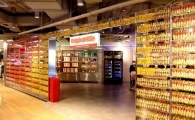 Innocean Launches Asia's Largest 'K-Ramen Popup Store'
To establish a sustainable cooperative system between agriculture and the food industry, a "raw material brokerage platform" supporting contract farming between food companies and farms will be built. Demand information such as volume, price, usage timing, and quality requirements for domestic raw materials will be databased for food companies, while supply information including contract farming hopeful agricultural corporations and items will be collected mainly by agricultural cooperatives and local governments. Additionally, companies excelling in the use of domestic raw materials will receive a 1.0% point reduction in raw material purchase loan interest rates, and support for new product development using domestic raw materials will be increased from 20 million won to 40 million won per company.

© The Asia Business Daily(www.asiae.co.kr). All rights reserved.







