
The inflow of stock funds from individual investors is also evident in market liquidity-related indicators.

On the 19th, the KOSPI opened at 7425.66, down 1.20% from the previous trading day, and widened its losses to trade at 7310.64, down 2.73%, as of 10:02 a.m. on the same day. Situation board at Hana Bank dealing room in Jung-gu, Seoul on the 19th. Photo by Yonhap News Agency
원본보기 아이콘The KOSPI is showing weakness as foreign investors continue large-scale net selling. Individual investors are absorbing the bulk of these foreign sell orders, raising concerns that individuals who entered the market late may face significant losses in an upcoming correction phase.
Foreign Investors Log Nine Consecutive Trading Days of Large-Scale Net Selling...Driven by Profit-Taking and Portfolio Rebalancing
On May 19, the KOSPI opened at 7,425.66, down 1.20% from the previous trading day, and widened its losses to trade at 7,310.64, down 2.73%, as of 10:02 a.m. The KOSDAQ started the session up 0.02% at 1,111.36 but is currently trading down 2.08% at 1,088.15.
Foreign investors have been net sellers on the KOSPI for nine consecutive trading days, dragging the index down. Since the start of May, foreign investors have net sold several trillion won worth of stocks nearly every day, except for just two sessions. From the first trading day of May through the previous day, foreigners have net sold a total of 33 trillion won on the KOSPI. As of 10:04 a.m. on this day, they had already net sold an additional 1.99 trillion won.
KOSPI Investor Trading Trends in May
(Unit: KRW, Source: Korea Exchange, May 4 - May 18)
red
Net Buyingblue
Net SellingForeign Investors
Individuals
Institutions
Individuals Bought 33 Trillion Won as Foreigners Sold 33 Trillion Won...Propping Up the KOSPI
It is individual investors who are absorbing the net selling from foreigners. Every time foreign investors drove the index lower with net selling, individuals responded with net buying, effectively defending the market. Throughout May, as foreigners net sold 33 trillion won, individuals net bought 33 trillion won, helping to prevent a steeper index decline. The volume of buying and selling by institutions was roughly similar.
In the securities industry, the main reason cited for foreign investors' selling pressure is the sharp rise in the KOSPI. The KOSPI has risen more than any other major stock market in the world this year, prompting foreign investors to sell in order to rebalance their portfolios. Kwon Soonho, a researcher at Daishin Securities, explained, "The recent large-scale net selling by foreigners is more about profit-taking and rebalancing demand than an active reduction of their positions in Korean stocks."
Individuals Led Past Bull Markets...But There Are Concerns for Losses in Corrections
Some analysts point out that foreign net selling does not directly lead to a market downturn. In fact, in previous major bull markets, the pattern of foreign net selling and individual net buying has been repeated. Lee Euntaek, a researcher at KB Securities, said, "Since 2000, there has not been a single major bull market where foreigners drove the rise of the Korean stock market," adding, "Rather, bull markets have tended to occur when domestic investors, especially individuals, returned to the stock market."
Foreigners Led the Bull Market? NO!! The Real Protagonists Are Individuals
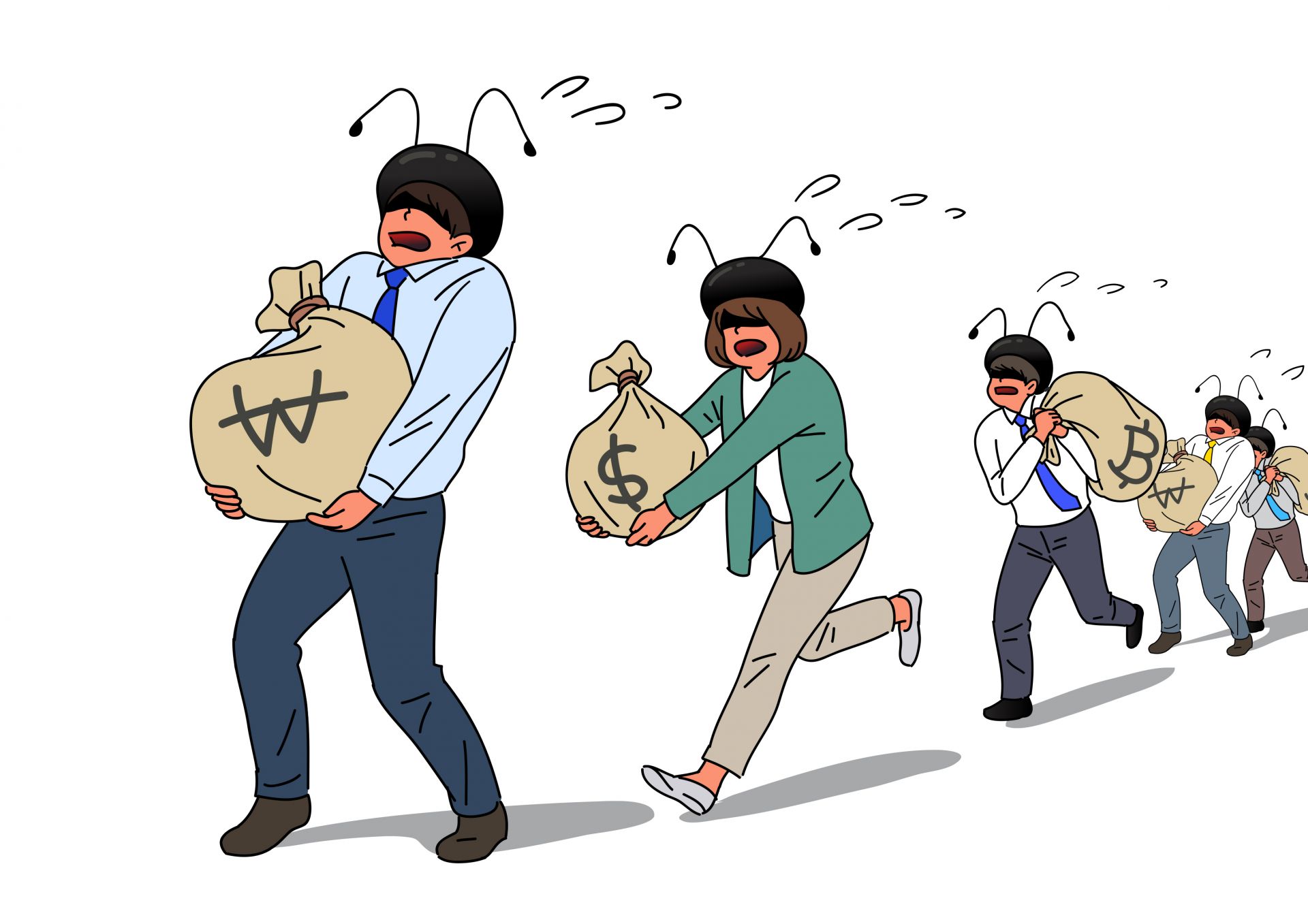
According to the Korea Financial Investment Association, investor deposits reached 132.8596 trillion won as of the 15th, approaching the all-time high of 137 trillion won.
Money market funds (MMFs), which accumulate short-term idle funds, also surged by 12.4 trillion won in March compared to the previous month.
Avoid Excessive Investment...Diversification into Safe Assets Is Essential
While the inflow of individual investors has pushed the index higher, there are concerns that those who entered the market late may suffer losses in the event of a future correction. An official at a securities firm emphasized, "Since the stock market has always experienced cycles of ups and downs, a correction could come at any time." The official added, "It is wise to avoid excessive investments, such as excessive leverage, and to consider diversifying into safe assets like bonds."
-

Reporter Lee Changhwan goldfish@asiae.co.kr
-
Edit Kim Yumi ymkim91@asiae.co.kr
© The Asia Business Daily(www.asiae.co.kr). All rights reserved.
!["Please Help Us": How Much Do Those Bowing 90 Degrees These Days Actually Earn? [Data Pick]](https://cwcontent.asiae.co.kr/asiaresize/323/2026052010120870131_1779239528.png)