Small and Medium Enterprise Technology Protection Measures Lacking Detail
SMEs and Startups: "Even Increasing Punitive Damages Fivefold Won't Move Large Corporations"
"Mandatory Non-Disclosure Agreements Needed"

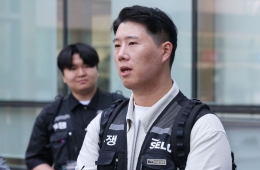
On the morning of the 8th, the Ministry of SMEs and Startups announced the 'Measures to Strengthen Support for Technology Protection of Small and Medium Enterprises' at the Four Seasons Hotel in Jongno-gu, Seoul.
View original imageThe small and medium-sized enterprises (SMEs) and startup sectors expressed disappointment over the government's 'Strengthened Support Measures for SME Technology Protection' announced on the 8th, citing a lack of policy detail. Although the sanctions against technology theft were increased, opinions suggest that the measures are not intimidating enough for large corporations. There were also calls for the introduction of more definitive mandatory regulations to prevent technology theft.
The core of the new measures introduced by the Ministry of SMEs and Startups to resolve the issue of technology theft among SMEs focuses on prevention and strengthened punishment. The government has reinforced a cross-ministerial cooperation system involving the Korean Intellectual Property Office, the National Police Agency, and the National Intelligence Service, and increased punitive damages from three times to five times the original amount. There is also a plan to integrate the fragmented legal framework for technology protection, including the 'Win-Win Cooperation Act' and the 'SME Technology Protection Act.'
SME owners currently engaged in disputes with large corporations over technology infringement or those who have suffered direct damages expressed regret over the government's measures. Park Noseong, Vice President of SmartScore, which is involved in a technology infringement dispute with KakaoVX, a Kakao subsidiary, said, "Although various measures such as monitoring technology theft have been announced, they are still insufficient," adding, "There needs to be pressure on large corporations that they could face business disadvantages if they steal technology from SMEs, and stronger measures are required in this regard." Another startup CEO pointed out, "Even if punitive damages are increased, large corporations can use their financial resources and legal teams to lower the baseline for damages." In reality, SMEs must prove the amount of damage themselves, but large corporations often do not provide relevant data, making it difficult to accurately calculate the damage amount. Therefore, even imposing fivefold punitive damages is not at a level that would impose a significant burden on large corporations.
There were also many opinions that a mandatory non-disclosure agreement (NDA) should be required when large corporations collaborate with startups. Although the Win-Win Cooperation Act includes a clause mandating NDA execution, it only applies to principal-subcontractor relationships. Recently, cases have frequently occurred where large corporations request technology-related materials during the collaboration phase before signing the main contract with startups and then appropriate core technologies. Song Jeyoon, CEO of Dr. Diary, who is in a technology dispute with Kakao Healthcare, said, "In reality, it is difficult for startups to be the first to request an NDA when collaborating with large corporations," adding, "If you don't explicitly say during meetings, 'Team leader, this is confidential,' everything becomes a potential target for leakage."
There are also suggestions that the Ministry of SMEs and Startups should create and distribute a standard NDA form and require notarization of its execution. Kim Gyeonwon, CEO of HMC Networks, who suffered technology infringement damages from NHN in 2021, pointed out, "Even when NDAs are signed, large corporations' legal teams often demand modifications or deletions to suit their preferences," and added, "The Ministry of SMEs and Startups should develop and distribute a standard NDA form and introduce a process where companies that complete it can have it notarized."
Hot Picks Today
!["Heading for 2 Million Won": The Company the Securities Industry Says Not to Doubt [Weekend Money]](https://cwcontent.asiae.co.kr/asiaresize/93/2025050713592847164_1746593968.jpg) "Heading for 2 Million Won": The Company the Securities Industry Says Not to Doubt [Weekend Money]
"Heading for 2 Million Won": The Company the Securities Industry Says Not to Doubt [Weekend Money]
- Jay Y. Lee Bows His Head: "I Will Face the Harsh Storm"...Apologizes for Samsung Labor-Management Conflict
- 200 Billion Won in Additional Loans Amid Ongoing Trial for 180 Billion Won Illegal Lending? Saemaeul Geumgo Reported to Police
- "Anyone Who Visited the Room Salon, Come Forward"… Gangnam Police Station Launches Full Staff Investigation After New Scandal
- "Stop Tying Others' Hands"... China Criticizes U.S. Containment Policy
There is also an opinion that curbing the sprawling business expansion of large corporations would reduce technology theft issues. Vice President Park said, "In the digital platform market, which is more idea-centered than highly technical, dominant players' technology infringement cases are becoming more sophisticated and frequent," adding, "Since prevention is more important than after-the-fact measures, administrative hurdles are needed to block their indiscriminate market entry."
© The Asia Business Daily(www.asiae.co.kr). All rights reserved.