[MarketING] Powell Rekindles Concerns Over Tightening
KOSPI Falls to 2430 Level
Tightening Concerns Expand Again Amid Powell's Hawkish Remarks
Correction Phase Expected to Continue for the Time Being
![[Image source=Yonhap News]](http://www.asiae.co.kr/news/img_view.htm?img=2023030810195247004_1678238392.jpg)
The KOSPI is showing weakness as concerns over tightening grow following hawkish remarks by Jerome Powell, Chair of the U.S. Federal Reserve (Fed). With employment and inflation data releases that could influence monetary policy scheduled, the adjustment phase is expected to continue until the March Federal Open Market Committee (FOMC) meeting.
KOSPI Weakens for the First Time in 6 Days Following Powell's Hawkish Remarks
As of 10:10 a.m. on the 2nd, the KOSPI stood at 2,439.36, down 23.99 points (0.97%) from the previous day. The KOSDAQ fell 1.11 points (0.14%) to 814.65. The KOSPI showed more than a 1% decline in early trading but the drop has narrowed. The KOSDAQ also narrowed its losses and has been fluctuating around the flat line.
This weakness is interpreted as a result of Chair Powell's hawkish remarks. Powell appeared before the Senate for the semiannual monetary policy report and mentioned that recent economic indicators have been stronger than expected, suggesting that the ultimate level of interest rates could be higher than anticipated. He stated that if the data require faster tightening, the Fed is prepared to raise rates more quickly, hinting at the possibility of a 50 basis point (1bp = 0.01 percentage point) hike at the March FOMC. Following Powell's comments, the yield on the 2-year U.S. Treasury surged above 5%, and the inversion between the 2-year and 10-year yields widened to a record level. Consequently, all three major U.S. stock indices closed down by more than 1%. On the 7th (local time) at the New York Stock Exchange (NYSE), the Dow Jones Industrial Average fell 1.72%, the S&P 500 dropped 1.53%, and the Nasdaq declined 1.25% compared to the previous day.
Suh Sang-young, a researcher at Mirae Asset Securities, said, "The decline in the U.S. stock market due to Powell's strong hawkish remarks is a burden for the Korean stock market. In particular, the clear strength of the U.S. dollar increases the likelihood of won weakness, which will act as a burden on foreign investor demand."
As concerns over tightening expand due to Powell's hawkish remarks, the market is expected to pay closer attention to upcoming U.S. economic data releases. Employment data is scheduled for the 10th, and the Consumer Price Index (CPI) will be released on the 14th. Han Ji-young, a researcher at Kiwoom Securities, analyzed, "Powell's recent congressional remarks were more hawkish than the market expected, so the possibility of a 50bp rate hike in March should be kept open. Considering that the fundamental reason for the stronger tone compared to the February FOMC was the January employment and inflation surprises, it can be seen that the Fed is focusing on the data."
Suh added, "Powell mentioned that there are many important economic data releases, including the employment report and CPI, before the March FOMC meeting, and that the results of these indicators are important. He also noted that the changes in consumption, production, and inflation in January might be due to mild weather and may not have strong continuity, which is worth noting."
Adjustment Expected to Continue Amid Growing Tightening Concerns
As tightening concerns intensify, the stock market is expected to remain in an adjustment phase.
Han said, "The probability of a 50bp rate hike at the March FOMC, which was 31% the previous day, surged to 70.5%, rapidly shifting the consensus from 25bp to 50bp. The final rate consensus also changed from 5.5% to 5.75%, and expectations for a rate cut by year-end have faded. With the U.S. 2-year Treasury yield entering the 5% range and the dollar reaching 105 points, hitting a yearly high, a negative macro environment is forming for the stock market."
Although the adjustment will continue, the scale of the decline is not expected to be deep. Han explained, "During the process of confirming data such as employment and inflation before the March FOMC, market interpretations of the Fed's actions may change, exposing the market to uncertainty and adjustment pressure. However, since these are existing negative factors that the market has already experienced and built resistance to, it is appropriate to prepare for a period of adjustment with downward rigidity rather than a price correction." He added, "Because the macro environment is turbulent, there is a strong desire to bet on downside moves, but it is necessary to refrain from directional bets until after the employment data on the 10th, the CPI on the 14th, and the FOMC on the 22nd."
Hot Picks Today
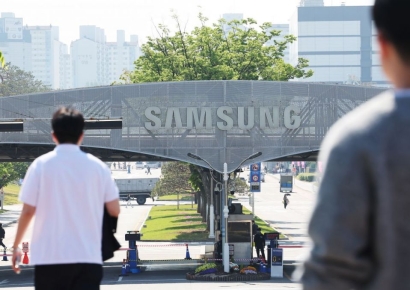 "Now Our Salaries Are 10 Million Won a Month" Record High... Semiconductor Boom Drives Performance Bonuses at Major Electronic Component Firms
- Experts Already Watching Closely..."Target Price Set at 970,000 Won" Only Upward Momentum Remains [Weekend Money]
- Prime Minister Kim Minseok: "Samsung Electronics Strike Could Cost Up to 1 Trillion Won per Day, 100 Trillion Won Total... Tomorrow's Talks Are the Last Chance" (Comprehensive)
- Did Samsung and SK hynix Rise Too Much?... Foreign Assets Grow Despite Selling [Weekend Money]
- Is It Really Like an Illness? "I Can't Wait to Go Again"—Over 1 Million Visited in Q1, Now 'Busanbyeong' Takes Hold [K-Holic]
Suh said, "Powell also took a step back by mentioning that the January data results were due to mild weather and that economic indicators still need to be watched, so the possibility of a continuous decline in the index is not high. Although there is a possibility of profit-taking after the rise, expectations for economic recovery in 2024 and corporate earnings improvements mean that buying flows during adjustments will continue."
© The Asia Business Daily(www.asiae.co.kr). All rights reserved.