Parking and Stopping on 'Sobangdoro' Signs... It Can Lead to Serious Trouble
Parking with Hazard Lights On
64% of Safety Buffer Zones Are Market Areas
Safety Negligence Despite No Parking Signs

On the afternoon of the 7th, a road near Namdaemun Market in Jung-gu, Seoul. Despite the phrase "Fire Truck Passage," a cargo truck is parked there. Photo by Lee Jung-yoon leejuyoo@
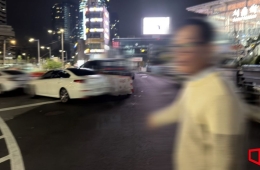
View original image[Asia Economy Reporter Lee Jung-yoon] On the afternoon of the 7th, on a road at the entrance of Seoul Jungang Market in Jung-gu, Seoul, the pavement was marked in yellow with the words "No Parking on Fire Lane," but vehicles parked illegally were easily spotted. Temporary congestion occurred due to vehicles waiting with hazard lights on in the area marked with the no-parking notice. Cargo trucks visiting the furniture district inside the market also stopped without hesitation in the area marked with the notice. These parked vehicles, along with the stalls set up by market merchants, became obstacles that hindered the passage of fire trucks.
At the same time, the situation was similar at an entrance road of Namdaemun Market in Jung-gu, Seoul. Despite the "Fire Truck Passage" marking on the road, a cargo truck fully loaded with cardboard boxes was parked there. Two workers were unloading from the truck, and although the work was completed, the truck did not leave. For over 30 minutes, the vehicle remained firmly parked on the fire truck passage. Additionally, motorcycles, bicycles, and handcarts were disorderly parked on the road within the market, obstructing traffic.
Although awareness of fire prevention has increased following the fire at the Pyeongtaek logistics center construction site, traditional markets still show vulnerability to fires. Traditional markets are particularly susceptible to large-scale fires, making securing fire truck passageways crucial. However, despite notices requesting no parking, vehicles were blatantly parked, causing road congestion. Merchants regarded the issue of blocking fire truck passageways with parked vehicles as insignificant. Fire safety complacency remains. One merchant said, "When running a business, sometimes you have to park for work, so I don't think it's a big problem," adding, "If someone asks to move the car, then we move it."
According to the "2021 Fire Agency Statistical Yearbook," among 150 designated fire hazard zones last year, 96 (64%) were market areas. In 2011, 76 market areas were designated as fire hazard zones, and the number has increased over time. In Seoul, seven locations, including Namdaemun Market and Gwangjang Market, are designated as market area fire hazard zones. Following market areas, 21 locations are dense areas such as hazardous material manufacturing sites, and 17 are wooden building dense areas. Fire hazard zones refer to places with a high risk of fire occurrence or where damage is expected to be significant in case of fire. On December 19th last year, a fire broke out at Cheongnyangni Agricultural and Marine Products Market in Dongdaemun-gu, Seoul, destroying 13 stores.
Hot Picks Today
 Even with High Oil Price Relief Payment, Additional 300,000 Won Per Person to Be Provided... Applications Open from the 18th in This Region
- "Invested 95% in Hynix and Reached 10 Billion Won"... Japanese Investor's Proof Post Goes Viral
- "Why Is the Korean Stock Market Surging?"... Even Italy Is Astonished by the KOSPI Rally
- "You Don't Need to Go to the Gym": The Best Exercises for Lowering Hypertension
- "That Thing Wakes Up Every Night" ... Suspicious Object Covers Rural Village
Professor Gong Ha-sung of the Department of Fire and Disaster Prevention at Woosuk University said, "Markets are particularly vulnerable to fires compared to other areas, so constant vigilance is necessary," adding, "Through active publicity, people should be guided not to park in fire truck passageways, and if the situation does not improve, enforcement should be strengthened."
© The Asia Business Daily(www.asiae.co.kr). All rights reserved.