Authorities: "3rd Dose Group Shows 83%↓ Infection, 97%↓ Severe Cases, 99%↓ Deaths Compared to 2nd Dose"

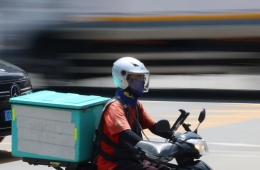
On the 5th, when 4,444 new COVID-19 cases were reported, citizens waiting to get tested at a temporary screening clinic set up at Sogang University Station in Mapo-gu, Seoul. Photo by Jinhyung Kang aymsdream@
View original image[Asia Economy Reporter Kim Daehyun] It has been confirmed that elderly people aged 60 and over who have completed the third dose of the COVID-19 vaccine have an 82.8% lower risk of infection compared to elderly people who have only completed the second dose.
On the afternoon of the 5th, the Central Disease Control Headquarters (CDCH) announced the results of the "Analysis of the Preventive Effect of the Third Vaccine Dose" during a COVID-19 vaccine briefing.
"Among 1,902,991 people who received the third dose, only 1 COVID-19 death"
According to the CDCH, the risk of infection for elderly people aged 60 and over who received the third dose was 82.8% lower than that of the same age group who only received the second dose. The risk of severe illness and death after infection was also reduced by 96.9% and 99.1%, respectively.
This analysis was conducted on 2,350,207 elderly people aged 60 and over who had no history of COVID-19 infection until October 25 of last year and had passed five months after receiving the second dose of either the AstraZeneca or Pfizer vaccine. Elderly people who had not yet passed 14 days after the third dose were excluded from this analysis.
Among them, 1,902,991 people had completed the third dose, and 447,216 people had only received up to the second dose. Among the 447,216 second-dose recipients, 10,315 experienced breakthrough infections, 543 were severe cases, and 442 died. In contrast, among the 1,902,991 third-dose recipients, 880 were infected with COVID-19, 4 were severe cases, and only 1 death was reported.
Park Youngjun, head of the epidemiological investigation team at the CDCH, added, "Although further monitoring is needed, the current results are similar to the effects of the third dose reported overseas."
"Vaccination rates among adolescents should be raised to adult levels"
The health authorities explained that vaccination rates among adolescents also need to be raised to the same level as adults. Currently, 91% of high school students aged 17 to 19 have completed the first dose. Among middle school students aged 14 to 16, 71.4% have received the first dose, and 47.8% have received the second dose.
Hong Jeongik, head of the vaccination management team at the COVID-19 Vaccination Response Task Force, said, "Considering that adolescent vaccinations are ongoing, the rates will increase further," adding, "I believe the rates should reach the national average vaccination rates of 86% for the first dose and 84% for the second dose." Park also emphasized, "As vaccination rates increase, the occurrence of confirmed cases shows an inverse relationship by age group. High school students, who have the highest vaccination rates, have the lowest incidence rates, while elementary school-aged children have the highest incidence rates."
Regarding the court's suspension of the vaccine pass (proof of vaccination or negative test) requirement for educational facilities such as academies, Park said, "There seems to be an error in the ratio and numerical calculations in the court's judgment." He added, "Since 2020, over more than 700 days of response, about 650,000 confirmed cases have occurred," and suggested that if the entire population had been calculated in the same way, the results would have been different.
The Seoul Administrative Court yesterday suspended the enforcement of the measure that included academies and study rooms as mandatory vaccine pass facilities until the main trial verdict is delivered, stating, "There must be objective and reasonable grounds to impose disadvantageous treatment restricting facility use only on the specific group of unvaccinated people." The health authorities expressed their intention to immediately appeal this decision.
Hot Picks Today
 Even with High Oil Price Relief Payment, Additional 300,000 Won Per Person to Be Provided... Applications Open from the 18th in This Region
- "Invested 95% in Hynix and Reached 10 Billion Won"... Japanese Investor's Proof Post Goes Viral
- "Why Is the Korean Stock Market Surging?"... Even Italy Is Astonished by the KOSPI Rally
- "You Don't Need to Go to the Gym": The Best Exercises for Lowering Hypertension
- "That Thing Wakes Up Every Night" ... Suspicious Object Covers Rural Village
Referring to statistics from the second week of last month, the court stated, "Among all unvaccinated people aged 12 and over, the infection rate is about 0.15%, and among all vaccinated people aged 12 and over, the infection rate is about 0.07%," concluding, "The difference in infection rates alone does not justify saying that the unvaccinated group poses a much greater risk of spreading COVID-19."
© The Asia Business Daily(www.asiae.co.kr). All rights reserved.