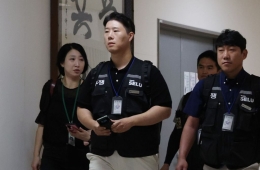
Kumho Tire Total Strike Enters 3rd Week... Sales Disruption Becomes Reality
Tire Stock Shortage in Peak Season
Impact on Q1 Performance Next Year
Internal Calls to "End the Strike" Also Raised

[Asia Economy Reporter Ki-min Lee] As the total strike at Korea Tire & Technology's domestic factories continues due to the breakdown of this year's wage negotiations, operational disruptions caused by supply shortages are becoming a reality.
According to the industry on the 14th, as the Korea Tire union enters its third week, T Station, a specialty store for replacement tires (RE), and dealerships are experiencing tire inventory shortages. A representative from a T Station branch in Seoul said, "As the strike prolongs, products with high recent demand such as winter tires are in short supply," adding, "Despite it being the peak season for tire replacement, we are turning away customers who come in."
Not only for RE but also for original equipment (OE) tires supplied to automakers, there is a high possibility of supply restrictions, which is expected to negatively impact Korea Tire's performance not only in the fourth quarter but also in the first quarter of next year. In particular, if the supply volume falls short of the contracted amount with automakers, the company may face penalties or be excluded from new car allocations, causing great concern. Even if the union ends the total strike, it takes 2 to 3 days to normalize the production line, and since there is a one-week shutdown in the last week of this year, which is two weeks away, if the strike is not resolved within this week, domestic factory operations this month will effectively be lost.
Moreover, since the Daejeon and Geumsan factories account for 38.7% of the total performance, it is difficult to compensate with overseas factories. An industry insider said, "November and December are peak seasons due to increased tire replacement demand and new car deliveries," adding, "The prolonged year-end total strike inevitably affects next year's performance as well."
Hot Picks Today
 "Samsung and Hynix Were Once for the Underachievers"... Hyundai Motor Employee's Lament
- "Was This Delicious Treat Enjoyed Only by Koreans?"... The K-Dessert Captivating Japan
- Despite Captivating the Nation for Over a Month... "Timmy" the Whale Ultimately Found Dead
- "Record Heat Expected"...Warning of the Strongest 'Super El Nino' Since 1877
- "That? It's Already Stashed" Nightlife Scene Crosses the Line [ChwiYak Nation] ③
Since the payday on the 10th, some union members have raised their voices to end the strike and return to work, showing signs of internal conflict among union members. According to the no work, no pay principle, workers at the Daejeon and Geumsan factories had their salaries cut by 1 to 1.5 million KRW this month. Additionally, due to performance deterioration caused by the shutdown, there is concern that it could negatively affect next year's wage negotiations. In fact, the management's position is that the longer the strike lasts, the more the company’s performance worsens, and disruptions in the supply of new car and replacement tires force stricter application of the no work, no pay principle.
© The Asia Business Daily(www.asiae.co.kr). All rights reserved.