Only 15% or 5,000 union members in 2024
Comparison of the 2024 Strike Process

This time, it's not an 'annual struggle' led by the majority union
Tensions rise over the executive board's hardline remarks
Burden on hardline stance... 4,000 members leave
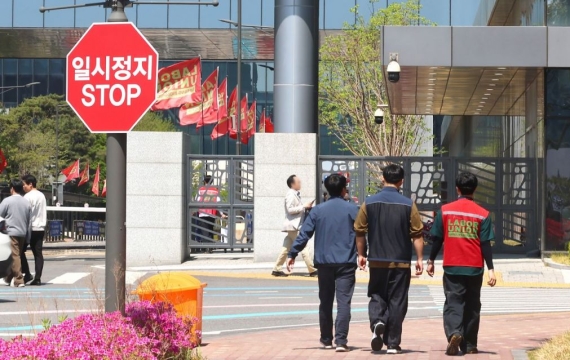
The all-out strike announced by the Samsung Electronics labor union is now just three days away. Industry insiders note that the atmosphere is significantly different from the first strike in 2024. At that time, the strike was largely symbolic, characterized as an "annual struggle," but this time, the majority union, which has adopted a more hardline stance, is leading the strike, raising concerns that the aftermath may be even more severe. Both inside and outside the company, a sense of crisis is spreading, with growing calls that the strike must be prevented, as "this time is truly different."
Union Members Turn Away from a Hardline Approach... 4,000 Leave in a Month
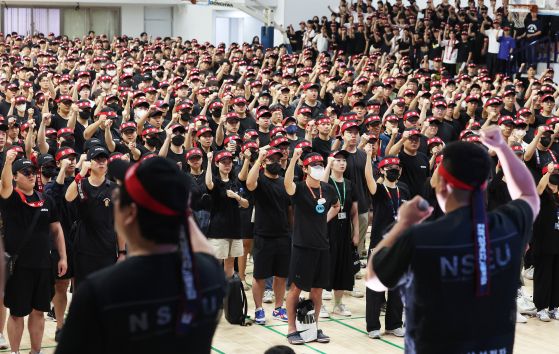
The Samsung Electronics union began taking collective action in earnest starting in 2024. On May 29 of that year, the National Samsung Electronics Labor Union (NSEU), the largest union within Samsung Electronics, declared the company’s first-ever strike, citing failed wage negotiations. The push for a strike at Samsung Electronics, which had maintained a no-union management policy for over 50 years since its founding, was heavily influenced by a sudden surge in the number of union members around 2023. At the time of the strike, about 25% of Samsung Electronics' 125,000 employees were union members.
However, the actual number of participants in the strike was only about 5,000, accounting for just 15% of all union members. The NSEU was mainly composed of members from the Device Solutions (DS) division, and although it was the largest union within the company, it still did not represent the majority. There were repeated criticisms that a single union leading the strike lacked sufficient justification to represent all employees.
This year, there is a growing assessment that the level of union action has reached a critical point. As labor-management conflict escalates to an extreme, it was reported on May 18 that, in an internal Telegram group of the Samsung Electronics super-enterprise union's executive board, one executive remarked, "We should just erase Samsung Electronics," and, "We'll show them how truly angry we are," making highly charged statements targeting the company. With such remarks seemingly denying the very existence of the company, criticism is emerging that the union has abandoned its original purpose of negotiation and become consumed by confrontation for its own sake.
There are also concerns, both inside and outside the union, that the executive board is placing more emphasis on demonstrating strength and actual power than on dialogue and negotiation. The repeated approach of pressuring the company through tough talk and collective action, rather than setting up a rational negotiating table, is pushing labor relations to the brink.
As the union leadership's stance becomes increasingly radical, ordinary union members are turning away. Following the withdrawal of Donghaeng Union—centered on members from the DX (Device eXperience) division—from the joint struggle headquarters, about 4,000 members left the super-enterprise union in just one month. As more members feel pressured by the hardline approach and leave, the union remains largely limited to the DS division, highlighting its organizational constraints.
From 'Annual Struggle' to 'Actual Strike'
Pressure to mention production disruptions intensifies
Concerns over aftereffects of the semiconductor supercycle
Potential direct and indirect losses due to declining trust
The 2024 strike was highly symbolic as it was the company’s first-ever strike since its founding, and mainly took the form of using annual leave or concentrating demonstrations on specific days. As members began to leave due to concerns over lost wages, the strike ended after just 25 days.
This time, however, the union is directly referencing the possibility of disruption to semiconductor production, significantly raising the level of pressure. The union claims that if production lines are disrupted, daily losses could amount to 1 trillion won. This has led to criticism that the union is effectively holding the company hostage. Another factor fueling the hardline action is the recently passed "Yellow Envelope Act" (Labor Union and Labor Relations Adjustment Act), which has reduced the union's liability for damages.
Arrival of the 'Semiconductor Supercycle'... Growing Concerns Over Aftermath

There are also considerable concerns about the timing of the strike. In 2024, the semiconductor industry was just emerging from a downturn, so the actual shock from the strike was limited. In contrast, the current environment is defined by the so-called "semiconductor supercycle," with explosive demand for AI servers and supply shortages. Samsung Electronics is enjoying an unprecedented boom, recording its highest-ever quarterly results in the first quarter of this year. Even with factories operating at full capacity 24 hours a day, it is difficult to meet the order volumes from global big tech companies. If a bottleneck occurs at advanced process lines, the impact could be immeasurable. According to industry and foreign media analysis, if the strike proceeds, direct and indirect losses—including production disruptions, declining external trust, and customer attrition—could reach up to several tens of trillions of won.
Hwang Yongshik, a professor at Sejong University’s Department of Business Administration, commented, "Unlike past strikes, this time the semiconductor industry environment has made the Samsung Electronics union strike a national agenda item and has amplified its scale. Since these issues have been accumulating for years, the key is how much the management is willing to accept."
-

Reporter Park Joonyi giver@asiae.co.kr
-
Edit Kang Dongwon kangdw76@asiae.co.kr
© The Asia Business Daily(www.asiae.co.kr). All rights reserved.
!["Please Help Us": How Much Do Those Bowing 90 Degrees These Days Actually Earn? [Data Pick]](https://cwcontent.asiae.co.kr/asiaresize/323/2026052010120870131_1779239528.png)