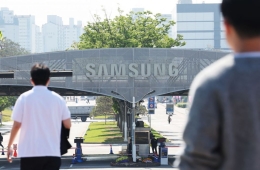
Lee Jae-yong Launches Bold and Radical Personnel System Reform as a Winning Move for 'New Samsung'
Removing 'Physical Restrictions' Applied to Promotion and Personnel Evaluations, Emphasizing Increased Flexibility and Inclusiveness
![[Image source=Yonhap News]](http://www.asiae.co.kr/news/img_view.htm?img=2021112310260232021_1637630762.jpeg)
[Asia Economy Reporter Lee Hye-young] Samsung Electronics Vice Chairman Lee Jae-yong has taken the lead in overhauling the personnel system, making another bold move. His strategy is to lay the foundation for the ‘New Samsung’ vision by establishing a future-oriented personnel system. The core of this reform plan is to build a personnel system aligned with both the global business environment and changing times, based on ‘boldness’ and ‘fairness.’
Announced on the 29th, Samsung Electronics’ ‘Future-Oriented Personnel System Innovation Plan’ aims to remove the ‘physical limits’ previously applied to promotions and personnel evaluations as much as possible, and to maximize flexibility and inclusiveness in evaluations and organizational operations to secure global competitiveness. This change aligns with Vice Chairman Lee’s first remark upon returning from a recent business trip to the United States, describing the “harsh reality.” To build a personnel system befitting a global company as ordered by Lee, Samsung emphasized creating a flexible and horizontal organizational culture from the early stages of the reform process by actively listening to employees’ opinions.
On the first anniversary of the late Chairman Lee Kun-hee in October, Vice Chairman Lee expressed his determination to build the ‘New Samsung,’ saying, “With a humble heart, let us all move forward together to create a new Samsung and a better future for our neighbors and society.” During his U.S. trip, he also repeatedly emphasized building a ‘New Samsung,’ stating, “As the future world and industrial map are being redrawn, our survival environment is dramatically changing. We cannot navigate this massive transition period by merely chasing or widening the gap with trailing companies. It will be difficult and painful, but let us turn the impossible into possible and create a future no one has ever seen, a new Samsung, together.”
During this U.S. trip, Vice Chairman Lee held a series of meetings with executives from companies such as Google, Amazon, and Microsoft (MS), reportedly exchanging views on talent development in the era of the Fourth Industrial Revolution.
Under Vice Chairman Lee’s leadership, Samsung Electronics has been preparing for a long time to improve the personnel system, starting with an internal employee forum on the company intranet in 2015, benchmarking global companies, and consulting experts. The introduction of the ‘fast-track’ system, including the integration of executive ranks and the abolition of standard tenure periods by rank, which are key points of this reform plan, were all outcomes of this prolonged review and consultation process.
According to Samsung Electronics’ Q3 report this year, there are 428 managing directors, 129 executive directors, and 67 vice presidents. If the executive rank of executive director is removed starting in 2022, the number of executives holding the title of vice president is expected to increase by more than 100, approaching the 200 mark. As the number of vice president-level executives increases, the pool of next-generation management candidates will also expand, enabling the stable institutionalization of a performance-based management team as envisioned by Vice Chairman Lee, Samsung Electronics expects.
The removal of rank and employee number displays on the intranet and the decision not to disclose promotion details even internally are interpreted as changes reflecting Vice Chairman Lee’s determination to establish a bold, horizontal organizational culture.
Strengthening ‘open innovation’ by emphasizing cooperation over competition is also a measure to encourage innovation through collaboration. The system has effectively abolished relative evaluation and switched to absolute evaluation, institutionalizing the idea that “anyone can receive a top evaluation based on performance.” However, to motivate high performers, the top evaluation is still operated within 10%, minimizing the side effects of blurred performance rewards.
To supplement the evaluation process by a single department head, which had raised concerns including from labor unions, a ‘peer review’ system will also be introduced. In peer evaluations, instead of assigning grades, collaborators will write descriptive assessments of contribution to teamwork, reflecting voices from the field calling for multidimensional rather than simple evaluations.
Hot Picks Today
![About 100 Trillion Won at Stake... "Samsung Strike Is an Unprecedented Opportunity" as Prices Surge 20% [Taiwan Chip Column]](https://cwcontent.asiae.co.kr/asiaresize/93/2026051416263163580_1778743590.jpg) About 100 Trillion Won at Stake... "Samsung Strike Is an Unprecedented Opportunity" as Prices Surge 20% [Taiwan Chip Column]
About 100 Trillion Won at Stake... "Samsung Strike Is an Unprecedented Opportunity" as Prices Surge 20% [Taiwan Chip Column]
- 'Still Hesitant? If You're Wondering Whether KOSPI Will Rise, This Is the Number You Must Watch [Weekend Money]'
- "Heading for 2 Million Won": The Company the Securities Industry Says Not to Doubt [Weekend Money]
- "Anyone Who Visited the Room Salon, Come Forward"… Gangnam Police Station Launches Full Staff Investigation After New Scandal
- Did Samsung and SK hynix Rise Too Much?... Foreign Assets Grow Despite Selling [Weekend Money]
Vice Chairman Lee’s call for innovation and awareness improvement regarding work environment changes in the post-COVID-19 era is also seen as materialized through initiatives such as the new hub offices.
© The Asia Business Daily(www.asiae.co.kr). All rights reserved.