Social Distancing Guidelines, Strict? ... A Comparison with Other Countries

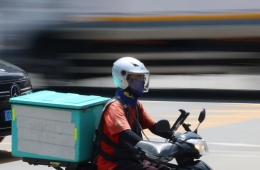
On the 14th, 50 days before the 2021 College Scholastic Ability Test, parents of examinees and Buddhist devotees are praying for high scores and success in university admissions at Jogyesa Temple in Jongno-gu, Seoul, while observing social distancing measures to prevent COVID-19. Photo by Moon Honam munonam@
View original image[Asia Economy Reporter Cho Hyun-ui] “When we say social distancing is adjusted to level 2 when daily confirmed cases exceed 50, we are often asked whether this is based on the number of new daily cases per 100,000 people.”
On the 2nd, an official from the Central Disaster and Safety Countermeasures Headquarters (CDSCH) said, “When we introduce the domestic social distancing escalation criteria during conferences on COVID-19 with foreign health authorities or experts, we commonly receive this question,” explaining this point.
The government will change the social distancing stage criteria from the “2-week average daily confirmed cases” to the “1-week average daily confirmed cases” starting from the 7th. The existing criteria were considered not well suited to the current quarantine situation and were especially criticized as being too strict compared to major overseas countries.
Domestically, until now, if the 2-week average daily confirmed cases exceeded 50, social distancing level 2 was applied, and if it exceeded 100 to 200, escalation to level 3 was considered. Major foreign countries adjust social distancing stages based on the number of new confirmed cases per 100,000 people.
Applying this to the domestic social distancing escalation criteria means that exceeding 0.1 cases per 100,000 people corresponds to level 2, and exceeding 0.2 cases corresponds to level 3. Considering that major European countries such as Germany and the UK generally use tens of cases per 100,000 people as the standard for strengthening quarantine measures, this is seen as excessively strict.
Son Young-rae, head of the CDSCH Strategy Division, stated at a press briefing on the 29th of last month, “Foreign countries usually assess risk based on confirmed cases per 100,000 people,” adding, “There have been criticisms that our domestic criteria are conservative.”
In fact, Germany imposes strengthened quarantine measures on regions where more than 50 confirmed cases per 100,000 people occur over a week. Applying the domestic standard, this corresponds to more than 25,000 confirmed cases nationwide. After strengthening social distancing, the number of confirmed cases per 100,000 people must decrease to 35 or less over a week for the measures to be eased.
In the UK, a three-stage response system of “normal-high-very high” is applied regionally based on confirmed cases per 100,000 people. For 10 to 100 cases per 100,000 people, the normal stage prohibits indoor gatherings of more than 6 people, and restaurants are only allowed takeout or delivery after 10 p.m. The high stage, with 100 to 400 cases, bans outdoor gatherings of more than 6 people. At the very high stage, with 500 to 600 cases, meetings with households other than family are completely prohibited, and travel restrictions to other regions are imposed.
However, it is explained that since Korea has excellent epidemiological investigation capabilities, there is no need to apply foreign standards directly. According to quarantine authorities, the cumulative number of confirmed cases domestically is below about 50 per 100,000 people.
Hot Picks Today
 Even with High Oil Price Relief Payment, Additional 300,000 Won Per Person to Be Provided... Applications Open from the 18th in This Region
- "Invested 95% in Hynix and Reached 10 Billion Won"... Japanese Investor's Proof Post Goes Viral
- "Why Is the Korean Stock Market Surging?"... Even Italy Is Astonished by the KOSPI Rally
- "You Don't Need to Go to the Gym": The Best Exercises for Lowering Hypertension
- "That Thing Wakes Up Every Night" ... Suspicious Object Covers Rural Village
Yoon Tae-ho, head of the Central Accident Response Headquarters’ Quarantine Division, said, “The greatest strength of K-quarantine is that COVID-19 has been blocked through epidemiological investigations,” explaining, “(Overseas) when cluster infections occur, confirmed cases continue to increase, but in Korea, after reaching a peak, the trend rapidly decreases.” He added, “It is important to utilize our quarantine and medical response characteristics,” and “While we can refer to foreign standards, there is no need to follow them.”
© The Asia Business Daily(www.asiae.co.kr). All rights reserved.