NSN "Neurosona Starts Clinical Trial for Consciousness Disorder... Contract with Seoul National University Hospital"
[Asia Economy Reporter Hyunseok Yoo] Neurosona, a company developing brain disease treatment devices, announced on the 26th that it signed a clinical trial contract with Seoul National University Hospital on the 23rd and will begin an exploratory clinical trial to evaluate the efficacy and safety of low-intensity focused ultrasound stimulation in patients with consciousness disorders following traumatic brain injury.
Traumatic brain injury refers to brain function damage caused by physical impact to the head from external forces. With advances in modern medicine, the survival rate of patients with traumatic brain injury has significantly increased; however, many patients still do not regain consciousness and live in a state of consciousness disorder. If this condition persists, patients are left with almost no ability to perform tasks independently, and unfortunately, this can impose enormous psychological and financial burdens on their families.
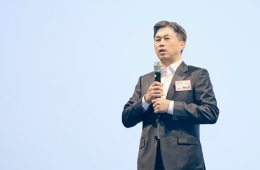
Seonil Seo, CEO of Neurosona, stated, "Through this clinical trial using Neurosona's low-intensity focused ultrasound stimulation device on patients with consciousness disorders, we hope to offer a new treatment alternative not only for patients who have not received adequate rehabilitation due to severe consciousness impairment but also for patients in coma or vegetative states in the future."
He added, "In 2016, researchers at UCLA in the United States reported a clinical case where a traffic accident patient in a coma for about 20 days was stimulated daily with low-intensity focused ultrasound, regaining consciousness from the third day and starting to walk from the fifth day. Through this clinical trial applying an improved clinical model, we plan to verify the safety and efficacy of Neurosona's low-intensity focused ultrasound stimulation device."
The focused ultrasound (Low-Intensity Focused Ultrasound) stimulation system developed by Neurosona can stimulate any desired area deep within the brain with high spatial accuracy, allowing precise stimulation of specific brain regions. Additionally, it holds significant value as a non-invasive treatment option without risky surgery for intractable brain diseases that have limited or no effective treatment alternatives, attracting considerable interest among researchers in the brain disease field recently.
Neurosona began its research and development as the bio-business division of NSN after signing a research support agreement with Brigham and Women’s Hospital (BWH), an affiliate hospital of Harvard Medical School, in August 2016. It spun off under the name Neurosona in August 2017.
Hot Picks Today
 "Six Months After 'Mom's Touch Troublesome Woma...
- Popcorn Container Craze at Theaters Sparks Sell-Out Frenzy, Emerges as New Reven...
- "With This Certificate, Even Those in Their 60s Can Get Hired and Earn 3.69 Mill...
- Jae-yong Lee Snaps a Selfie with President Lee and Prime Minister Modi... Closer...
- Female Game Caster Makes Bold Move After Criticism Over "Short Skirt" on Broadca...
Currently, Neurosona is conducting exploratory clinical trials to evaluate the therapeutic efficacy and safety of the focused ultrasound stimulation system in patients with Alzheimer’s disease, major depressive disorder, and neuropathic pain, respectively. NSN is the largest shareholder of Neurosona, holding 54.8% of its shares.
© The Asia Business Daily(www.asiae.co.kr). All rights reserved.



!["They Said It Was 'Delicious' Milk... Is the 'List of Fake Milk Products in Korea' for Real? [Matjal X-File]"](https://cwcontent.asiae.co.kr/asiaresize/307/2023072413274517286_1690172865.jpg)