[Q&A] "'Shincheonji Believer Diagnosed After Returning from Wuhan' Likely Not the Infection Source"
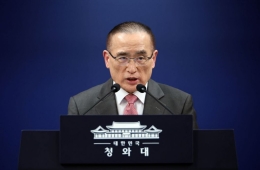
![Kwon Jun-wook, Deputy Director of the Central Disaster and Safety Countermeasure Headquarters for COVID-19 [Photo by Yonhap News]](http://www.asiae.co.kr/news/img_view.htm?img=2020030316092291815_1583219362.jpg)
Kwon Jun-wook, Deputy Director of the Central Disaster and Safety Countermeasure Headquarters for COVID-19 [Photo by Yonhap News]
View original image[Asia Economy Reporter Kim Heung-soon] The quarantine authorities reiterated their position that it is difficult to consider the Shincheonji Jesus Church member who returned from Wuhan, China and was diagnosed with COVID-19 as the initial source of the large-scale cluster outbreak centered around the Shincheonji Daegu Church.
On the afternoon of the 5th, Kwon Jun-wook, Deputy Head of the Central Disaster and Safety Countermeasure Headquarters for COVID-19, said at a regular briefing, "At this point, considering the timing of the patient's onset, it does not appear that this patient played a major role as the index patient or source of infection related to the outbreak among Shincheonji members."
The quarantine authorities, through the Ministry of Justice, identified 42 Shincheonji members who entered the country from Wuhan since July last year. Among them, it was confirmed that two returned from Wuhan after January. One of them was found not to be a patient, and the other was diagnosed positive, with the positive result confirmed around late February.
The large-scale outbreak of confirmed cases centered on Shincheonji began after patient number 31, a Shincheonji Daegu Church member, tested positive on the 18th of last month. Since the Shincheonji member who returned from Wuhan developed symptoms later than these cases, the authorities' initial assessment is that it is difficult to consider them as the source of infection. This was also explained in the briefing on the 3rd.
However, Deputy Head Kwon left room for further investigation, stating, "If there are cases of taking antipyretics, a more detailed investigation is necessary." Previously, among other confirmed cases in Korea, there were instances where symptoms appeared after taking antipyretics, and diagnosis was delayed because the patient was unaware of symptom onset. The authorities are considering the possibility that the Shincheonji member returning from Wuhan may have taken over-the-counter medication, delaying the timing of testing.
◇ Below is the Q&A with Deputy Head Kwon Jun-wook regarding the Shincheonji member who returned from Wuhan
- How far has the investigation into Shincheonji members who entered from Wuhan progressed?
▲ We analyzed resident registration numbers, personal information, and immigration data related to Shincheonji members. Among these, about two significant cases emerged. Considering the timing of onset, it is currently difficult to see them as index patients or major sources of infection related to the outbreak among Shincheonji members. However, the investigation is not yet complete.
- Is there weight being given to the possibility that they could be a major source of infection?
▲ We confirmed the onset timing through phone interviews with the individuals and checked the Drug Utilization Review (DUR) if they used health insurance to obtain medical services, which provides reliable medical institution usage information. However, if they took antipyretics purchased as over-the-counter drugs, more detailed epidemiological investigation, such as checking credit card usage, is necessary.
- New confirmed cases have decreased for two consecutive days. How do you assess the current situation?
▲ We consider this the most critical period. The apparent numbers themselves are difficult to interpret meaningfully at this time because we are still identifying confirmed cases within already known clusters. Even those clusters need to be quickly managed through admission to life treatment centers. Additionally, there continue to be unfortunate deaths among patients with underlying conditions. That must be our primary concern.
Hot Picks Today
 Even with High Oil Price Relief Payment, Additional 300,000 Won Per Person to Be Provided... Applications Open from the 18th in This Region
- "Invested 95% in Hynix and Reached 10 Billion Won"... Japanese Investor's Proof Post Goes Viral
- "Why Is the Korean Stock Market Surging?"... Even Italy Is Astonished by the KOSPI Rally
- "You Don't Need to Go to the Gym": The Best Exercises for Lowering Hypertension
- "That Thing Wakes Up Every Night" ... Suspicious Object Covers Rural Village
Although the total number of confirmed cases appears to be decreasing, the population of the main amplification clusters is limited, and we are still identifying confirmed cases within them. The problem is that these clusters have likely already established multiple connections to the outside. The COVID-19 virus crossing these connections could create new amplification clusters. This could trigger secondary and tertiary transmissions or new waves of outbreaks in the community. Notably, today in the Gyeongbuk region, cluster cases occurred in nursing homes. In the metropolitan area, there have already been cases with unclear connections that have passed or may appear again. Therefore, the quarantine authorities and other local governments must respond with the mindset that situations like those in Daegu can occur anytime, preparing for the worst-case scenario.
© The Asia Business Daily(www.asiae.co.kr). All rights reserved.