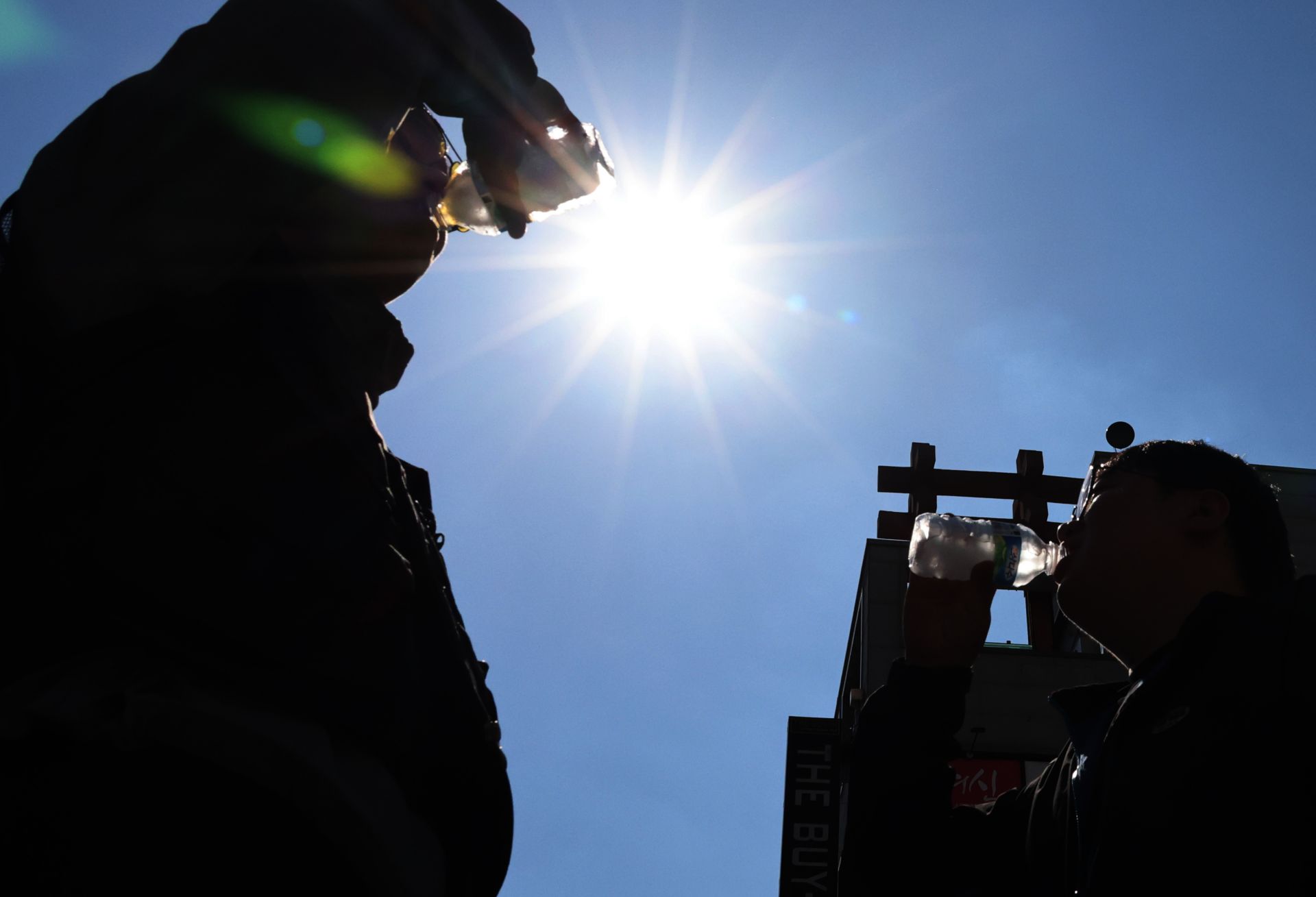
Three Common Health Misconceptions According to Emeritus Professor Lee Gyeho of Chungnam National University
An expert has pointed out that some habits practiced for health may actually be harmful to the body. Lee Gyeho, an authority in analytical chemistry and emeritus professor in the Department of Chemistry at Chungnam National University, noted that the number of patients with hyponatremia is increasing in Korea due to three common health misconceptions: "Drinking 2 liters of water daily is good for you," "The more vegetables and fruits you eat, the better," and "A low-salt diet is always healthy."
"Drinking 2 Liters of Water Daily Can Harm Your Health... Excessive Intake May Even Be Fatal"

Professor Lee Gyeho, an authority in analytical chemistry and emeritus professor at Chungnam National University, advised, "Water also enters the body through food," and added, "If you drink water compulsively, you may end up drinking too much." Getty Images Bank
원본보기 아이콘He cited "drinking a lot of water is good for you" as the first incorrect health belief. Professor Lee emphasized, "Drinking exactly 2 liters of water every day can significantly harm your health." He warned, "Drinking excessive amounts of water can be fatal," and added, "There have been many cases at marathons where runners drank a lot of water and then died of cardiac arrest." The cause of death in these cases is said to be "cardiac arrest due to hyponatremia."
Professor Lee explained, "There are minerals called sodium and potassium in the blood, and they generate electricity in our bodies. When there is too much water in the body, sodium levels decrease, and the amount of electricity generated also drops." He continued, "People who drink a lot of water may feel weak and dizzy even if they are otherwise healthy. If this situation continues over a long period, those with weaker hearts may die because their hearts are not supplied with enough electricity."
He also pointed out, "Water does not enter our bodies only as water, but also through food. If you eat watermelon punch and then feel obligated to drink 2 liters of water, you are consuming too much water. The total amount of watermelon and water combined should be 1.5 to 2 liters per day."
"Excessive Consumption of Vegetables and Fruits Can Disrupt Nutritional Balance"

Professor Lee Gyeho, Emeritus Professor of Chemistry at Chungnam National University, pointed out that the number of patients with hyponatremia is increasing due to three incorrect health beliefs among Koreans. Photo by Pixabay
원본보기 아이콘The second misconception he addressed is the excessive intake of vegetables and fruits. Professor Lee explained, "The main component of vegetables and fruits is potassium, which has a diuretic effect and lowers the sodium concentration in the body. Eating large amounts just because they are considered healthy can actually disrupt the body's balance." He added, "The fluids in our bodies are like a 0.9% saline solution, and if this balance is disrupted, problems can arise." He noted that this is why even herbivores such as deer and sheep must be supplemented with salt.
"A Low-Salt Diet Is Not Always Healthy... Maintaining the Body's Saline Concentration Is Important"

Lee Gyeho, Emeritus Professor of Chemistry at Chungnam National University, pointed out that the number of patients with hyponatremia is increasing due to three incorrect health beliefs among Koreans. Photo by Pixabay
원본보기 아이콘Professor Lee also pointed out that the belief "a low-salt diet is always healthy" is incorrect. He stated, "Among people who die suddenly in their sleep without any prior health issues, there are cases of cardiac arrest due to hyponatremia." He continued, "Because Korea's traditional fermented foods such as sauces and kimchi are very salty, the government has promoted low-salt diets for the past ten years. As a result, people have come to mistakenly believe that a low-salt diet is always healthy." He emphasized, "A low-salt diet is only healthy for those who consume too much salt. What matters is maintaining the body's saline concentration at 0.9%."
Need for Comparison and Verification Rather Than Blind Faith in Expert Claims
Caution is needed regarding the claims of Professor Lee Gyeho, an expert in analytical chemistry. The body's fluid and electrolyte balance, as well as dietary recommendations, are based on medical and nutritional research and may differ from the personal interpretations of a single expert. The "2 liters of water per day" guideline is generally for healthy adults and can vary depending on activity level, body weight, and climate conditions. Cases of death during marathons are special situations involving a combination of extreme exercise, excessive water intake, and insufficient electrolyte replenishment, and are not grounds to completely reject general hydration recommendations. Authoritative organizations such as the World Health Organization (WHO) and the Institute of Medicine (IOM) in the United States still recommend adequate fluid intake.
Regarding the potential exaggeration of the risks of excessive vegetable and fruit consumption, most healthy kidneys can regulate potassium and sodium concentrations appropriately. While it is physiologically correct that potassium lowers sodium levels, dietary potassium overload rarely causes hyponatremia in healthy individuals. In fact, potassium intake is recommended for the prevention of hypertension and cardiovascular disease. As for low-salt diets, organizations such as the WHO and the Korean Society of Hypertension continue to recommend limiting daily sodium intake to less than 2 grams (5 grams of salt). Most cases of hyponatremia are due to complex causes such as chronic disease, medication, or acute illness, and simple sodium deficiency from diet is a rare cause.
Therefore, even expert statements should be compared and verified against official medical and nutritional guidelines, rather than being accepted blindly. Individuals should seek personalized advice based on their health status, including kidney function, cardiovascular conditions, and medications.
-

Reporter Seo Jiyeong zo2zo2zo2@asiae.co.kr
-
Edit Lee Kijae happylee17@asiae.co.kr
© The Asia Business Daily(www.asiae.co.kr). All rights reserved.

!["They Said It Was 'Delicious' Milk... Is the 'List of Fake Milk Products in Korea' for Real? [Matjal X-File]"](https://cwcontent.asiae.co.kr/asiaresize/323/2023072413274517286_1690172865.jpg)

!['Record-High Net Profit' TSMC to Invest KRW 82 Trillion in Facilities This Year [Taiwan Chip Communication]](https://cwcontent.asiae.co.kr/asiaresize/304/2026011515434793142_1768459427.jpg)