TSMC to Begin Mass Production of 3nm Semiconductors in the US, Japan, and Taiwan... Converting 5nm Lines to 3nm
Simultaneous Expansion Driven by AI Demand
Restructuring Portfolio Around 3nm Production
Concerns Over Helium and Hydrogen Supply Met With "Sufficient Stockpiles"
Taiwan Semiconductor Manufacturing Company (TSMC), the world’s largest foundry (semiconductor contract manufacturing) company, is reportedly planning to begin mass production of 3-nanometer (nm, one billionth of a meter) process semiconductors starting next year. The company also plans to convert its existing 5nm production lines in Taiwan to the 3nm process.

Panoramic view of TSMC headquarters in Hsinchu City, Taiwan. Photo by AP Yonhap News
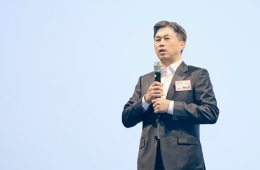
View original imageAccording to local media outlets such as Taiwan News and Focus Taiwan on April 17, TSMC Chairman Mark Liu announced at this year's first-quarter earnings briefing that, driven by demand for artificial intelligence (AI), TSMC will begin building 3nm fabrication plants in Taiwan, the United States, and Japan starting next year.
Chairman Liu stated that the company has decided to simultaneously expand its new 3nm plants. First, a 3nm plant will be built in the Tainan Science Park in southern Taiwan, with mass production targeted for the first half of next year. At the same time, TSMC plans to convert 5nm production lines at existing plants in Taiwan to the 3nm process to further increase production capacity.
The company explained that its second factory in Arizona, United States, will adopt the 3nm process and begin mass production in the second half of next year. In Japan, the second Kumamoto plant, which will also feature the 3nm process, is scheduled to begin mass production in 2028. These production plans have already been approved by the Taiwanese government.
Chairman Liu stated that as the industry shifts from generative AI to agent-based AI, consumption of advanced semiconductors is increasing significantly. He added that TSMC is proactively securing production capacity to meet strong customer demand for advanced processes. He also noted that the company is making substantial facility investments to expand 3nm production and ensure that related orders do not go to competitors.
Liu said that products utilizing the 2nm process will begin mass production in the fourth quarter of this year at TSMC’s plants in Hsinchu and Kaohsiung, Taiwan. The state-of-the-art A14 (1.4nm) process, which adopts the second-generation nanosheet transistor architecture, is scheduled to begin mass production in 2028.
Chairman Liu also estimated that TSMC’s second-quarter sales will reach 1.13 trillion New Taiwan dollars (approximately 40.2 billion US dollars), an increase of 10% compared to the first quarter. Annual sales are expected to grow by over 30% to about 5.06 trillion New Taiwan dollars (approximately 237.01 trillion won), driven by increased demand for high-performance computing (HPC) chips.
Regarding growing concerns over sourcing specialty gases and other raw materials due to the recent war in the Middle East, TSMC Chief Financial Officer Wendell Huang said, "We have sufficient stockpiles of specialty gases such as helium and hydrogen," and added, "We are diversifying our supply chain to prevent supply disruptions caused by the conflict."
Hot Picks Today
 "With This Certificate, Even Those in Their 60s...
- Popcorn Container Craze at Theaters Sparks Sell-Out Frenzy, Emerges as New Reven...
- When His Father Suddenly Collapsed Before His Eyes... 13-Year-Old Son Preserves ...
- "Six Months After 'Mom's Touch Troublesome Woman' Incident... Franchise Says, 'S...
- "Quit Office Job to Earn Over 200 Million Won a Year"… Chinese Woman in Her 30s...
Meanwhile, TSMC announced that its net profit for the first quarter reached 572.5 billion New Taiwan dollars (about 26.7 trillion won), a 58% increase from the same period last year. This figure exceeds Bloomberg's consensus estimate of 542.4 billion New Taiwan dollars. During the same period, sales increased by 35.1% to 1.1341 trillion New Taiwan dollars.
© The Asia Business Daily(www.asiae.co.kr). All rights reserved.



!["They Said It Was 'Delicious' Milk... Is the 'List of Fake Milk Products in Korea' for Real? [Matjal X-File]"](https://cwcontent.asiae.co.kr/asiaresize/307/2023072413274517286_1690172865.jpg)