Trump Says Iran Nuclear Deal Is Nearly Complete... Will There Be a Dramatic Breakthrough This Weekend? (Comprehensive)
"If Agreement Is Signed, Will Visit Pakistan"
Iran: "Repelled Invading Forces With Indomitable Will"
"May End With Only a Temporary Memorandum of Understanding"

As early as this weekend, there is a high possibility that the United States and Iran will once again sit down at the negotiating table to discuss an end to hostilities. U.S. President Donald Trump expressed optimism regarding Iran's complete abandonment of its nuclear program—a core issue for ending the conflict—and predicted that talks would be held. He also stated that depending on the outcome, he might personally attend the negotiations. On the same day, Israel and Lebanon also entered into a ten-day ceasefire, further fostering an atmosphere conducive to ending hostilities.
However, disagreements over nuclear issues remain unresolved within Iran, and some point out that Western nations are attempting to restrict nuclear weapons only in Iran among Middle Eastern countries. As a result, there are various outlooks that even if talks are held, it will be difficult to reach an agreement quickly, or that any deal may take the form of a temporary memorandum of understanding.
Trump: "Iran Has Agreed to Almost Everything" ... Israel-Lebanon Ceasefire Takes Effect

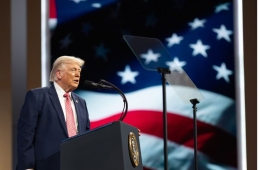
On April 16 (local time), President Trump said at a White House press conference, "Iran has agreed to almost everything. There is a high likelihood that the negotiations will be concluded," adding, "What we must do is ensure that Iran does not possess nuclear weapons, and Iran has agreed to this." When asked about the timing of the second round of talks, he replied, "Probably around this weekend." The first round of talks between the two countries was held over two days starting April 11.
President Trump emphasized, "There is a very strong statement from Iran that they will not possess nuclear weapons for the next 20 years. This does not simply mean a 20-year limit; it means even more than that," adding, "If an agreement is signed in Islamabad (the expected location for the second round of talks), I may visit there." He explained that the gap between both sides had significantly narrowed on the nuclear agreement issue, which had been emphasized as a red line.
The ceasefire between Israel and Lebanon, which Iran has strongly insisted is a "truce agreement with the United States," also took effect on the same day. President Trump announced on his own social media platform, Truth Social, that "Israel and Lebanon will enter into a ten-day ceasefire starting at 5 p.m. Eastern time."
Subsequently, both countries made similar announcements. Israeli Prime Minister Benjamin Netanyahu said in a video message, "With the provisional ceasefire with Lebanon led by President Trump, a historic opportunity has arisen to conclude a peace agreement," and stressed that "President Trump plans to invite both sides to promote negotiations." Hezbollah, the pro-Iranian armed faction in Lebanon, which has been the main target of Israeli attacks, also acknowledged the ceasefire. In a statement, Hezbollah said, "We acknowledge the ceasefire between Israel and Lebanon. However, whether we will accept the ceasefire will be decided depending on how the situation develops," and added, "We cannot accept any agreement that allows the Israeli military free movement within Lebanon."
Iranian President Criticizes the West for "Double Standards on Nuclear Issues"

However, Iran's response remains quite tense. On the same day, Iranian President Masoud Pezeshkian posted on his X (formerly Twitter) account, "The West is applying double standards to the nuclear weapons of Israel and Iran," adding, "When Israel tries to block our peaceful nuclear program by waging war against our entire nation and killing scientists and children, it is questionable whether Western leaders can claim to have a conscience."
At a cabinet meeting held on the same day, he stated, "For 40 days, the Iranian people have repelled the aggression of the United States and Israel with indomitable will," and added, "The invading forces thought that if they escalated threats, we would back down, but our people have become even more united." Contrary to President Trump's remarks that an agreement is nearly complete, Iran is instead showing an even tougher stance.
Some observers suggest that Iran is showing such a reaction in order to exchange nuclear issues for war compensation payments. Israeli media outlet Channel 12 reported, "According to what has been revealed in the negotiations so far, the United States has indicated its willingness to establish an Iranian aid fund worth about 250 billion dollars (approximately 368 trillion won) in exchange for the removal of highly enriched uranium from Iran. However, Iran is demanding an even larger amount," and added, "Iran has stated that the war damages amount to 270 billion dollars (about 400 trillion won) and wants more than that."
Growing Doubts Over Nuclear Agreement ... "At Least Six Months Needed for a Deal"

Regardless of Iran's intentions, the significant gap in positions between the two countries is expected to act as an obstacle to negotiations. There are also predictions that reaching an agreement could take at least six months.
Bloomberg News, citing sources familiar with the matter, reported, "European and Middle Eastern leaders believe it will take more than six months for the United States and Iran to reach an agreement to end hostilities," adding, "Given this, both sides believe they need to secure more time to prevent a resumption of conflict and are considering extending the ceasefire period."
U.S. political media outlet Politico also quoted sources as saying, "Iran is still insisting that the period for suspending nuclear enrichment be capped at five years and is unwilling to give up its stockpile of enriched uranium," and added, "Even the Iran nuclear deal (JCPOA) reached under the Barack Obama administration in 2015 took two years to finalize after negotiations. The Trump Administration's deal, which sets 'Iran's complete abandonment of nuclear weapons' as a red line, could also take considerable time."
Hot Picks Today
 "Over 20 Times More Than Overseas": 104.5 Milli...
- "Only the Top 1% Winning Big in Stocks Smile... '300 Million Won Splurges' or '1...
- Applied Just for Skin Soothing...Study Finds It Suppresses Antibiotic Resistance
- "If an Accident Happens, Teachers Go to Jail"... The Real Reason Behind Fewer Sc...
- "Please Launch It in Korea!" After All the Hype... This Coffee Finally Arrives i...
There is also the possibility that the United States and Iran could reach a comprehensive agreement and sign a memorandum of understanding at their second round of talks. One Western media outlet, citing Iranian sources, reported, "After failing to achieve clear results in the first round, the focus of negotiations has shifted to producing a temporary agreement," adding, "The plan is to negotiate a final agreement over a period of 60 days after signing a temporary memorandum of understanding, with organizations such as the International Atomic Energy Agency (IAEA) expected to participate in these talks."
© The Asia Business Daily(www.asiae.co.kr). All rights reserved.