[Public Voices]The World Transformed by Digital Assets: Only Korea Remains Stagnant
Regulatory Debates Focused on Equity Ownership Restrictions
Contradict Global Trends
At Risk of Missing the Golden Window for Innovation
Financial Authorities Must Become Facilitators of Innovation
Upholding the Spirit of the Digit

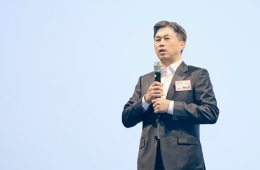
Professor Seongmin Jeon, Department of Business Administration, Gachon University
View original imageThe global e-commerce market stands at a major inflection point defined by the "software-ization of finance." The global e-commerce platform Shopify has partnered with the cryptocurrency exchange Coinbase to introduce a stablecoin payment system. Small business owners can now receive settlements in just a few seconds, with only a 1% fee, and without the complex procedures of traditional foreign exchange remittances. This development demonstrates that digital assets are evolving from mere investment vehicles into core infrastructure that maximizes the efficiency of the real economy.
In the field of digital assets, South Korea has fallen into a stagnation that does not match its reputation as an "IT powerhouse." Change is already underway, with Tether exchange ATMs installed in major domestic tourist destinations such as Myeong-dong and Namdaemun. However, delays in institutionalization have postponed the launch of related services and the delivery of user benefits. The global first-mover advantage and industrial sovereignty that Korean companies should enjoy are being rapidly eroded by foreign operators.
For export-oriented small and medium-sized enterprises, delays in overseas remittances and high fees are chronic problems. While large corporations can manage costs through economies of scale, small and medium-sized enterprises inevitably suffer from structural disadvantages that undermine their profitability. For them, real-time payments using stablecoins are a powerful tool that not only reduces costs, but also addresses the information asymmetry in finance between themselves and large corporations. The tokenization of real-world assets (RWA), such as real estate and gold, and the introduction of a Korean won stablecoin are key to expanding the capital market's boundaries. Through these innovations, companies obtain new channels for raising funds, and the public gains access to new investment opportunities.
The most critical consequence of delayed digital asset institutionalization is not merely capital outflow, but the subordination of the financial platform itself. The United States has already taken the lead in digital finance by enacting the GENIUS Act, and Europe has established the Markets in Crypto-Assets Regulation (MiCA), accelerating the race for global hegemony. In contrast, South Korea remains mired in regulatory debates, such as shareholding restrictions that run counter to global trends, and is missing the golden window for innovation.
While domestic operators are tied down by regulations, key users and high value-added data are already crossing borders. If this situation continues, domestic exchanges will be relegated to mere platforms for Korean won deposits and withdrawals, rather than leading the innovation ecosystem. As a result, the national tax base will weaken and digital financial sovereignty may be handed over to large foreign capital.
The direction of the global market is clear. Instead of imposing unconditional shareholding limits, the focus is shifting toward building market trust by strengthening major shareholder eligibility reviews and enhancing governance transparency. As seen in Japan and the European Union, the appointment of independent directors and the imposition of strict post-hoc accountability are practical solutions to prevent conflicts of interest.
Financial authorities must now break free from the temptation of "convenient regulation" and become guides that support innovation. Resolving regulatory uncertainty and establishing a level playing field where domestic companies can compete globally without reverse discrimination are the true objectives of the Digital Asset Basic Act. Whether South Korea rises as a digital finance powerhouse or remains a peripheral consumer nation depends on bold policy decisions made at this very moment.
Hot Picks Today
 "With This Certificate, Even Those in Their 60s...
- Popcorn Container Craze at Theaters Sparks Sell-Out Frenzy, Emerges as New Reven...
- "Bear Destroyed My Rolls-Royce"... US Car Owners Who Claimed $200,000 Insurance ...
- Passed Through Just Before Hormuz Re-closure... 1 Million Barrels of Crude Oil H...
- "Quit Office Job to Earn Over 200 Million Won a Year"… Chinese Woman in Her 30s...
Professor Seongmin Jeon, Department of Business Administration, Gachon University
© The Asia Business Daily(www.asiae.co.kr). All rights reserved.



!["They Said It Was 'Delicious' Milk... Is the 'List of Fake Milk Products in Korea' for Real? [Matjal X-File]"](https://cwcontent.asiae.co.kr/asiaresize/307/2023072413274517286_1690172865.jpg)