[Public Voices] Expanding "Advanced Forest Management" Is Essential to Prevent Large-Scale Wildfires

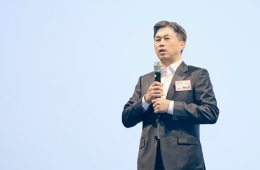
Sung Hyun Nam, Distinguished Professor at Kookmin University (Former Commissioner of the Korea Forest Service). Provided by Korea Forest Service
View original imageForest management involves activities such as thinning and tending trees after planting them, in order to create healthy and valuable forests. Research has shown that after forest management, carbon absorption increases by 42.7%, and water supply also rises by 43.9%.
Since the 2000s, as large-scale wildfires have become more frequent due to climate change, advanced countries have implemented forest management activities in advance to prevent such fires. In the United States, during the presidency of George W. Bush in 2003, the "Healthy Forest Initiative" project was launched to promote forest management and actively pursue policies aimed at reducing fuel materials within forests to prevent wildfires.
With the implementation of the Inflation Reduction Act (IRA) in 2022, the United States invested 3 trillion won to support healthy forest management and the removal of fuel materials from forests. Before large-scale wildfires occur, flammable fuel (trees) is thinned out in advance, and the removed trees are used as industrial timber.
Forest management is the only way to proactively reduce wildfire risks. The main forest management methods to lower wildfire risks include: 1) raking up fallen leaves on the ground or cutting down small trees to reduce the intensity of surface fires (wildfires that burn weeds, shrubs, and fallen leaves on the ground); 2) pruning branches to prevent surface fires from spreading to crown fires (fires that burn leaves and branches); 3) thinning trees to stop crown fires from spreading to neighboring trees; and 4) permanently reducing wildfire risks by converting coniferous forests, which are vulnerable to crown fires, into broadleaf forests.
It is crucial to ensure that all woody byproducts generated during forest management are collected so they do not contribute to the spread of wildfires. Forest management is not only essential for maintaining healthy forests, but also for keeping the amount of flammable material in forests at appropriate levels, thereby reducing wildfire risks. However, if the trees cut down during forest management are left on site, they can affect the intensity of wildfires when they occur. Fires may also last longer until all remaining fuel is consumed.
Cut trees are usually stacked in strips, which can act as a link in the chain of wildfire spread. In fact, during the 2005 wildfire at Naksansa Temple in Yangyang, it was pointed out that trees cut down during forest management acted as kindling and contributed to the recurrence of the wildfire.
Research has also shown that when cut trees from forest management are left unattended, the amount of surface fuel is about twice as high as the average pine forest in Korea, and the risk of the fire spreading to the crowns is more than twice as high. According to simulations by the National Institute of Forest Science on the flame propagation characteristics depending on the amount of stacked cut trees, wildfire intensity increased when trees were piled up. Conversely, when the distance between tree piles was more than 30 meters, the fire did not spread.
Now, Korea must also actively promote large-scale forest management projects to create healthy and valuable forests and proactively prevent large-scale wildfires, as advanced countries do. The issue is the budget. Starting next year, Korea needs to more than double the budget for forest management projects aimed at wildfire prevention compared to this year, just like advanced countries.
Assuming a major shift in the forest management paradigm, I hope that with the interest and support of the government and political circles, sufficient funding for these projects can be secured.
Hot Picks Today
 "With This Certificate, Even Those in Their 60s...
- Popcorn Container Craze at Theaters Sparks Sell-Out Frenzy, Emerges as New Reven...
- "Bear Destroyed My Rolls-Royce"... US Car Owners Who Claimed $200,000 Insurance ...
- Passed Through Just Before Hormuz Re-closure... 1 Million Barrels of Crude Oil H...
- "Quit Office Job to Earn Over 200 Million Won a Year"… Chinese Woman in Her 30s...
Sung Hyun Nam, Distinguished Professor at Kookmin University (Former Commissioner of the Korea Forest Service)
© The Asia Business Daily(www.asiae.co.kr). All rights reserved.



!["They Said It Was 'Delicious' Milk... Is the 'List of Fake Milk Products in Korea' for Real? [Matjal X-File]"](https://cwcontent.asiae.co.kr/asiaresize/307/2023072413274517286_1690172865.jpg)