Gwangjin District to Develop "Seoul Central Park" Around Children's Grand Park... Urban Space Consultation Center Open
Gathering Feedback Through the Consultation Center Until May 29
Gwangjin District in Seoul is operating an "Urban Space Consultation Center" to establish a strategy for restructuring urban spaces around Children's Grand Park. The center has been open since April 24 and will continue until May 29, during which residents are invited to share their opinions on development directions and the use of urban spaces.

Area designated for service around Children's Grand Park. Provided by Gwangjin District Office.
View original imageLast September, the district launched a feasibility study to transform the area around Children's Grand Park—one of the core projects of the “2040 Gwangjin Re-Creation Plan”—into "Seoul Central Park." In February of this year, the district also conducted a resident survey.
According to the survey (816 responses), residents cited proximity to a large park (63%) and access to main roads and public transportation (21%) as the main advantages of the area. As for disadvantages, they pointed to the formation of undistinctive villa complexes (38%) and a concentration of substandard studio apartments such as semi-basement units (19%). The main problems identified were a high density of aging low-rise buildings (32%) and a lack of parking spaces (20%).
Regarding the direction of development, there was strong support for high-rise mixed-use development around Gunja Station and the redevelopment of low-rise residential areas into high-rise apartment complexes. There was also significant demand for the introduction of cultural facilities on the sites of Children's Grand Park Station (Children's Hall) and the Guuimun parking lot.
At the consultation center, survey results are shared and additional feedback is collected. Questions related to urban space restructuring are addressed directly by responsible public officials and the consulting firm. Applications can be made via phone, email, or QR code; applicants submit their preferred date, time, and agenda, after which the schedule and format are coordinated. Consultations are conducted either one-on-one or in groups, with both in-person and virtual options available. The outcomes are reflected in the feasibility study after a satisfaction survey.
The district plans to incorporate the collected opinions into its urban space restructuring strategy and the selection of pilot zones. These pilot zones are designated as special areas for advance public review of development projects such as station-area activation, fast-track integrated planning, and collective town projects. Sites with high feasibility are selected based on criteria such as building age, housing density for each project, and resident preferences. Consulting support, including architectural simulation, will also be provided.
Hot Picks Today
 Even with High Oil Price Relief Payment, Additional 300,000 Won Per Person to Be Provided... Applications Open from the 18th in This Region
- "Invested 95% in Hynix and Reached 10 Billion Won"... Japanese Investor's Proof Post Goes Viral
- Parents Sue After Losing Son Who Followed ChatGPT Advice to "Take the Medication"
- "You Don't Need to Go to the Gym": The Best Exercises for Lowering Hypertension
- "That Thing Wakes Up Every Night" ... Suspicious Object Covers Rural Village
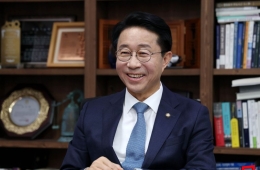
A district official stated, "The area around Children's Grand Park is an important hub for the future urban space of Gwangjin District. Through this Urban Space Consultation Center, we aim to fully listen to diverse resident opinions and connect them to effective urban space restructuring strategies."

“Urban Space Counseling Center” Information. Provided by Gwangjin District Office.
View original image© The Asia Business Daily(www.asiae.co.kr). All rights reserved.