"Expanding Transportation Options over Car Restrictions"... Proposal for Green Transportation Promotion
"10-30-60 Green Transportation Living Zone" Proposed
Discussion of Metropolitan BRT and Local Railways
Calls for Semi-Public Bus System Reform and
Connected Bicycle Networks for Local Communities
There have been criticisms that the green transportation policies in Gwangju and Jeonnam should not be limited to simply "reducing cars." It was pointed out that realistic transportation options must be expanded so that citizens can travel without relying on cars. Suggestions were also made to address transportation gaps prior to the opening of Urban Rail Line 2, the structural limitations of the semi-public bus system, and disconnected bicycle paths.
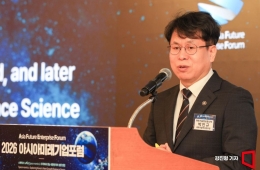
According to Gwangju Jeonnam Future Vision on May 13, the previous day, the 9th Future Vision Forum was held at the MSL Prima Art Hall in Gwangju under the theme of "Promotion Plan for Urban Green Transportation in Gwangju and Jeonnam." The forum was co-hosted by the Gwangju Citizens’ Coalition for Economic Justice and the Gwangju Environmental Movement Union.
Yoon Heecheol, Director of the Ecological City Living Lab, who delivered the main presentation, stated that the transportation sector accounts for 52.5% of Gwangju's direct greenhouse gas emissions. While the public transportation modal share is just 31.7%, the share for passenger cars reached 49.4%.
Director Yoon said, "There is a limit to simply restraining car use," and emphasized, "It is important to create a transportation system where it is not inconvenient to travel without a car."
He proposed the "10-30-60 Green Transportation Living Zone" as an alternative. The concept involves redesigning the transportation network so that people can access public transportation and shared mobility within 10 minutes, move within their local area in 30 minutes, and travel between Gwangju and Jeonnam in 60 minutes.

On the 12th, participants of the 'Gwangju Jeonnam Future Vision 9th Forum' held at the MSL Prima Art Hall in Gwangju are taking a commemorative photo. The forum discussed topics under the theme 'Promotion Plan for Urban Green Transportation in Gwangju and Jeonnam,' including revitalization of public transportation, reform of the quasi-public bus system, and development plans for bicycle infrastructure in residential areas.
View original imageThere was also a proposal to prioritize the expansion of metropolitan BRT and trunk buses until the opening of Urban Rail Line 2. Some argued that instead of building new railways, the intervals and fare structures of existing railway networks should be improved, converting them into metropolitan railways serving local living zones.
During the designated discussion, both criticisms and alternatives regarding Gwangju's transportation policy were presented.
Shin Seokgi, Director of Cooperation at the Gwangju Council for Sustainable Development, said, "Since the 8th popularly elected administration, policies centered on public transportation, bicycles, and walking have not progressed as expected," and added, "A citizens’ committee should be established as a permanent body to ensure bus route reforms do not end as a one-off administrative measure."
Jang Suil, Secretary-General of the Gwangju Citizens’ Coalition for Economic Justice, emphasized the need to reform the semi-public bus system. He stated, "Over the past five years, the total operating distance of city buses has decreased by 10.8%, but financial subsidies have increased from 73.3 billion won to 136.4 billion won. Raising fares without structural reform will be difficult to justify to the public." He went on to argue, "The criteria for financial support should be changed from simple deficit compensation to a focus on service performance, such as headway intervals and punctuality."
Regarding bicycle policy, the need to establish a connected network within local living zones was raised.
Kim Kwanghoon, Executive Director of Gwangju Ecobike, said, "Currently, bicycle paths are mainly structured for leisure along rivers," and added, "Disconnected sections should be connected first to enable practical use for commuting and school travel." There were also proposals to reintroduce the suspended public bicycle service "Tarangge" and to provide user incentives.
Hot Picks Today
 Even with High Oil Price Relief Payment, Additional 300,000 Won Per Person to Be Provided... Applications Open from the 18th in This Region
- "Invested 95% in Hynix and Reached 10 Billion Won"... Japanese Investor's Proof Post Goes Viral
- [Breaking] KOSPI Closes Up 200.86 Points at 7,844.01... Highest Closing Price on Record
- 'Is Everyone Getting Rich but Me?' The Fear Driving 'All-In' and 'Debt Investing'... FOMO Warning Grows [AK View]
- "I'm Younger and Fitter Than Your Husband, Get a Divorce"... Suspicious Messages Between Wife and Fitness Trainer
Im Nakpyeong, Co-Representative of Gwangju Jeonnam Future Vision, referenced the case of Paris, France. He remarked, "Paris has drastically reduced automobile roads and public parking lots while greatly expanding dedicated bicycle lanes. Gwangju and Jeonnam also need a transformation that goes beyond declarations, requiring changes to the administrative system and budget structure."
© The Asia Business Daily(www.asiae.co.kr). All rights reserved.