[6.3 Election] Kim Daejung's "Integrated 2030 Classroom": "Fusion of Gwangju AI and Jeonnam Instruction"
Integration of Gwangju's "AI Factory" and Jeonnam's "Glocal Classroom"
300 Classrooms to Be Established Annually with 30 Billion Won Investment
Kim Daejung, candidate for superintendent of the Gwangju-Jeonnam Integrated Special City, has unveiled his core campaign pledge to establish the "Integrated 2030 Classroom," a project that combines Jeonnam's strong capabilities in instructional research with Gwangju's cutting-edge artificial intelligence (AI) infrastructure. By developing a customized future education model tailored to the unique characteristics of this urban-rural mixed region, he aims to position the soon-to-be-launched integrated special city as the leading hub of digital education in Korea.
On May 13, Kim's campaign announced a plan to expand future-oriented classrooms by integrating Jeonnam's experience operating "Glocal Future Classrooms" with Gwangju's capabilities in building "AI Factories."

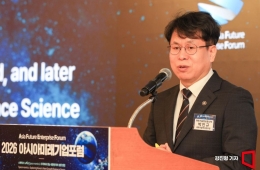
Daejung Kim, Preliminary Candidate for Superintendent of the Integrated Education Office in Gwangju, Jeonnam
View original imageThe key aspect of this pledge is the parallel adoption of a two-track model that reflects the region’s characteristics. The "Urban 2030 Classroom," centered on the Gwangju area, will maximize personalized learning for students by applying AI-based learning analytics. In contrast, the "Rural 2030 Classroom," focused on Jeonnam, will leverage digital technology to overcome the physical limitations of small schools by implementing a system free from spatial, temporal, and language barriers.
To achieve this, 150 classrooms of each model, totaling 300 "2030 Classrooms," are planned to be built annually. The estimated annual budget is 30.6 billion won. Specifically, 15 billion won will be allocated to each of the urban and rural classroom models (30 billion won in total), with an additional 600 million won earmarked for instructional research and sharing support.
The initiative also highlights a shift from simply building hardware to prioritizing software (SW)-driven instructional innovation. The plan is to introduce a "one classroom, n teachers" system, where lead instructors, assistant instructors, and AI tutors collaborate to create an "AI collaborative class" environment that enables immediate, personalized feedback for each student.
Support measures to encourage voluntary teacher participation have also been prepared. A "2030 Class Research Group" of around 1,500 teachers will be operated each year, and a "Best Practices Platform" for sharing outstanding lesson examples will be established to further drive instructional innovation. In addition, an "AI-Edutech Testbed" will provide local AI companies with opportunities to collect real-world data, fostering a virtuous cycle ecosystem that promotes both cutting-edge education and regional industrial development.
Kim stated, "True educational integration will only be achieved when Jeonnam's outstanding instructional research is scaled up to the metropolitan level and Gwangju's abundant AI resources are truly connected to real classroom instruction." He added, "Through the Integrated 2030 Classroom, we will set a new digital education standard from Jeonnam and Gwangju that the rest of Korea will aspire to."
Hot Picks Today
 Even with High Oil Price Relief Payment, Additional 300,000 Won Per Person to Be Provided... Applications Open from the 18th in This Region
- Is the Union Still Aiming for the 45 Trillion Won Bonus?... Samsung Union Rejects Government Mediation as Countdown to May 21 General Strike Begins
- [Breaking] KOSPI Closes Up 200.86 Points at 7,844.01... Highest Closing Price on Record
- 'Is Everyone Getting Rich but Me?' The Fear Driving 'All-In' and 'Debt Investing'... FOMO Warning Grows [AK View]
- "I'm Younger and Fitter Than Your Husband, Get a Divorce"... Suspicious Messages Between Wife and Fitness Trainer
Kim Daejung's "Integrated 2030 Classroom" pledge is drawing attention for its clever combination of Gwangju’s (advanced infrastructure) and Jeonnam’s (instructional capability) respective comparative advantages. Observers note that it goes beyond the mere administrative merger of regions, and instead sets a clear direction for real "chemical educational integration" by exchanging and leveraging the strengths of both regions.
© The Asia Business Daily(www.asiae.co.kr). All rights reserved.